
 By Reynand Wu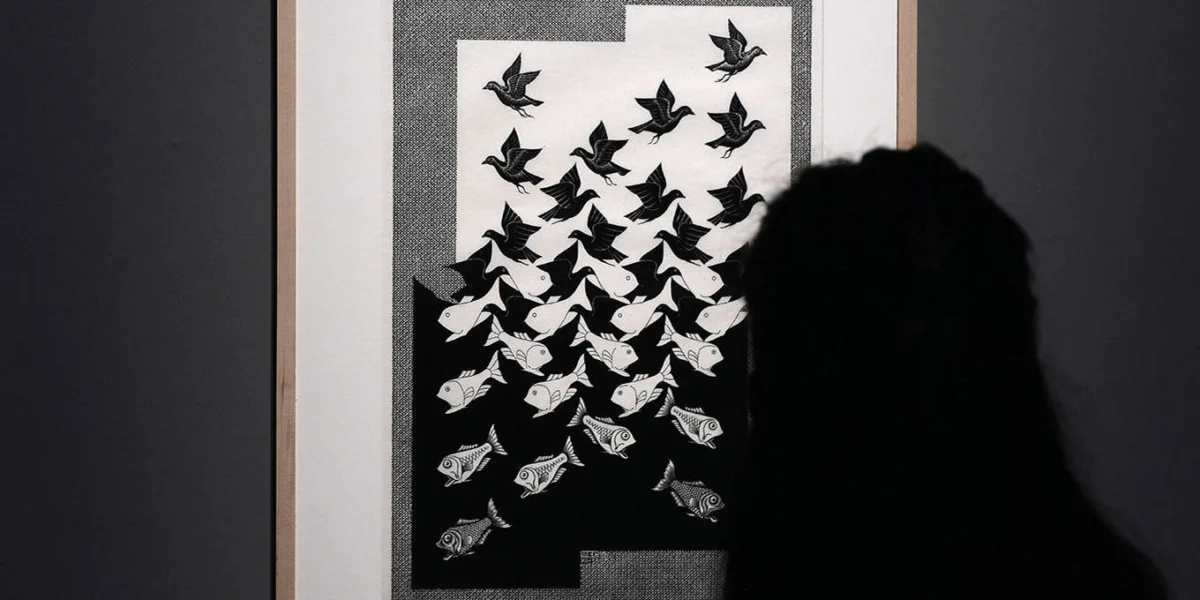
By Benn Steil
June 26, 2026
For a brief, heady period following the collapse of the Soviet Union, the American consciousness was gripped by a seductive illusion: the belief that the liberal international order had become self-sustaining. The consensus suggested that democracy, free-market capitalism, and the rule of law had achieved a terminal velocity of stability. We convinced ourselves that the architecture of global governance was complete and that history had reached its final, friction-less form.
Yet, as history has repeatedly demonstrated, any rules-based system elaborate enough to govern and interpret its own operations will inevitably confront questions that its internal logic cannot answer. We are currently witnessing the fraying of that order, not necessarily because of external shocks, but because of the inherent limitations of systemic complexity.
The Gödelian Precedent: Systems and Their Shadows
To understand the current crisis of governance, one must look back to 1980, when Douglas Hofstadter, then an obscure computer science professor at Indiana University, published Gödel, Escher, Bach: An Eternal Golden Braid. The book, which would go on to win a Pulitzer Prize, became a cult classic among polymaths and engineers alike.
GEB, as it is affectionately known, performed a feat of intellectual alchemy. By interweaving the mathematical logic of Kurt Gödel, the impossible geometries of M.C. Escher, and the contrapuntal fugues of J.S. Bach, Hofstadter illuminated a profound truth about reality: formal systems, no matter how robust they appear, contain inherent contradictions that they cannot resolve from within.
Gödel’s Incompleteness Theorem—the core of Hofstadter’s thesis—posits that in any sufficiently powerful logical system, there exist statements that are true but unprovable within that system. If the system is consistent, it cannot prove its own consistency. This mathematical insight serves as a chilling metaphor for the liberal order. When we built the institutions of the post-1945 era, we assumed they were "complete"—that they contained the mechanisms to handle any political or economic eventuality. We were wrong.
Chronology: From Post-Cold War Hubris to Systemic Fatigue
The trajectory of this "liberal order" can be mapped through distinct phases of expansion and eventual stagnation:
- 1945–1991: The Era of Construction. The Bretton Woods institutions—the IMF, the World Bank, and the GATT—were established to codify a rules-based system. It was a time of clear objectives: reconstruction and containment.
- 1991–2008: The Era of Unipolar Certainty. Following the Cold War, the West operated under the assumption that liberal capitalism was the "default" state of human organization. The enlargement of NATO and the expansion of the World Trade Organization were treated as technical exercises rather than ideological gambles.
- 2008–2016: The Era of Cracks. The Global Financial Crisis exposed the limitations of the "rules-based" economic order. The internal contradictions of globalized finance, which the system could not self-regulate, led to massive public bailouts and the first significant erosion of faith in institutional competence.
- 2016–Present: The Era of Incompleteness. From the populist insurgencies in the West to the challenge of autocratic state capitalism, the system is now facing questions—sovereignty, national identity, and income inequality—that its existing legal and bureaucratic frameworks were never designed to answer.
Supporting Data: The Metrics of Institutional Erosion
The decline of the liberal order is not merely a matter of political rhetoric; it is reflected in empirical shifts. Data from the Varieties of Democracy (V-Dem) project indicates a "third wave of autocratization," where the number of countries experiencing democratic backsliding now outpaces those moving toward liberalization.
Furthermore, economic data suggests that the "rules-based" trade system has reached a point of diminishing returns. According to WTO statistics, the growth of global trade as a percentage of world GDP has plateaued since 2008, a phenomenon economists have termed "slowbalization."
The system’s inability to resolve these contradictions is best illustrated by the current gridlock in global institutions. The UN Security Council, for instance, is paralyzed by the very veto power designed to ensure its stability. In the language of Hofstadter, the system is attempting to "prove its own consistency" while its foundational members act in ways that directly contradict the system’s primary objective: the preservation of global peace.
Official Responses: The Search for a New "Golden Braid"
World leaders are acutely aware of this systemic fatigue, though their responses vary in effectiveness.
In Washington, the prevailing strategy has shifted toward "strategic competition" and "de-risking." The current administration views the previous era of total integration as a strategic liability, suggesting that if the system cannot resolve its internal tensions, the only solution is to build a smaller, more secure "system within the system"—what some call "minilateralism."
Conversely, the European Union has attempted to double down on regulatory integration through the Digital Markets Act and the AI Act. These initiatives represent an attempt to "re-code" the liberal order to account for 21st-century realities. However, critics argue that these regulations are precisely the kind of elaborate, self-referential systems that Gödel warned us about—complex rule-sets that struggle to keep pace with the chaotic reality they attempt to govern.
"The rules are becoming so complex that they are stifling the very innovation they were meant to protect," says Dr. Elena Vance, a senior fellow at the Center for Global Governance. "We are trying to patch a legacy operating system that no longer supports the software of the modern world."
Implications: The Limits of Logic
The implications of our current predicament are profound. If we accept that our institutions are inherently incomplete, we must stop expecting them to function as self-correcting machines.
The Myth of Technical Governance
We have spent three decades treating political problems as technical ones. We believed that if we could just optimize the tax code, perfect the trade agreement, or standardize the regulatory framework, the system would remain stable. But politics, unlike mathematics, involves values that cannot be quantified or resolved through logic. When a system ignores this, it inevitably invites a "systemic reset"—which, in human history, is rarely a gentle affair.
The Necessity of Reflexivity
Hofstadter’s work suggests that for a system to survive, it must be "reflexive"—it must be able to look at its own structure and acknowledge where it is incomplete. For the liberal order, this means moving away from the arrogant assumption that "there is no alternative." Instead, we need a new institutional humility. We must accept that our rules are not universal laws of nature, but provisional agreements that require constant, messy, and often painful renegotiation.
The Risk of Collapse
The danger, as seen in the works of systems theorists, is that when a system reaches a state of hyper-complexity without the ability to resolve its internal contradictions, it becomes brittle. It can no longer adapt to perturbations. If we cannot evolve our international order to address the fundamental concerns of the populace—inequality, national belonging, and technological displacement—the system will not simply continue to "falter." It will eventually be discarded in favor of systems that offer simpler, albeit more authoritarian, answers.
Conclusion: Beyond the Braid
The "Eternal Golden Braid" that Douglas Hofstadter described was a beautiful, closed loop. It was a masterpiece of internal consistency. But the global order of the 21st century cannot afford to be a closed loop.
To survive the current era, the liberal order must find a way to incorporate the "unknowns" it was designed to exclude. It must learn to exist not as a perfect machine, but as an evolving conversation. The paradox, as Gödel proved, is that we can never have a system that is both perfect and complete. We must choose between the comfort of an orderly, decaying system and the vitality of an imperfect, open one.
As we look toward the remainder of this decade, the question is not whether the system can be fixed—it is whether we are brave enough to build something new, knowing full well that whatever we build will eventually have its own Gödelian flaws. The era of the "self-sustaining" order is over. The era of the "human-managed" order must begin.
 Layla Zulfa
  Suro Senen
  Ammar Sabilarrohman