
 By Lina Irawan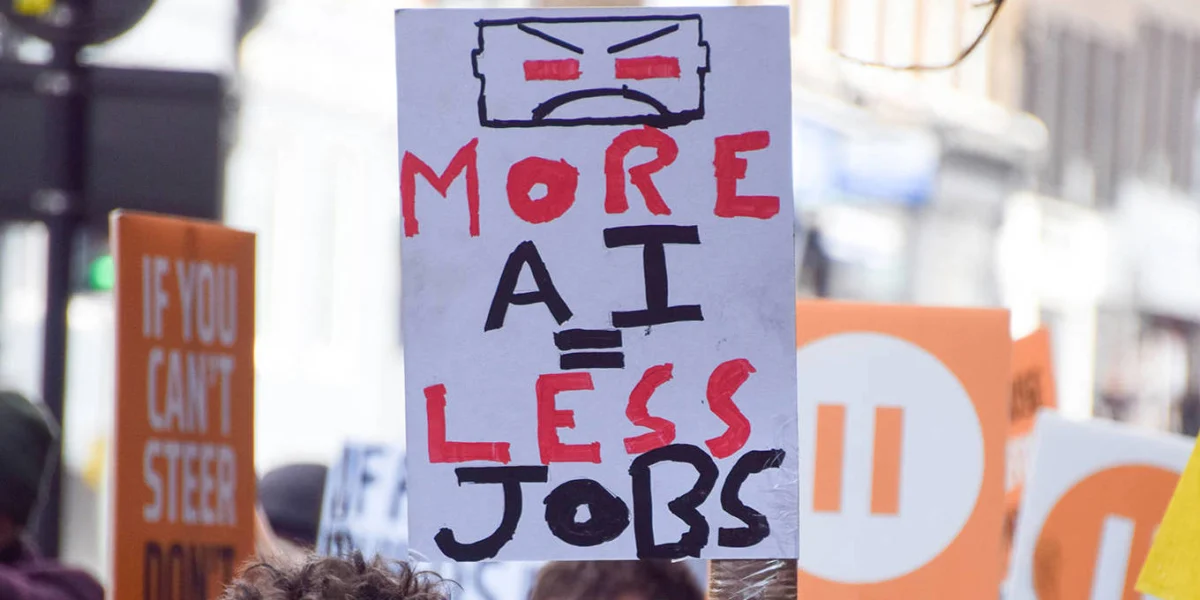
By Carl Benedikt Frey
June 22, 2026
In the modern economic landscape, the promise of Artificial Intelligence is often framed as a liberation. Proponents argue that by automating the mundane, the repetitive, and the dangerous, humanity is on the precipice of a new "leisure society." Yet, as we stand at this technological crossroads, we must confront a fundamental, often overlooked truth: work is not merely a mechanism for wealth distribution. It is the scaffolding upon which we build our social identity, our community standing, and our psychological stability.
The assumption held by many AI boosters—that humans will organically pivot to new, meaningful sources of fulfillment once the "burden" of labor is removed—is not only optimistic; it is historically and psychologically unfounded. As we peer into a future defined by algorithmic efficiency, we risk decoupling humanity from the very structures that provide our sense of purpose.
The Literary Precedent: Vonnegut’s Warning
The specter of a post-work society is not new. In his 1952 debut novel, Player Piano, Kurt Vonnegut painted a haunting picture of a technocratic future. Set in the town of Ilium, New York, the narrative describes a world where machines have automated almost all industrial production. The remaining populace is divided into two distinct castes: the "managerial elite," who oversee the complex machinery, and the masses, who are fed and housed by the state but left with no productive outlet for their skills or aspirations.
Vonnegut’s vision was not a utopia of leisure, but a dystopia of stagnation. The characters in Player Piano do not flourish in their newfound free time; they languish in a state of existential malaise, stripped of the "status" and "belonging" that employment provides. As we enter 2026, the parallels between Vonnegut’s fictional Ilium and our real-world trajectory are becoming increasingly difficult to ignore.
Chronology: From Industrialization to Algorithmic Displacement
To understand the current crisis, one must view the evolution of labor through a historical lens:
- The First Industrial Revolution (Late 18th Century): The shift from agrarian labor to factory work fundamentally altered human rhythm. While grueling, it introduced the concept of "the workplace" as a social hub.
- The Mid-20th Century (1950s–1970s): The peak of the middle-class labor model. Employment became synonymous with citizenship, social mobility, and stability.
- The Digital Transition (1990s–2010s): Computers and the internet began to automate white-collar tasks, leading to the "hollowing out" of the middle class.
- The Generative AI Explosion (2023–2026): We have entered an era where cognitive labor—once thought to be the exclusive domain of humans—is now subject to automation. For the first time, the "managerial elite" mentioned in Player Piano are also facing the threat of obsolescence.
Supporting Data: The Psychological Cost of Idleness
The economic argument for automation is clear: increased productivity, lower costs, and higher GDP. However, the sociological data paints a grimmer picture.
Research conducted by the Oxford Institute for Economic Inquiry reveals that individuals who experience long-term involuntary unemployment—regardless of financial support—report a 40% higher incidence of depressive symptoms compared to those with gainful employment.
The Status Component
Work provides a "social currency." In most cultures, the question "What do you do?" is the primary icebreaker. It acts as a shorthand for one’s values, education, and contribution to the collective. Without this, individuals often report a "loss of self." When the state provides for basic needs but offers no vehicle for social contribution, the result is not creative flourishing; it is social alienation.
The Community Component
Workplaces serve as "third places"—spaces where individuals interact outside of the home. The erosion of these physical spaces, accelerated by remote work and now AI-led automation, threatens the social fabric of local communities. When workers are no longer brought together by a shared task, the bonds of civic life begin to fray.
Official Responses and Policy Shifts
Governments worldwide are beginning to grapple with the "Automation Paradox."
In the European Union, the "Digital Solidarity Act" has been proposed, which seeks to tax algorithmic productivity to fund "Human-Centric Initiatives." These initiatives prioritize arts, caregiving, and community building—sectors where the "human touch" remains a premium.
Meanwhile, in the United States, policymakers are divided. Some advocate for a Universal Basic Income (UBI) as a stop-gap measure for displaced workers. However, critics, including various labor economists, argue that UBI solves the poverty problem but fails to solve the purpose problem. "A check covers the rent," says Dr. Helena Vance, a lead policy advisor, "but it does not replace the dignity of knowing you are needed by your peers."
The consensus among social scientists is shifting toward "Job Guarantee" programs. Rather than simply subsidizing idleness, these programs aim to create public-sector roles in areas that AI cannot touch: elderly care, urban restoration, and complex education, ensuring that even in an automated world, the human capacity to serve remains active.
Implications: The Future of Human Meaning
If we continue on the current path, we face three potential futures:
1. The Neo-Luddite Retreat
A cultural rejection of AI in high-value sectors. We may see a "human-made" movement, where goods, services, and content created by human hands command a premium, much like the organic food movement of the early 2000s.
2. The Algorithmic Serfdom
A society where the vast majority of the population lives in a state of state-sponsored dependency, with their "leisure" activities managed and curated by the very algorithms that replaced them. This is the closest iteration to Vonnegut’s vision.
3. The Re-Humanization of Labor
A radical restructuring of the economy that values "human-only" tasks. In this scenario, we accept that AI can do the work, but we reserve the vocation for humans. We decouple "employment" from "survival" while maintaining "engagement" as a social necessity.
Conclusion: The Necessity of Purpose
The challenge for the next decade is not merely technical; it is existential. We are capable of building machines that can outperform us in almost every measurable task. But we have yet to build a society that can survive the total absence of human struggle.
If we ignore the sociological consequences of automation, we risk creating a world of extreme efficiency and extreme loneliness. To maintain our humanity in the age of AI, we must redefine what it means to be a productive member of society. We must shift our focus from "what can be automated" to "what should remain human."
The dignity of work is not an archaic concept; it is a fundamental human need. If we fail to protect the space for human agency, we may find that in our quest to build machines that do everything for us, we have rendered ourselves irrelevant. As we navigate the coming years, we must ensure that the "player piano" continues to play—but that we remain the ones at the keys, playing the music ourselves.
 Lina Hope
  Ammar Sabilarrohman
  Reynand Wu