
 By Jia Lissa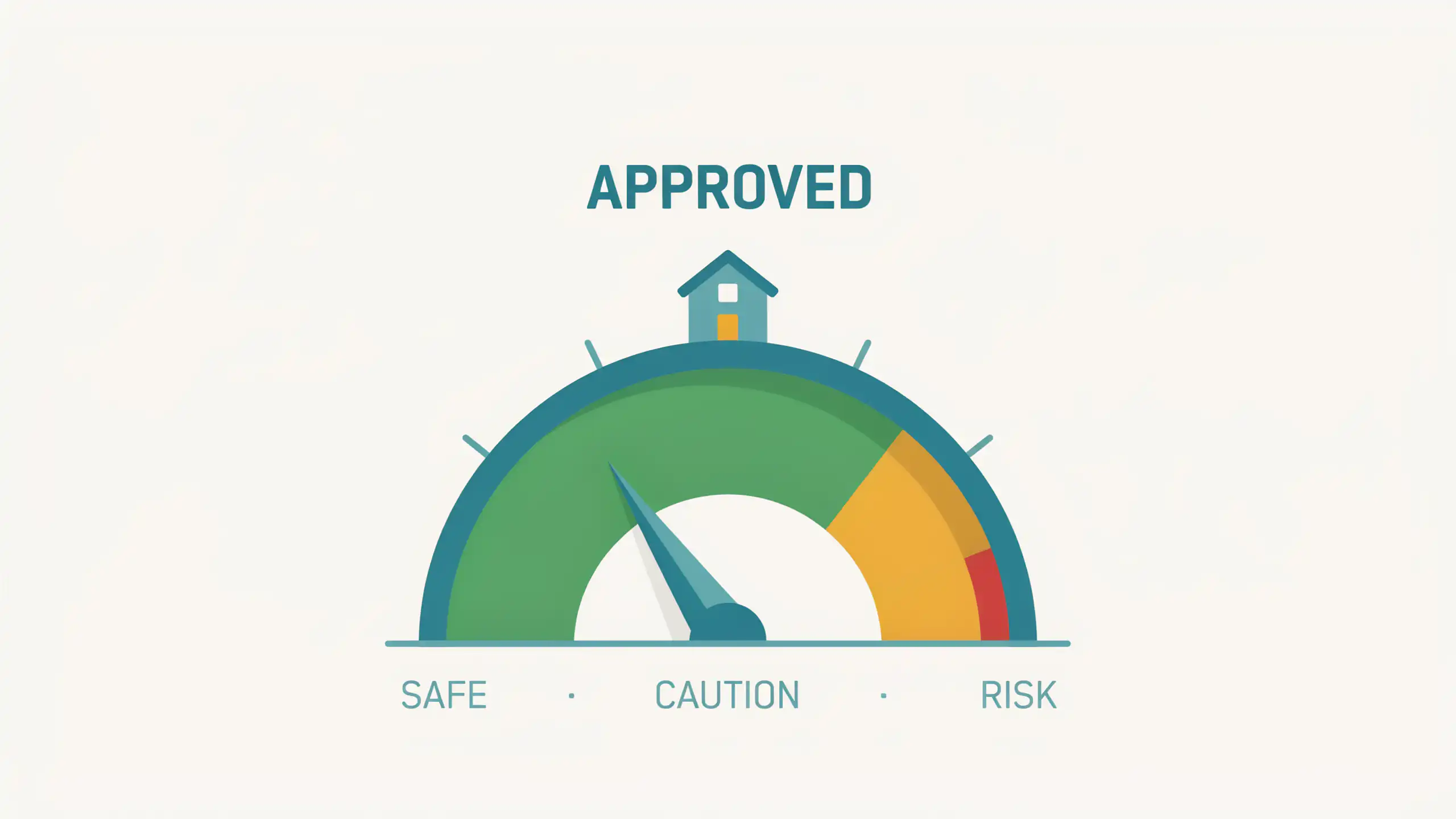
While prospective homebuyers often spend months obsessively monitoring their FICO scores, a more subtle, yet equally critical, metric often flies under the radar until it is too late: the Debt-to-Income (DTI) ratio. Even borrowers with "excellent" credit ratings are frequently turned away by mortgage underwriters for a single, fundamental reason—they have simply run out of "room" in their monthly budget to sustain a new home loan.
In the world of mortgage lending, your credit score measures how you have handled debt in the past, but your DTI ratio measures your current ability to manage additional financial obligations. For those looking to secure the best interest rates and avoid the sting of a loan denial, understanding and optimizing your DTI is not just a suggestion; it is a financial necessity.
The Mechanics of DTI: A Snapshot of Financial Health
At its core, the DTI ratio is a straightforward arithmetic equation used by lenders to assess risk. It represents the percentage of your gross monthly income that goes toward paying your monthly debt obligations.
To calculate your DTI, lenders take your total required monthly debt payments and divide them by your gross monthly income (the amount you earn before taxes and other deductions). The resulting percentage provides a clear indicator of how much of your paycheck is already "spoken for."
What Lenders Count (And What They Ignore)
It is a common misconception that lenders look at your total budget, including groceries, utilities, and lifestyle spending. In reality, underwriters are interested only in contractual, recurring debt. This includes:
- Minimum credit card payments: Even if you pay your balance in full every month, lenders look at the minimum amount required by your credit card issuer.
- Installment loans: This covers car loans, student loans, and personal loans.
- Existing mortgages: If you own other property, that debt is factored in.
- The "New" Mortgage: Lenders will project what your new house payment—including principal, interest, taxes, and insurance (PITI)—will be and add that to your existing obligations.
Notably, your day-to-day living expenses—such as rent (if you are currently renting), electricity bills, internet subscriptions, groceries, and medical expenses—are excluded from the DTI calculation. This distinction is vital: a $600 car payment is a significant liability in the eyes of an underwriter, while a $600 grocery bill is entirely invisible to them.
The Hierarchy of DTI: Thresholds for Approval
Lenders operate within specific ranges to determine risk. While guidelines can vary slightly between conventional, FHA, and VA loans, the industry generally adheres to two critical "lines in the sand."
The "Gold Standard": Under 36%
Borrowers who maintain a DTI of 36% or lower are viewed as low-risk applicants. This tier not only qualifies you for the widest array of loan products but also puts you in the strongest position to negotiate for the lowest possible interest rates. A low DTI signals to the lender that you have significant financial flexibility, making you a preferred candidate in a competitive market.
The "Danger Zone": Approaching 43%
Once your DTI crosses the 43% threshold, the lending landscape shifts dramatically. Approval becomes significantly more difficult. While some specialized loan programs may allow for higher ratios under specific circumstances—such as high cash reserves or significant assets—the average borrower will find their options severely limited. If you are hovering around this mark, you are essentially at the limit of what lenders consider a "sustainable" debt load.
Strategic Optimization: How to Lower Your DTI Quickly
If you are planning to purchase a home within the next 24 months, your DTI should be a primary focus of your financial strategy. Unlike credit history, which takes years of consistent behavior to build, your DTI can often be improved in a matter of months through tactical debt management.
Prioritize Elimination Over Reduction
Many borrowers make the mistake of spreading extra cash across several balances, hoping to lower their interest burden. However, to lower your DTI for a mortgage application, you should focus on eliminating specific accounts entirely.
Because lenders only care about the required monthly payment, reducing the balance on a $20,000 student loan from $19,000 to $18,000 rarely moves the needle on your DTI, as the monthly payment remains identical. Conversely, paying off a credit card with a $90 minimum payment or a personal loan with a $150 monthly installment immediately improves your ratio. By wiping out these smaller, recurring obligations, you free up "capacity" in your monthly income to support a new mortgage payment.
The "Multiplier Effect" of Small Payments
The impact of eliminating small debts is compounding. For a household with a $6,000 gross monthly income, eliminating just $100 in monthly debt payments lowers the DTI by nearly two percentage points. If you can identify and pay off two or three small accounts, you can effectively move yourself from a "difficult" tier into a "preferred" tier, potentially saving thousands of dollars in interest over the life of your mortgage.
Freeze New Borrowing
One of the most common pitfalls for homebuyers is the temptation to finance a new car or purchase furniture on credit shortly before applying for a mortgage. Even if your credit score remains high, the addition of a new monthly car payment can erase a year of progress in your DTI reduction. During the pre-approval phase, it is essential to freeze all non-essential borrowing to ensure your financial profile remains stable.
Implications for the Modern Buyer
The modern housing market is characterized by high home prices and fluctuating interest rates, making the lender’s approval process more rigorous than ever. When you approach a lender with a clean, low-DTI profile, you are not just presenting a set of numbers; you are presenting a "safe" investment.
Avoiding the "House Poor" Trap
Beyond the mechanics of getting approved, maintaining a low DTI is a safeguard against becoming "house poor"—a situation where your mortgage consumes so much of your income that you lack the liquidity to handle emergencies, property repairs, or basic quality-of-life expenses. By proactively managing your DTI, you are doing more than securing a loan; you are ensuring that your future home remains a source of security rather than financial stress.
Expert Guidance: The Pre-Application Audit
Before submitting a formal application, it is highly recommended that you run your own "pre-audit."
- Gather your data: Collect your most recent pay stubs and your last three months of credit card and loan statements.
- Calculate the obligations: Sum up all required minimum payments.
- Project the new payment: Use online calculators to estimate your potential mortgage payment, including property taxes and insurance.
- Perform the math: Divide that sum by your gross monthly income.
If the result is above 40%, you have a clear roadmap: look for the smallest monthly payment obligations you can eliminate, create a payoff plan, and execute it before speaking to a lender.
Final Thoughts: Taking Control
Your credit score may be the headline, but your debt-to-income ratio is the fine print that determines the outcome of your mortgage application. By treating your DTI as a strategic project rather than a static number, you can position yourself as an ideal borrower. In an environment where lenders are increasingly selective, a well-managed DTI is the most effective tool in your arsenal to secure the home of your dreams on the best possible terms.
Editorial & Advertiser Disclosure: The editorial content on this website is not provided, commissioned, reviewed, approved, or otherwise endorsed by any advertiser. Opinions expressed are ours alone, not those of any advertiser. The offers that appear are from companies from which we may receive compensation. However, this compensation does not impact where and how these companies are mentioned on the site. We do not include all companies or all available offers in the marketplace.
 Suro Senen
  Dwi Wanna
  Muslim