
 By Raul Delapena Setiawan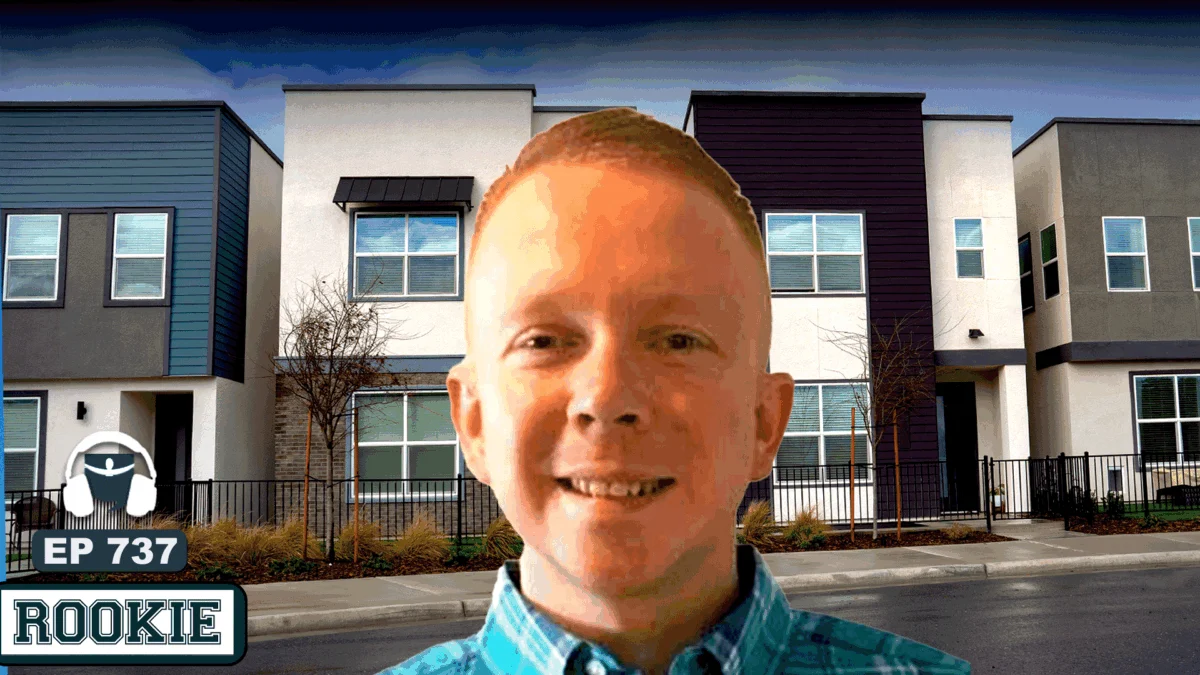
In the high-stakes world of real estate, the narrative often focuses on seasoned moguls or overnight sensations who hit the jackpot in a booming market. However, for most, the path to financial independence is paved with sacrifice, logistical gymnastics, and the sheer necessity of survival. Brent Beard, a Kansas City-based investor and aspiring real estate agent, is not the typical success story—he is the modern-day "Rookie" who proved that when your back is against the wall, the most dangerous thing you can do is stay still.
The Catalyst: A Life-Altering Shift
In late 2023, Brent Beard’s trajectory underwent a seismic change. While he and his wife had successfully navigated their careers—Brent as a tech industry engineering lab lead and his wife in the banking sector—they were accustomed to "skating by." They lived comfortably, yet they lacked the financial cushion necessary to support a rapidly changing family dynamic.
After a grueling, long-term court battle, the couple was awarded custody of their granddaughter. The realization hit home instantly: their existing income structure would no longer suffice. "We could no longer coast on our salaries like we used to," Beard shared during a recent appearance on the Real Estate Rookie podcast. "I needed to figure out what I needed to do to provide more."
This necessity forced a pivot. Beard initially looked toward corporate advancement, finishing his bachelor’s degree to seek a promotion. However, a deep dive into financial literature—specifically Robert Kiyosaki’s Rich Dad Poor Dad—reoriented his focus. He realized that while corporate climbing provided a paycheck, real estate offered an engine for wealth that would outlast his W-2 career.
Chronology of a Rookie Deal
Beard’s journey from novice to property owner occurred at a breakneck speed, even as he juggled his responsibilities as a husband, grandfather, National Guard member, and full-time employee.
- Mid-2025: Beard began seriously investigating real estate, moving from the "education phase" to active analysis.
- July 2025: Following his reading of foundational investment texts, he abandoned his plans for an MBA or additional corporate certifications to focus exclusively on real estate.
- Late 2025: After utilizing the BiggerPockets agent finder and conducting his own rigorous underwriting, Beard closed on his first duplex in Leavenworth, Kansas.
- Post-Closing: Beard immediately navigated the complexities of inheriting a tenant, leasing the second unit, and managing the property remotely while preparing for his dual-state realtor licensing exams.
Supporting Data: The Anatomy of the First Deal
Beard’s first acquisition was a masterclass in pragmatic investing. The property, a duplex in Leavenworth, did not fit his initial "buy box"—which prioritized side-by-side units with garages. However, the raw data indicated a deal that could not be ignored.
Underwriting Strategy
Beard combined his own custom spreadsheets with the industry-standard BiggerPockets calculators. His analysis relied on:
- Market Rent Validation: By consulting with his agent and comparing current lease rates, he set a conservative rent of $1,100 for the vacant unit, despite potential for higher figures.
- Conservative Appreciation: While the market had seen explosive growth in 2020 and 2021, Beard modeled his projections on a modest 3% annual appreciation over the next decade.
- Cash-on-Cash Return: By baking in a 10% property management fee and a 20% reserve for CapEx, vacancy, and maintenance, the deal still yielded an 8% cash-on-cash return.
This "boring" MLS deal, financed with a standard 30-year fixed loan at 6.99%, became the cornerstone of his portfolio.
The Tax Trap: A Lesson in Due Diligence
No investment story is complete without a lesson learned the hard way. For Beard, that lesson came in the form of a property tax bill that nearly doubled overnight.
"It was 100% operator error and a complete oversight on my part," Beard admitted. While he had correctly modeled a 15% year-over-year tax increase based on historical data, he failed to account for the specific tax assessment laws in Kansas. In that jurisdiction, the purchase price effectively resets the market value for tax purposes. Because his purchase price was significantly higher than the previous assessment, he was hit with an 87% tax hike.
While this error did not sink the investment—thanks to his conservative initial underwriting—it serves as a warning for all new investors: Always investigate how your specific state or county calculates property taxes post-transfer. Exemptions held by previous owners (such as veteran or primary residence homestead exemptions) are often stripped away the moment a property is sold to an investor.
Official Perspectives: The Role of the Investor-Agent
Beard’s decision to pursue a real estate license is driven by three strategic goals:
- Agent Speed: Having missed out on several deals due to the lag time between identifying a property and having an agent submit the offer, Beard wants the autonomy to act immediately.
- Financial Efficiency: Representing himself as a buyer’s agent allows him to recoup a portion of the commission, effectively lowering his entry costs.
- Network Expansion: Perhaps the most overlooked benefit of licensing is the access to a "Rolodex" of contractors, lenders, and property managers. As Beard noted, "Even if you don’t want to be an agent, get to know a good one. They are the gatekeepers to the best contractors."
Implications for the "Busy" Investor
The core of Beard’s message is that there is no such thing as a "perfect" time to start. His schedule is a testament to the fact that constraints—family, military service, and a W-2 job—are not excuses to quit, but rather variables to be managed.
The "Small and Mighty" Philosophy
Influenced by the "Small and Mighty" model championed by investor Chad Carson, Beard is not interested in reckless expansion. His 10-year plan involves:
- Slow, Sustainable Growth: Aiming for one high-quality property per year.
- Pruning the Portfolio: Analyzing performance metrics annually to trim underperformers and double down on high-yield assets.
- Leveraging W-2 Security: Utilizing his stable corporate income to remain "bankable" for lenders, while using agent commissions to fund future down payments.
Advice for the Aspiring Rookie
For those currently sitting on the sidelines, waiting for interest rates to drop or the "right" moment to appear, Beard offers a simple directive: Get started.
"If interest rates are at 6%, get in at 6%," he advises. "If rates go down, you refinance. If rates go up, you’re glad you secured the property when you did."
He suggests a "75/25 rule": once an investor has mastered 75% of the fundamental knowledge through podcasts, books, and calculators, the remaining 25% must be learned through hands-on experience. "You have to make those mistakes," he notes. "They make you a better operator."
Conclusion
Brent Beard’s story is a sobering, inspiring reminder that real estate is not merely a get-rich-quick scheme, but a long-term discipline. By choosing to act in the face of uncertainty and personal responsibility, he has transitioned from a man who was "skating by" to a man who is building a generational legacy. Whether it is his upcoming attendance at BPCon or his pursuit of dual-state licensure, Beard’s trajectory proves that for the determined, the barriers to entry are merely speed bumps on the road to financial freedom.
 Dwi Wanna
  Muslim
  Ammar Sabilarrohman