
 By Evan Lee Salim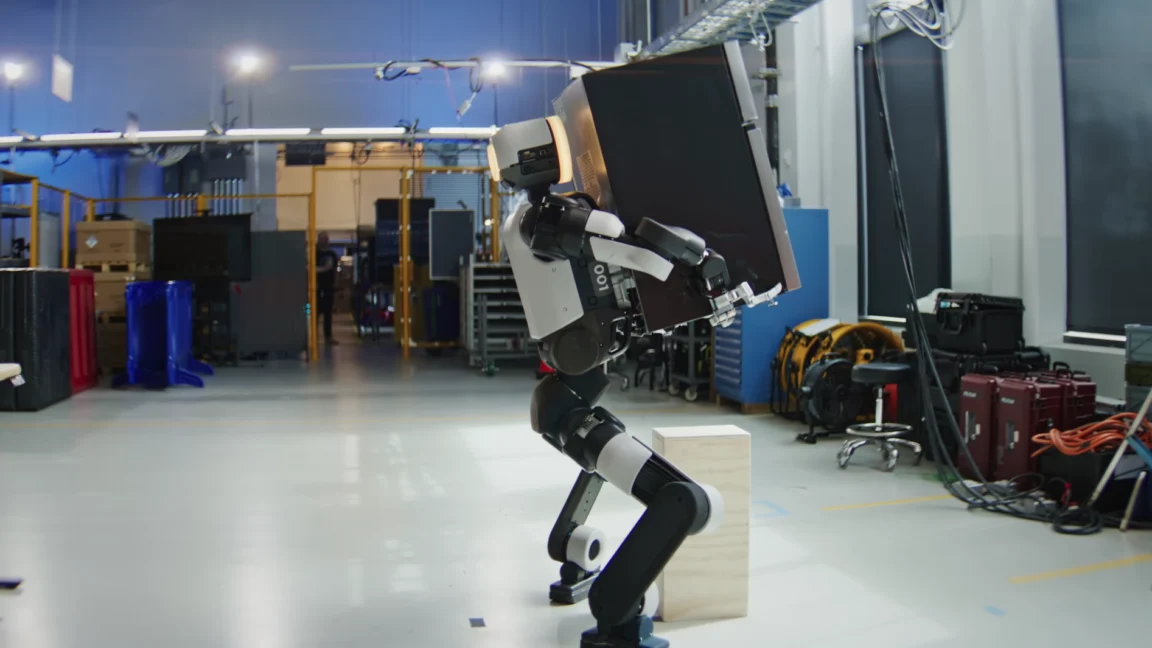
In a move described by analysts as one of the most ambitious industrial pivot strategies in modern history, the South Korean government has officially unveiled a $1 trillion “triple axis” megaproject. This sweeping initiative aims to secure the nation’s dominance in the global artificial intelligence landscape by 2028 through the aggressive expansion of memory chip production, the massive deployment of AI-integrated data centers, and the large-scale commercialization of humanoid robotics.
The announcement, delivered by President Lee Jae Myung during a keynote address on June 29, underscores South Korea’s determination to leverage its existing strength in semiconductors to anchor the future of the global digital economy. However, the plan arrives at a moment of profound societal tension, as labor unions express concern over job displacement and policymakers grapple with the ethical distribution of the immense wealth generated by the AI boom.
The Triple Axis: Core Strategic Pillars
The South Korean government has identified three specific sectors that will serve as the engine for its economic "great leap forward."
1. Memory Chip Super-Cluster
At the heart of the investment lies a $585 billion commitment from industry giants Samsung and SK Hynix. The objective is to construct a series of high-capacity fabrication plants (fabs) across the Seoul capital region and the southwestern provinces. The government’s explicit goal is to double the country’s output of Dynamic Random-Access Memory (DRAM) within five years. This initiative is designed to address the persistent global supply chain bottlenecks that have hampered the production of everything from consumer smartphones to high-end enterprise servers.
2. Large-Scale AI Data Centers
The second pillar involves a $357 billion investment by a coalition including SK Group, GS Group, and Naver. This capital will be funneled into building advanced, energy-efficient AI data centers across several of South Korea’s outlying provinces, including South Chungcheong, Gangwon, and the Jeolla regions. These centers are intended to provide the necessary computing infrastructure to support the training and deployment of large-scale foundation models.
3. Physical AI and Humanoid Robotics
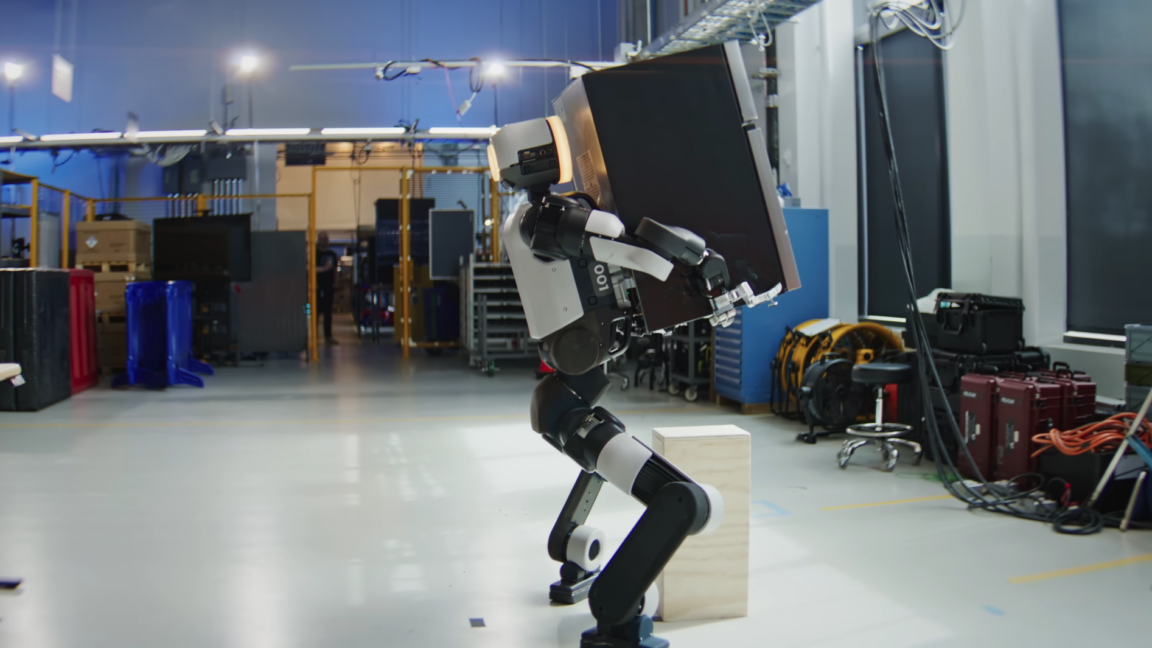
The most transformative, and controversial, aspect of the strategy is the designation of "Physical AI" as a national strategic industry. By focusing on the intersection of AI and robotics—enabling machines to navigate and interact with the physical world autonomously—the government hopes to integrate humanoid workers into ten major domestic industries by 2028. This includes the manufacturing of 30,000 Atlas humanoid robots annually, a project spearheaded by Hyundai Motor Company and its subsidiary, Boston Dynamics.
Chronology of the AI Surge
The path to this $1 trillion commitment has been defined by rapid acceleration in the AI sector:
- 2021: Hyundai Motor Company acquires Boston Dynamics, signaling a long-term interest in integrating advanced robotics into its global manufacturing supply chain.
- 2025 (September): Major AI firms globally increase investments in "world models," shifting the focus from text-based LLMs to systems capable of physical environment understanding.
- 2026 (January): Global RAM shortages expand to GPUs and high-capacity SSDs, leading to significant price inflation in consumer electronics.
- 2026 (May): The South Korean presidential office sparks a national debate by floating the idea of a "national dividend" for citizens, funded by excess tax revenue from AI-driven corporate profits.
- 2026 (June 25): Hyundai Motor’s labor union votes to approve a potential strike, citing concerns over job security and the role of robots in the factory environment.
- 2026 (June 29): President Lee Jae Myung formalizes the $1 trillion investment plan, labeling the three sectors as the nation’s “triple axis.”
Supporting Data and Infrastructure Challenges
While the financial commitment is historic, the feasibility of the plan hinges on addressing severe infrastructural constraints. According to the Ministry of Climate, Energy, and Environment, the new chip fabs and data centers will require a massive influx of resources: 6.3 gigawatts of electricity and 650,000 tons of water for the southwestern fabs alone, with an additional 8 gigawatts required for the data centers.
The government intends to utilize a mix of nuclear, renewable, and fossil fuel sources to meet this demand. However, the ongoing instability in the Strait of Hormuz has left South Korea’s energy sector vulnerable, as the nation relies on natural gas for nearly 25 percent of its power generation. Relying on fossil fuels for AI infrastructure introduces a geopolitical risk that could undermine the project’s long-term sustainability.
Furthermore, industry experts note that speed remains an issue. SK Hynix Chairman Chey Tae-won has pointedly reminded stakeholders that building a cluster of chip manufacturing facilities in the Seoul area took nine years. The timeline of "five years" to double DRAM production and deploy robots at scale is, by industry standards, incredibly aggressive.
Official Responses and Political Friction
The government’s plan has met with mixed reactions. On one hand, the business sector views this as a vital consolidation of power in a market where memory chips are the "new oil." On the other hand, the public remains skeptical of the "trickle-down" benefits of these massive investments.
Labor unions, particularly at Hyundai, argue that the rapid introduction of humanoid robots threatens to hollow out the manufacturing workforce. The union’s recent legal victory in gaining the right to strike highlights a growing rift between the corporate drive for "Physical AI" and the preservation of human labor.

Government officials have attempted to mitigate these tensions by calling for "profit-sharing." The Minister of Labor has urged tech firms to distribute some of their record-breaking earnings to suppliers and employees. While some government aides have floated the idea of a universal dividend, these suggestions remain in the realm of debate rather than policy, reflecting the broader societal struggle to define the social contract in an age of automation.
Implications for the Global Economy
The success or failure of South Korea’s "triple axis" will have global consequences. If successful, the country will not only stabilize the supply of critical components for global tech giants—such as Apple and Valve—but also set the international standard for the integration of robotics into the workplace.
Global Supply Chain Stability
The anticipated increase in DRAM production is a direct attempt to provide relief to global tech companies that have been forced to raise prices due to the memory crunch. If South Korea manages to flood the market with more efficient, higher-capacity chips, it could potentially lower the barrier to entry for AI development worldwide, effectively democratizing access to high-end hardware.
The Rise of Physical AI
South Korea’s focus on "Physical AI" represents a shift in the global AI race. While the US and China have dominated the software-based generative AI space, South Korea’s push to build a "general-purpose foundation model" for robotics aims to capture the hardware-software interface. By creating a standardized model for how robots perceive the world, South Korea hopes to create a "Windows-like" ecosystem for the robotics industry.
Ethical and Labor Considerations
The tension between labor and technology in South Korea serves as a bellwether for the rest of the industrialized world. As companies globally look to "Physical AI" to solve labor shortages and improve factory efficiency, the South Korean experience will provide a roadmap for how nations handle the transition. The conflict between human workers and the impending "robot workforce" is no longer a theoretical exercise—it is a live policy debate.
In conclusion, South Korea’s $1 trillion bet is a high-stakes effort to define the next era of industrial history. By aligning national infrastructure, corporate ambition, and government subsidies, the nation is attempting to build a moat around its technological capabilities. Whether the infrastructure can be built in time, and whether the social fabric can withstand the resulting disruption, remains the central question of the next decade. As President Lee Jae Myung noted, the "great leap forward" is underway, but the success of the journey depends on more than just capital—it depends on the ability of the state to harmonize the needs of the machine with the needs of the people.
 Muslim
  Asro
Asro  Pevita Pearce