
 By Nana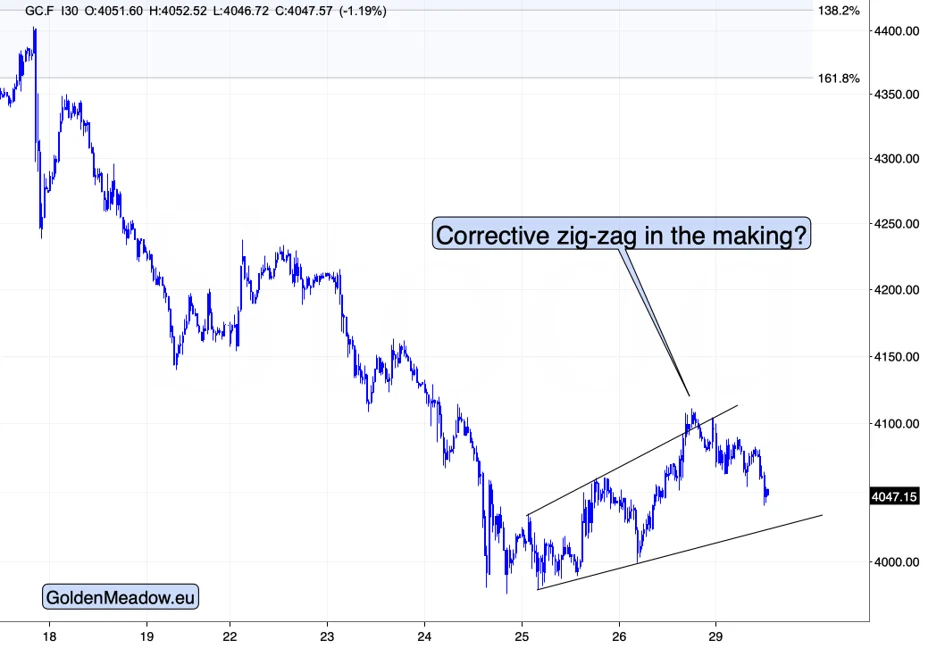
Executive Summary: The Disconnect Between Conflict and Commodities
In the traditional playbook of global finance, the outbreak of hostilities in the Middle East is a reliable catalyst for a "flight to safety," typically driving investors toward the perceived stability of gold. However, the events of this past weekend have shattered that long-standing correlation. Despite heightened tensions between the United States and Iran—marked by direct military strikes, missile attacks on facilities in Kuwait and Bahrain, and renewed threats to shipping lanes through the Strait of Hormuz—the gold market has exhibited a starkly different reaction: it has retreated.
As of Monday morning, gold prices are sliding, even as the U.S. Dollar shows signs of softening. This decoupling serves as a definitive signal that market participants are no longer viewing the metal through the lens of a safe-haven asset. Instead, the precious metals sector is being dictated by the "rate channel"—the interplay between inflation expectations, Federal Reserve policy, and the resulting strength of the greenback.
Chronology: A Weekend of Escalation and Market Indifference
Friday: The False Bottom
Heading into the weekend, gold had experienced a brief, two-day corrective bounce. Technical analysts had hoped this might signal a bottom after a sustained period of selling. However, this momentum proved to be merely a "breather"—a temporary respite for an oversold asset rather than a structural reversal. By the close of trading, it was evident that the relief rally was superficial.
Saturday and Sunday: The Geopolitical Flare-up
The weekend headlines were dominated by a significant escalation in the Gulf. The exchange of strikes between U.S. forces and Iranian assets represented a tangible shift from proxy conflicts to direct confrontation. The shelling of American facilities in Kuwait and Bahrain, combined with the renewed obstruction of critical maritime trade routes, created the exact conditions historically required to ignite a rally in precious metals.
Monday: The Market Verdict
As markets opened, the anticipated "gap up" in gold prices never materialized. Instead, the metal rolled over, pulling mining stocks down with it. The price drop, currently exceeding $50 from recent highs, confirms that the market is prioritizing macroeconomic fundamentals—specifically the Fed’s interest rate trajectory—over geopolitical risk premiums.
Supporting Data: The Rate Channel Thesis
The fundamental argument for gold’s decline lies in how conflict affects the broader economic machine. A spike in regional tensions in the Middle East inherently raises the specter of oil supply disruptions. Higher oil prices act as an inflationary pressure, forcing central banks—specifically the Federal Reserve—to maintain a hawkish stance on interest rates.

The Fed’s Hawkish Stance
The Federal Reserve has made its position abundantly clear: combating inflation is the primary mandate, even if it comes at the expense of short-term economic cooling. With headline inflation recently printing at 4.1%, the Fed has adjusted its inflation projections upward. Current market pricing suggests a high probability of three interest rate hikes this year, with September and December meetings identified as key pivot points.
The Dollar Index (DXY) and the "Breather"
The U.S. Dollar Index (DXY) has been undergoing a technical consolidation—a "post-breakout breather." Unlike previous instances in May and August of 2025, where the dollar saw sharp, rapid declines, the current dip is shallow and controlled. This indicates that the broader uptrend in the dollar remains intact. Because gold is priced in dollars, a structurally strong currency environment creates a consistent headwind that prevents gold from gaining sustainable traction, even on days when the dollar softens slightly.
Commodity Performance: The Oil Muted Response
Crucially, even crude oil prices have failed to trigger a panic, hovering near $70 per barrel. With strategic reserves released and tanker traffic finding alternative, albeit strained, paths, the market has not been gripped by an "inflation scare." The lack of a strong bid in oil suggests that the market believes it is well-supplied, further removing a pillar of support for gold prices.
Official Responses and Diplomatic Developments
The situation remains fluid. On Monday, both Tehran and Washington signaled a willingness to de-escalate, with representatives scheduled to meet in Doha for technical discussions regarding the security of the Strait of Hormuz.
However, diplomats remain cautious. The underlying tensions—including the continued presence of Israeli forces in southern Lebanon and Iranian demands regarding transit tolls—remain unresolved. Despite these fragile diplomatic efforts, the lesson from this past weekend is clear: investors should not expect a safe-haven rally even if the conflict flares up again. The market has proven that it is now "immunized" to the shock value of these headlines, choosing to focus instead on the reality of the interest rate environment.
Implications: The Path Ahead
1. The End of the "Safe-Haven" Narrative
The primary implication of recent trading is that the gold-as-a-hedge-against-war narrative is broken. Gold is currently acting as a high-beta play on the Fed’s interest rate policy. As long as the Fed maintains a restrictive posture to combat inflation, gold will likely remain under pressure.

2. Technical Outlook: The Downtrend Resumes
With the brief corrective bounce exhausted, the market is reverting to the larger downward trend. Gold is currently tracking for its fourth consecutive monthly loss. Technical indicators show that the price decline is persisting despite a weakening dollar, which is a bearish divergence. This suggests that the next major leg down is already in motion, obscured only by the momentary hesitation of the U.S. Dollar.
3. The Jobs Report: A Critical Variable
The upcoming jobs report stands as the only major economic release capable of interrupting the current downward trajectory.
- A Firm Number: If the report shows strong labor market participation and wage growth, it will reinforce the case for further rate hikes, cementing the current bearish outlook for gold.
- A Soft Number: Should the report miss expectations, it may provide the impetus for a short-term bounce. However, based on recent market behavior, this should be viewed as another "corrective" event rather than a fundamental change in trend.
4. Broad Market Resilience
It is worth noting that the stock market has remained resilient throughout this period of geopolitical instability. This indicates that the decline in gold and silver is not a result of a broad "risk-off" environment where investors are liquidating everything to move into cash. Instead, it is a specific, sector-driven weakness in the metals market.
Final Assessment
The "war trade" has officially failed. By examining the data, it is evident that the market is looking past the headlines and focusing on the inescapable reality of the Fed’s interest rate path. Investors who were waiting for geopolitical volatility to provide a floor for gold prices may need to recalibrate their expectations. The trend is firmly to the downside, the dollar remains the dominant force, and the path of least resistance for precious metals is lower. Until there is a fundamental shift in the Fed’s inflation mandate or a significant structural change in the interest rate outlook, the metal is likely to continue its descent, ignoring the geopolitical noise in favor of the macroeconomic reality.
 Nana Muazin
  Reynand Wu
  Asro
Asro 