
 By Nana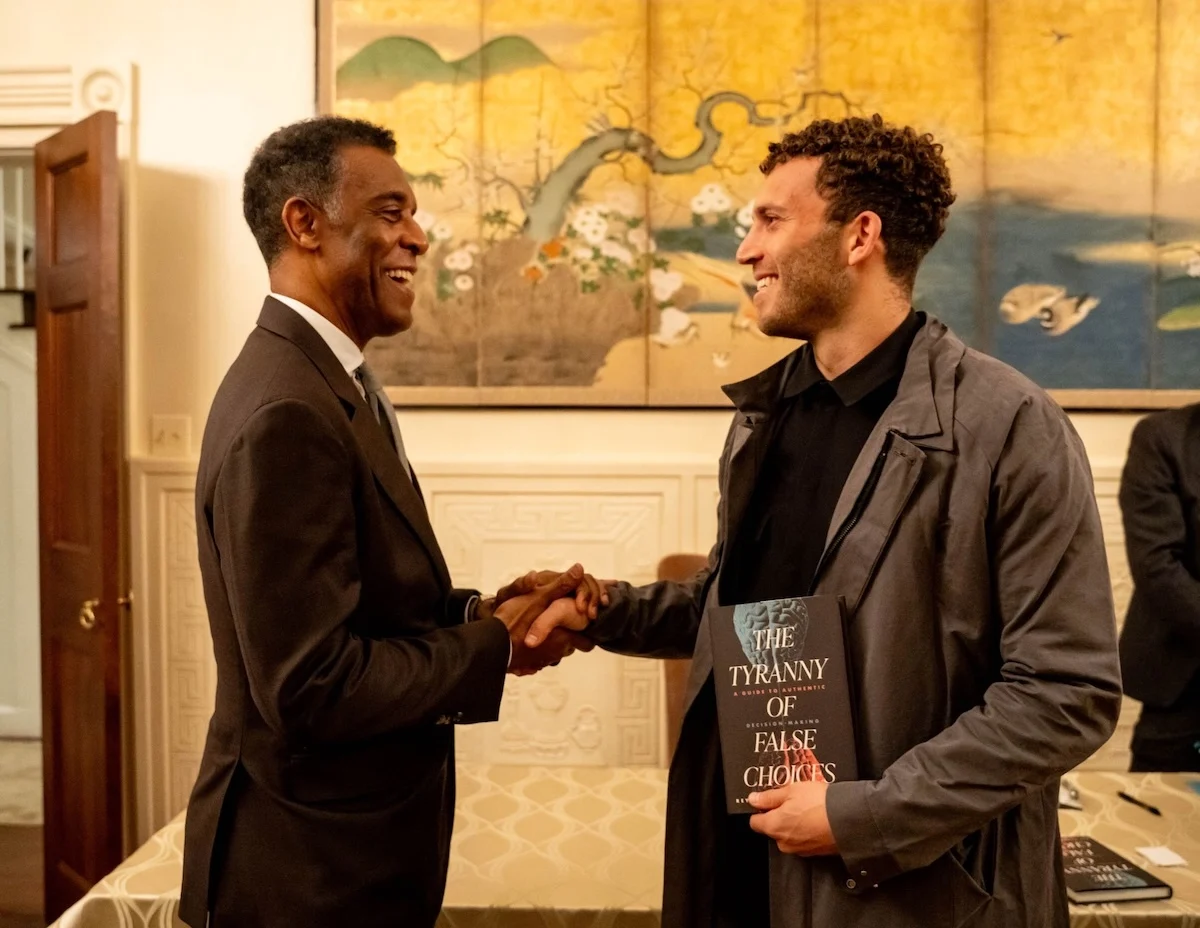
As the global financial landscape shifts, the definition of fiduciary duty is being rewritten by a new generation of "Agents of Impact." From the boardroom of the Nathan Cummings Foundation to the laboratories of London’s deep-tech sector, a common thread has emerged: the rejection of the "either/or" paradigm in favor of integrated, authentic decision-making. In this week’s comprehensive briefing, we explore how leadership, technological innovation, and data-driven modeling are converging to redefine the potential of capital.
I. Main Facts: The New Frontier of Conscious Capital
The current impact landscape is defined by three major pillars: the philosophical evolution of philanthropic leadership, the scaling of deep-tech solutions for climate change, and the formalization of impact-first investment strategies.
Rey Ramsey, president of the $483 million Nathan Cummings Foundation, has emerged as a central voice in this transition. His latest work, The Tyranny of False Choices, challenges the binary thinking that has long dominated institutional asset management. According to Ramsey, the industry’s reliance on rigid, agenda-laden frameworks often limits the efficacy of capital. By advocating for "authentic decision-making"—a process that involves stripping away algorithmic biases and conventional wisdom—Ramsey is steering the foundation toward a more fluid, justice-oriented deployment of assets.
Simultaneously, the "dealflow" of the week highlights a critical shift in how we approach the energy transition. London-based Gaussion has secured $28 million to push the boundaries of lithium-ion battery performance, while the industrial conglomerate SKF Group is leveraging its venture arm to tackle the circular economy, specifically targeting the hazardous waste streams of the steel industry. These investments represent a move away from passive ESG screening and toward active, technical problem-solving.
II. Chronology: A Week of Strategic Milestones
- June 23–25, 2026: The University of Chicago’s Booth School of Business and the Social Finance Institute unveil their collaborative "Impact-First Finance Tool" (IFI). The tool is designed to move the industry from qualitative "guesswork" to quantitative "economic scenario modeling."
- June 26, 2026: Gaussion announces a successful £21 million ($28 million) funding round led by AlbionVC and BGF. This capital injection is earmarked for scaling their proprietary magnetic technology, which promises to overcome the "physics ceiling" of current battery charging times.
- June 27, 2026: SKF Ventures announces its inaugural investment in Anferra, a startup focused on recycling steel-grinding sludge. The move marks a pivot for the century-old industrial giant as it seeks to integrate sustainability into its core supply chain.
- June 29, 2026: In an interview with David Bank on the Agents of Impact podcast, Rey Ramsey outlines the necessary evolution of foundation governance, arguing that rigorous due diligence is the best defense against current political pressures facing the sector.
- June 30, 2026: The sector concludes the week with a flurry of talent shifts, including key appointments at Enterprise Community Partners, Pymwymic, and GLIN Impact, signaling a tightening of the talent market for mission-aligned roles.
III. Supporting Data: Quantifying the Impact-First Model
The IFI tool, developed by the University of Chicago and Social Finance, provides a compelling mathematical argument for impact-first strategies. By allowing institutional investors to simulate portfolio allocations, the tool demonstrates that impact-first investing is not a binary trade-off between returns and social good, but rather a variable-based optimization problem.
Consider a hypothetical endowment of $100 million. Under traditional mandates, a foundation might split its assets between standard market-rate investments and a small pool of "socially conscious" grants. The IFI model shows that shifting as little as 10% of that endowment into impact-first investments can yield significantly higher social dividends without necessarily destabilizing the financial horizon.
In the realm of energy, the data is equally compelling. Gaussion’s technology addresses a critical bottleneck in the transition to renewables: the life cycle of storage. By extending battery life and improving charge speed, Gaussion’s tech addresses a $28 million market segment that is effectively a "force multiplier" for AI data centers, satellite operations, and long-range electric transport.
IV. Official Responses: The Philosophy of "Doing the Right Thing"
The rhetoric from institutional leaders suggests a growing confidence in the face of external scrutiny. When asked about the political climate surrounding philanthropic organizations—particularly those with mandates for racial, economic, and environmental justice—Rey Ramsey was emphatic:
"Let’s continue to do the right thing. If we’re doing proper diligence and analysis with our work, why would we have anything to be worried about?"
Ramsey’s stance is echoed by the industrial sector. Mikael Krook of SKF Ventures, commenting on the firm’s investment in Anferra, framed the move not as a charity project, but as a strategic necessity:
"Grinding sludge is one of the toughest recycling challenges in the steel and bearing industry. Anferra’s approach represents a way forward and positions us well to drive circularity and decarbonization."
This shift in tone—from defensive posturing to aggressive problem-solving—marks a maturation of the impact investing space. The goal is no longer to simply "mitigate harm" but to capture value in the transition to a more sustainable, equitable economy.
V. Implications: The Path Toward Liberated Thought
The cumulative effect of these developments points toward a fundamental restructuring of the "impact" sector. We are witnessing the end of the era where impact was a distinct asset class, managed by a separate team with its own set of rules. Instead, the future of capital is becoming "impact-integrated."
The Governance of AI and Algorithms
As Ramsey suggests, the primary hurdle to authentic leadership is the "tyranny of false choices." In the age of AI, this is literal: algorithms are trained on historical data that is inherently biased toward the status quo. For foundations and investors alike, the challenge is to use tools like the IFI simulator to break these feedback loops. By "liberating thought," as Ramsey puts it, institutions can avoid the trap of selecting only those solutions that fit within existing, flawed frameworks.
The Technical Edge
The investments in Gaussion and Anferra underscore that the most significant "impact" opportunities are often found in the "boring" corners of the economy—batteries, grinding sludge, and industrial waste. These are the physical realities that underpin our digital world. Investors who can bridge the gap between deep-tech innovation and scalable capital will likely dominate the coming decade.
The Talent Gap
Finally, the "Follow the Talent" movement is a leading indicator of where the industry is headed. The movement of high-level professionals from traditional finance houses (like McKinsey & Co.) and family offices into impact-focused roles suggests that the "impact sector" is no longer a peripheral career path. It is the new center of gravity for institutional finance.
As we look toward the second half of 2026, the mandate for the investment community is clear: move beyond the "either/or" constraints of the past. Whether it is through the rigorous, data-backed simulation of portfolio outcomes or the bold backing of deep-tech solutions that defy the current physics of our industrial base, the path forward requires a synthesis of analytical rigor and moral clarity.
For the Agents of Impact, the task is no longer to ask whether they can afford to prioritize purpose, but to realize they cannot afford not to. The "tyranny of false choices" is being dismantled, one investment at a time, replaced by a new, more authentic logic of global development.
June 30, 2026 — Briefing concluded.
 Neng Nana
  Nana Wu
  Nila Kartika Wati