
 By Nana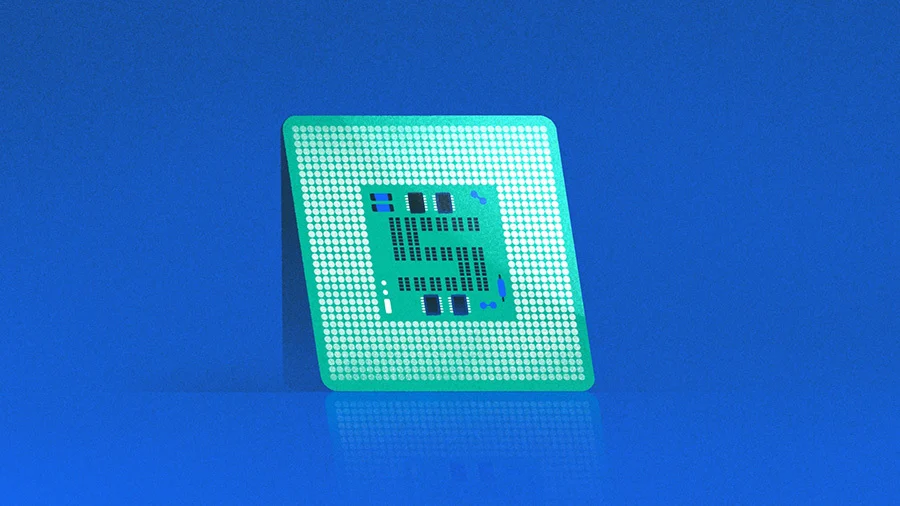
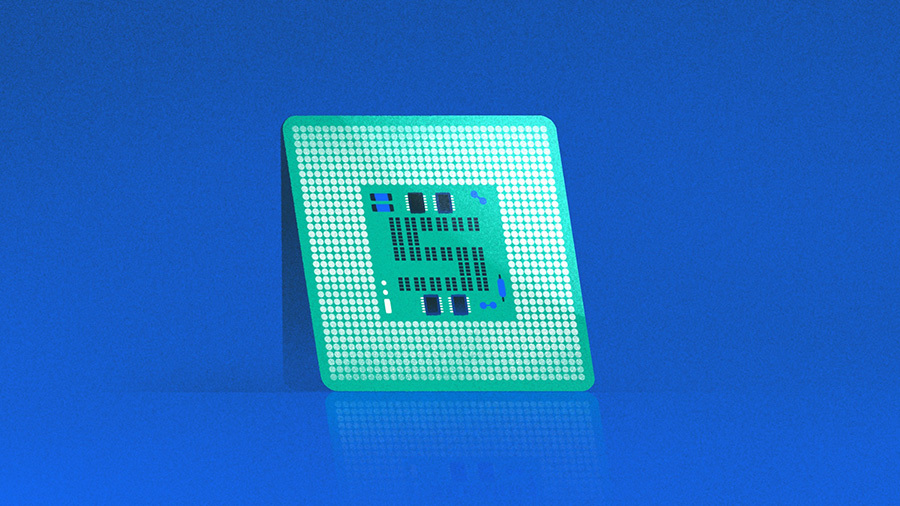
The artificial intelligence landscape is undergoing a tectonic shift. As the industry moves from the initial "wow" factor of generative models toward the gritty, capital-intensive reality of mass-market deployment, a new hierarchy is emerging. Last week’s major market movements—Qualcomm’s acquisition of software startup Modular and the reported $800 million funding round for chipmaker SambaNova—have signaled that the center of gravity in AI is moving away from raw silicon scarcity and toward the software layers that make heterogeneous computing possible.
For venture capitalists like Dave Munichiello, a managing partner at GV (Google Ventures), these developments are not mere headlines; they are the validation of a thesis he has been building for nearly a decade. As hardware remains expensive and difficult to source, the software that orchestrates these chips is becoming arguably more valuable than the transistors themselves.
The Strategic Realignment: Qualcomm and Modular
The acquisition of Palo Alto-based Modular by Qualcomm is a clear signal that the "walled garden" era of AI hardware is reaching its limits. Modular, a software startup focused on unifying the fragmented AI stack, has become a prized asset for chipmakers struggling to keep their hardware relevant in a world dominated by Nvidia’s ubiquitous GPUs.
For Qualcomm, which holds a unique position with its presence in CPUs, GPUs, and AI-specific accelerators, the acquisition is about control and interoperability. By integrating Modular’s technology, Qualcomm aims to provide a seamless software layer that allows developers to run models across diverse compute environments. This is a direct response to the industry’s pivot toward "disaggregated inference"—the practice of splitting AI tasks across multiple specialized chips to maximize efficiency and reduce costs.
A Chronology of Infrastructure Maturity
To understand why these deals are happening now, one must look at the evolution of the AI infrastructure market. The journey from niche research to enterprise-grade compute has been rapid.
- 2016–2017: The Foundations. GV began its deep dive into AI infrastructure, starting with investments in Lattice Data (acquired by Apple) and Determined AI (acquired by HPE). During this period, the focus was on data preparation and machine learning workflows.
- 2017: The Semiconductor Bet. In December 2017, GV led the Series A round for SambaNova, then just a three-person team with a slide deck. This investment—$15 million at a $480 million valuation—marked a pivot toward rethinking the architecture of AI chips from the ground up.
- 2023–2024: The Efficiency Era. As demand for inference exploded, the industry hit a wall of cost and scarcity. Companies realized that relying solely on high-end GPUs for every task was unsustainable. This led to the current phase of optimization, where firms are aggressively searching for ways to use cheaper CPUs alongside high-performance accelerators.
- 2024: The Consolidation Wave. With the recent Qualcomm-Modular deal and SambaNova’s massive $800 million funding round led by General Atlantic, the market is entering a phase of rapid consolidation. Large tech giants, hyperscalers, and specialized hardware firms are now moving to secure the software "glue" that will hold their heterogeneous systems together.
Supporting Data: The Cost of Compute
The urgency behind these investments is driven by the brutal economics of AI deployment. Currently, the industry is grappling with a severe hardware deficit. The demand for inference—the process of running a trained model to generate answers—is everywhere, from legal and medical diagnostics to customer support and real-time coding assistants.
Munichiello points to a stark reality: "We can’t make semiconductors fast enough." This scarcity has created a market where efficiency is the primary metric of success. The "disaggregated inference" model—using a CPU for simple tasks, a specialized chip for specific processes, and a high-end GPU for the most complex computations—is the industry’s attempt to lower the Total Cost of Ownership (TCO).
Furthermore, the rise of open-source models is shifting the economic landscape. As open-source alternatives become more capable, enterprises are increasingly looking to own their models and run them on their own hardware, rather than paying exorbitant fees to model providers. This trend further increases the demand for sophisticated software layers that can manage these internal, diverse compute environments.
Perspectives from the Frontline: An Interview with Dave Munichiello
In an exclusive discussion, Dave Munichiello provided insight into the mechanics of these shifts. A former U.S. military captain and paratrooper, Munichiello brings a pragmatic, operational approach to venture capital. His background at Kiva Systems, which was acquired by Amazon for $775 million, informs his focus on core software infrastructure and developer tools.
On the Shift Toward Software Layers
"The types of hardware required for AI in the future are becoming heterogeneous," Munichiello explains. "Originally, it looked like it was just GPUs from Nvidia, and then AMD. But now, the direction is toward disaggregated inference. If you’re a player like Qualcomm, you have CPUs, GPUs, and AI chips; you need a software layer that sits across all of them. Historically, there hasn’t been a solution that works seamlessly across all three."
On the Myth of the "Exit-Only" Startup
When asked if the current wave of consolidation means the end of independent AI startups, Munichiello is emphatic: "There is definitely a path to an independent IPO." He points to Cerebras as a gold-standard example. "There is absolutely a trajectory to build big, standalone businesses because the demand for compute is completely off the charts. We are in the efficiency step right now."
On Separating Hype from Reality
With valuations often disconnected from business outcomes, Munichiello emphasizes that true value comes from "quarter-over-quarter execution." He looks for companies that are fielding physical systems into production environments—data centers for major enterprise brands—rather than those relying on momentum-based valuations.
"A hundred million dollars goes a lot further in software because you can pivot," Munichiello notes. "In hardware, if you tape out a chip and it doesn’t work, you are set back for years. It’s binary. That’s why we look for exceptional people with the character to survive those ‘crucible moments’—when the tech doesn’t work or the market shifts."
Implications for the Future of AI
The current trends suggest three major implications for the future of the technology industry:
1. The Death of the "One-Size-Fits-All" Chip
The dominance of the general-purpose GPU is being challenged by the need for specialization. As AI tasks become more varied, the ecosystem is trending toward a mix of chips. Companies that can provide a software layer to manage this mix will become the new "kingmakers" of the AI stack.
2. A New Wave of IPOs
Despite the current consolidation, the market is primed for a series of IPOs. As startups move from the R&D phase to full-scale production, the next six months are expected to be a busy period for public listings. The "Neo-Clouds"—newly built data centers specifically for inference—are providing the customer base necessary to support these massive public entities.
3. The Democratization of Inference
As open-source models gain traction and software becomes more efficient, the barrier to entry for enterprises will drop. Companies will no longer be forced to rely on a few hyperscalers for their compute needs. This will likely trigger a massive secondary boom in localized, enterprise-specific AI applications, further driving the demand for specialized, low-cost hardware configurations.
Conclusion
The acquisition of Modular and the continued funding of hardware innovators like SambaNova are not just isolated financial events; they are markers of an industry maturing. The era of "AI at any cost" is fading, replaced by a more disciplined, engineering-focused era of "AI at scale."
For investors like Munichiello, the strategy remains consistent: back the builders who are solving the most fundamental bottlenecks in the system. As the market continues to demand more efficiency, the companies that provide the software to bridge the gap between silicon and application will find themselves at the very center of the AI revolution. The road ahead will be paved by those who can successfully navigate the "crucible moments" of hardware development, proving that while chips may be the fuel, software is the engine that drives the industry forward.
 Siti Muinah
  Dwi Wanna
  Jia Lissa