
 By Laily UPN
July 1, 2026
The landscape of impact investing is undergoing a profound shift, moving away from niche, thematic silos toward a more integrated, data-driven architecture. As institutional capital deepens its commitment to systemic change, the friction once associated with finding alignment between Limited Partners (LPs) and General Partners (GPs) is beginning to dissolve. This week’s dispatch explores the intersection of healthy aging, the greening of Europe’s agricultural heartlands, and the evolution of retirement-focused impact capital.
The New Frontier: Valuing Aging as a Market Asset
For decades, the concept of "aging" was treated by the private sector primarily as a social burden or a healthcare cost. However, a seismic shift is underway, driven by the Next50 Foundation. The Denver-based organization, managing $285 million in assets, is spearheading a strategic pivot: viewing the aging population not as a demographic to accommodate, but as a robust, under-served market.
Chronology of a Strategy Shift
Next50’s journey began with an intensive audit of its publicly listed equities. By analyzing the intersection of energy, housing, and infrastructure, the foundation realized that many companies were already delivering solutions for older adults without explicitly labeling them as such. This discovery triggered a comprehensive rotation of their private equity portfolio.
In a move announced exclusively to ImpactAlpha, Next50 has invested in Enable Ventures, a firm that has historically focused on disability solutions. The rationale is as profound as it is simple: disability and aging are inextricably linked, and the technologies designed to empower one often provide the essential infrastructure for the other.
The Economic Implications
"Aging and disability are deeply intertwined, yet the market has ignored both," says Peter Kaldes of Next50. "We are betting on a generation of technologies that will let older adults live, work, and participate on their own terms."
This thesis suggests that the "Longevity Economy" is poised for a breakout. By building for accessibility, companies can achieve higher adoption rates across broader demographics, effectively scaling their impact. Next50’s strategy serves as a blueprint for other foundations: identifying high-impact sectors where economic well-being, social inclusion, and the built environment converge.
Dealflow: Private Credit as a Catalyst for Green Agriculture
As the global food supply chain faces the dual threats of climate change and systemic under-capitalization, private credit is emerging as a critical bridge. Nowhere is this more apparent than in Europe, where small and mid-sized agriculture businesses are facing a financing shortfall of over €60 billion.

The InSoil Intervention
Lithuanian climate finance company InSoil has secured a €120 million ($138 million) credit facility from UK-based Pollen Street Capital. This deal represents one of the largest private credit commitments to sustainable agriculture in European history.
Laimonas Noreika of InSoil notes that the transition to green farming is no longer a choice but an operational necessity. "We cannot proceed as we did for the last 20 years," Noreika asserts. "The farmers know it, and they are ready for a change. What they need is finance, knowledge, and derisking." By providing the necessary liquidity, private credit providers are effectively acting as shock absorbers for the transition to regenerative agriculture.
Scaling Through Institutional Partnership
In a parallel development, Toronto-based InvestEco has finalized its fourth and largest sustainable food fund, securing C$106 million ($74.6 million). The success of this fund underscores the growing role of "wholesale" impact capital. Backed by federal entities like Canada’s Social Finance Fund, Farm Credit Canada, and the Business Development Bank of Canada, InvestEco’s success demonstrates how public-private partnerships can crowd in private capital to support the sustainable food transition.
Diversifying the Asset Manager Pipeline
A central challenge in impact investing remains the concentration of capital within traditional networks. The British Business Bank is addressing this head-on with its £400 million ($529.3 million) Investor Pathways Capital initiative.
Breaking the Barriers
The initiative recently deployed its first £90 million to 10 early-stage and impact funds. By providing foundational capital to female-led and racially diverse fund managers, the Bank is lowering the barrier to entry. Among the recipients are Future Impact Ventures, which targets low-carbon technologies, and the Mustard Seed Fund, which focuses on the societal impacts of artificial intelligence.
These managers are tasked with raising between £10 million and £20 million each. By seeding these funds, the British Business Bank is not only promoting diversity but is also actively building a more resilient, multifaceted investment ecosystem capable of identifying risks and opportunities that traditional firms might overlook.
Supporting Data: The Rise of the Ownership Economy
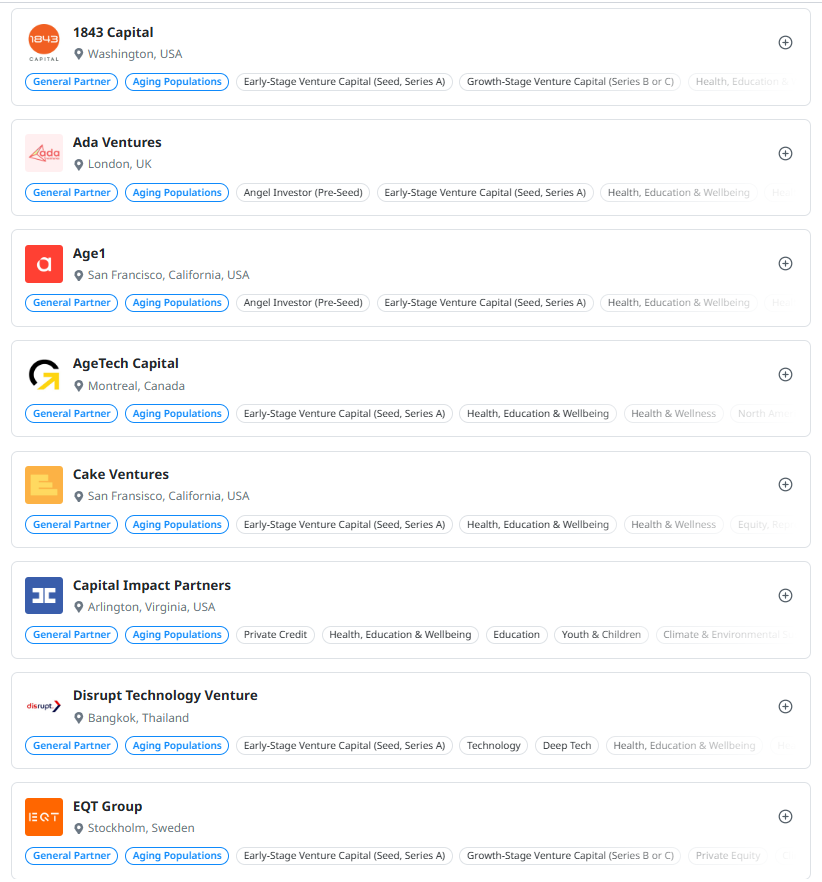
Data-driven intelligence is becoming the bedrock of the sector. ImpactAlpha’s own platform, ImpactAlpha Edge, currently maps over 3,370 allocations from more than 1,450 LPs and 1,490 GPs. This visibility is essential for the "Ownership Economy," where the focus is on home, employee, and community ownership.
Our current data shows more than 140 GPs actively raising funds in this space. This surge in activity proves that transparency reduces friction. When investors can see where capital is flowing, they are more likely to participate, creating a virtuous cycle of liquidity and innovation.
Corporate Stewardship: Aligning Retirement with Values
Impact is not just an external investment strategy; it is also an internal commitment. ImpactAlpha has spent the last two years working with Carbon Collective to manage its 401(k) program.
The Philosophy of Values-Aligned Retirement
The mission of Carbon Collective is to ensure that retirement funds reflect long-term climate realities. By offering employees a range of philosophies—from pure climate-focused options to broad ESG and passive low-fee strategies—firms can ensure their staff’s financial security aligns with their ethical convictions.
"Carbon Collective has helped us offer employees investment choices that align with their values and financial goals, while making retirement planning more accessible and engaging," says ImpactAlpha’s Zuleyma Bebell. This approach highlights a growing trend: employees are increasingly demanding that their employers treat retirement accounts as vehicles for positive impact, rather than mere financial instruments.
Agents of Impact: Follow the Talent
The movement is only as strong as the people leading it. This week, we track significant leadership transitions across the institutional landscape:
- Rockefeller Brothers Fund: Ian Solomon, currently dean of the Frank Batten School of Leadership and Public Policy at the University of Virginia, will step in as the eighth president and CEO, succeeding the retiring Stephen Heintz.
- VanEck: After a two-decade tenure, Jon Lukomnik is stepping down from his roles on the firm’s US and European fund boards.
Career Opportunities
The appetite for talent in mission-driven organizations remains high. Current openings include:
- Acumen: Seeking a senior associate of institutional partnerships in New York.
- The Nature Conservancy: Hiring an associate director of agriculture finance in Arlington, Va.
- The Ford Foundation: Searching for a program associate for mission investments.
- CPP Investments: Seeking an associate for their sustainable energy team.
- Yale University: Looking for a communications associate for its Economic Growth Center.
Implications: The Road Ahead
The events of this week highlight a fundamental shift: the maturation of impact investing from an aspirational goal to a structural requirement.
- The Integration of "Aging" into ESG: By reframing aging as a market opportunity, investors like Next50 are expanding the scope of what constitutes an "impact" asset class.
- Private Credit as a Climate Tool: The success of InSoil and Pollen Street demonstrates that private credit is the most efficient vehicle for funding the transition of real-economy assets like agriculture.
- The Democratization of Fund Management: Initiatives like the British Business Bank’s Investor Pathways show that the future of finance depends on diversifying the decision-makers who control the capital.
As these trends converge, the role of intelligence platforms like ImpactAlpha Edge becomes paramount. By mapping the ecosystem, we provide the clarity required to move capital faster, with more precision, and toward the systemic solutions the world demands.
The friction of discovery is falling. The opportunity to scale impact has never been greater.
 Nana
Nana  Lina Irawan