
 By Dwi Wanna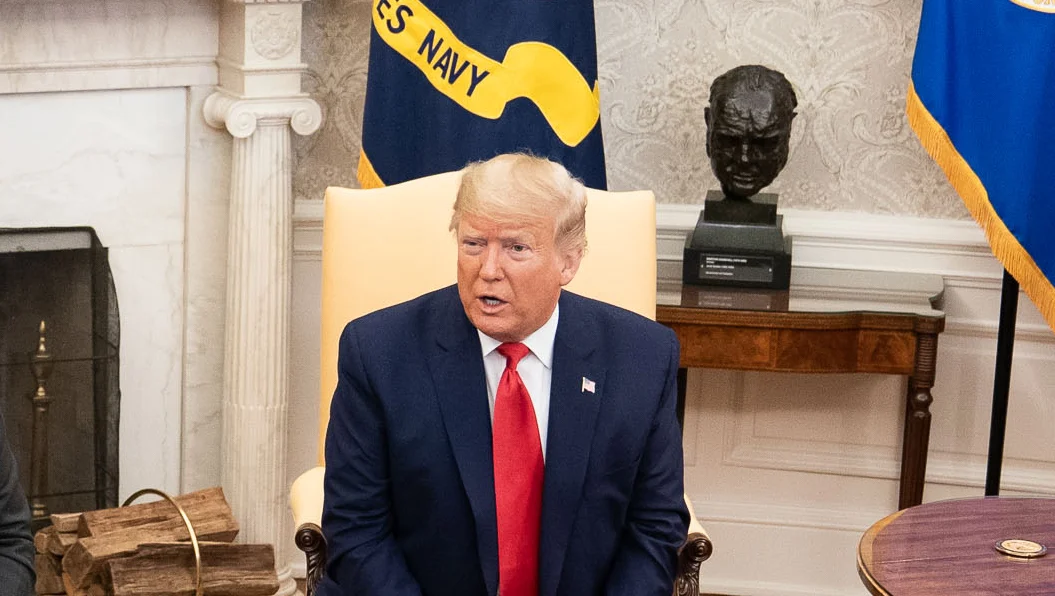
As the calendar turns toward July 1, 2026, the architects of North American trade policy are bracing for a watershed moment. On this date, the United States, Canada, and Mexico reach the inaugural "review deadline" of the United States-Mexico-Canada Agreement (USMCA). While the agreement, which replaced the long-standing NAFTA in 2020, was designed to modernize commerce across the continent, its future is currently shrouded in geopolitical friction and protectionist rhetoric.
With President Trump signaling a profound skepticism toward the agreement’s current structure, the North American economic landscape faces a period of heightened uncertainty. This review is not merely a bureaucratic check-in; it is a fundamental test of whether the three nations can maintain a cohesive integrated market or if they are destined to drift toward a fragmented, tariff-heavy future.
The Core of the Agreement: A Modernized Framework
The USMCA was initially hailed as a landmark achievement, moving beyond the zero-tariff framework established by its predecessor, NAFTA. By addressing the complexities of the 21st-century economy, the agreement codified vital protections for digital services, e-commerce, and intellectual property. Crucially, it established the free movement of data across borders—a necessity for modern supply chains—and prohibited discriminatory measures such as forced localization of computing facilities or tariffs on digital products.
Beyond the digital frontier, the USMCA implemented significant structural changes:
- Investor-State Dispute Settlement (ISDS): The agreement scaled back the mechanism that previously allowed private investors to sue sovereign governments in international tribunals, reflecting a shift in how countries manage domestic regulatory autonomy.
- Automotive Rules of Origin (ROOs): The pact tightened requirements for automobiles, aiming to incentivize North American production, though critics argue these requirements have simultaneously driven up costs for domestic manufacturers.
- Labor Standards: Mexico committed to strengthening collective bargaining rights, a provision designed to level the playing field and discourage the outsourcing of labor to lower-cost environments.
According to the United States International Trade Commission (USITC), the long-run impact of these provisions was projected to boost U.S. GDP by 0.35 percent and add approximately 176,000 jobs. However, the economic reality is nuanced; while the agreement fostered stability, the added costs of certain manufacturing requirements have created friction for industries reliant on lean, cross-border supply chains.
Chronology: A Turbulent Path to the 2026 Review
The path to the July 1 deadline has been paved with significant legislative and executive turbulence. The following timeline outlines the key shifts in trade policy leading to the current standoff:
- July 2020: The USMCA officially takes effect, superseding NAFTA.
- February 2025: President Trump invokes the International Emergency Economic Powers Act (IEEPA) to impose 25 percent tariffs on most imports from Canada and Mexico.
- March 2025: A 30-day exemption for USMCA-compliant goods is granted, later extended indefinitely.
- July 2025: The administration announces hikes to 35 percent (Canada) and 30 percent (Mexico). While the Canada tariff proceeds, the Mexico increase is postponed, eventually moving to an indefinite delay.
- February 2026: The Supreme Court strikes down the IEEPA tariffs. The administration pivots, implementing a 10 percent "Section 122" tariff that continues to exempt USMCA-compliant goods.
- June 2026: As the review deadline looms, the administration signals a desire for stricter auto-content rules, while Mexico lobbies for a relaxation of existing regulations.
Supporting Data: The Vital Role of Trade
The integration of the North American economy is not just a policy goal—it is a statistical reality. In 2024 alone, the total trade in goods and services between the three nations exceeded $1.8 trillion. This volume supports nearly 2 million jobs across the United States, spanning the manufacturing, energy, and agricultural sectors.
The effectiveness of the USMCA "exemption" status has been underscored by recent import data. Following the threat of escalating tariffs, businesses scrambled to ensure their supply chains were USMCA-compliant. Consequently, the share of compliant imports from Canada and Mexico surged from 44 percent in 2024 to an average of 67 percent in 2025, peaking at 89 percent in October 2025. This indicates that the agreement has served as a vital "regulatory umbrella," protecting importers from the full brunt of the administration’s aggressive tariff regime.
Official Stances and Policy Grievances
The current administration’s hesitation to renew the agreement in its current form stems from several core grievances:
- The Trade Deficit: Officials point to the persistent trade deficit with both neighbors as evidence that the agreement is failing to protect domestic interests.
- Transshipment Concerns: There is growing concern that Chinese goods are being routed through Mexico to circumvent U.S. tariffs, prompting calls for more rigorous oversight of North American supply chains.
- Market Access: The U.S. remains frustrated by limited access for American dairy products into the Canadian market.
- Auto Rules: The U.S. has expressed a desire to tighten Rules of Origin (ROOs) to 50 percent domestic content, while Mexico argues that the current requirements are already a significant burden on their manufacturing competitiveness.
Implications: The High Cost of Protectionism
The failure to reach a "clean extension" by July 1 would trigger a series of annual reviews, creating a state of perpetual uncertainty for businesses. The economic stakes are significant. If the current USMCA exemptions for tariffs were removed, the result would be a profound drag on the U.S. economy.
Modeling by the Tax Foundation suggests that removing these exemptions—effectively subjecting USMCA goods to the 10 percent and 25 percent tariff tiers—would have the following consequences:
- GDP Impact: A reduction in long-run GDP by an additional 0.1 percent, compounding the 0.3 percent reduction already expected from existing tariff policies.
- Employment: A loss of approximately 95,000 jobs.
- Tax Burden: A total of $466 billion in additional tax costs from 2027 through 2036. For the average American household, this would translate to a direct increase in costs of roughly $300 in 2027 alone.
The Looming Risk of Fragmentation
The threat of terminating the USMCA is not merely a negotiation tactic; it represents a fundamental shift in the American approach to global trade. If the United States moves away from a trilateral agreement in favor of bilateral deals, it risks dismantling the supply chain synchronization that has defined North American manufacturing for decades.
As policymaker focus shifts toward Section 301 tariffs and the looming expiration of the Section 122 tariff in July, the danger is that the USMCA review becomes collateral damage in a broader trade war. The business community has warned that stalling renewal—or opting for withdrawal—would inject volatility into markets that are already struggling to adapt to shifting tariff regimes.
Conclusion: A Strategic Necessity
The USMCA remains the backbone of North American prosperity. With almost 2 million U.S. jobs directly tied to trade with Canada and Mexico, the economic argument for continuity is overwhelming. While the agreement is far from perfect, and valid concerns exist regarding labor, market access, and origin rules, the cost of disruption far outweighs the potential gains of a protectionist pivot.
As the July 1 deadline approaches, the burden of proof rests on the negotiators to demonstrate that they prioritize long-term economic growth over short-term political posturing. A failure to secure the agreement would not only signal the end of a modern trade architecture but would also impose a lasting tax on the American consumer and the manufacturing sector alike. In an era of global economic competition, the stability provided by the USMCA is not just an option—it is a strategic necessity for the United States.
 Pevita Pearce
  Iffa Jayyana