
 By Siti Muinah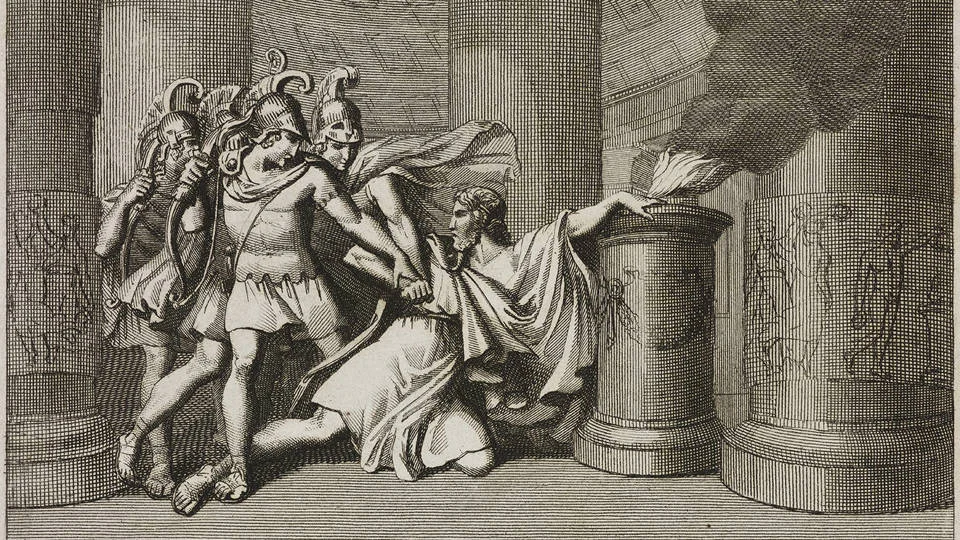
In the autumn of 403 BCE, a fragile peace settled over Athens. Following a ruinous 27-year conflict with Sparta, the city-state had suffered under the "Thirty"—a brutal, authoritarian regime that claimed the mantle of "virtue" and "justice" while executing over 1,500 citizens. The subsequent restoration of democracy, fueled by a coalition of working-class residents and emancipated slaves, remains a foundational moment in the history of self-governance.
Yet, as democratic forces offered sacrifices to Athena, the remnants of the fallen elite were busy erecting a monument to their leader, Critias. The gravestone featured a chilling relief: a fierce woman representing "Oligarchy" brandishing a torch, setting "Democracy" aflame. The accompanying epitaph declared, "This is the memorial of good men, who for a brief time restrained the hubris of the cursed Athenian people."
Centuries later, the ghost of Critias looms over the United States. As concerns regarding the "rule of the few" move from the fringes of political discourse to the center of national debate, the question arises: Are American democratic institutions inadvertently serving the very oligarchs they were designed to constrain?
The Ancient Blueprint of Elite Control
To understand the modern American struggle, one must first dismantle the myth that oligarchy is merely a byproduct of corruption. In classical Greece, oligarchy was a calculated constitutional project. Aristotle, in The Politics, famously noted that while constitutions were categorized by the number of rulers—one, few, or many—the true divide was economic: the rich versus the poor.
Oligarchs viewed themselves as a refined minority, separated from the "unwashed" masses by lineage, education, and wealth. They believed the demos (the people) possessed an inherent propensity for hubris—a lack of discernment that required "restraint." By utilizing property requirements, they ensured that political power remained locked within the top 10–15% of the citizenry.
Their strategy for survival was twofold: systemic exclusion and internal policing. They utilized divide-and-rule tactics, co-opting opposition leaders into the regime to neutralize potential revolts. They incentivized surveillance, posting public rewards for informants to shatter trust within the ranks of the marginalized. Most importantly, they relied on international allies—like Sparta—to intervene when domestic policy threatened their grip on power.
This was not a system of governance by consent; it was a system of governance by institutional barricade.
A Chronology of the Democratic-Oligarchic Conflict
- 460–360 BCE (The "Hundred Years’ War"): Historian John Ma describes this century as a relentless tug-of-war between democracy and oligarchy in the Greek polis. Unlike modern political parties, these factions rarely transferred power peacefully; change was almost exclusively the result of coups d’état.
- 1787 CE (The Constitutional Convention): The American framers, heavily influenced by Thucydides and the fear of "mob rule," consciously designed a system that distanced itself from the direct, volatile democracy of antiquity.
- 2010s CE (The Modern Resurgence): The term "oligarchy" begins its return to the American lexicon via the Occupy Wall Street movement and the 2016 populist campaigns, shifting the focus from international actors to domestic "tech bros" and corporate behemoths.
- January 2025 CE (The Farewell Warning): Former President Joe Biden uses his farewell address to explicitly warn against an "oligarchy of extreme wealth, power, and influence" that threatens the fundamental integrity of the American democratic experiment.
Supporting Data: The Institutional Barrier
The primary engine of modern American oligarchy is not necessarily the direct subversion of law, but the procedural manipulation of it. The United States Constitution, often heralded as the bedrock of liberty, contains structural "speed bumps" that have evolved into oligarchic bottlenecks.
The Supermajority Trap
The most glaring instrument of minority rule today is the Senate filibuster. In the 18th century, the Federalists themselves warned against the danger of supermajoritarian requirements. Alexander Hamilton, in Federalist 22, cautioned that requiring more than a majority for a decision "is, in its tendency, to subject the sense of the greater number to that of the lesser." He explicitly feared the "artifices of an insignificant, turbulent, or corrupt junto."
Today, 40% of the Senate—representing a fraction of the total U.S. population—can effectively paralyze the legislative process. This allows a minority to dictate policy or block progress on climate change, economic reform, and healthcare. When a government is designed so that the majority cannot act, the majority becomes, in practice, a subject of the minority.
The Illusion of "Republic vs. Democracy"
A pervasive narrative suggests that the U.S. is a "republic, not a democracy," implying that majority rule is somehow illegitimate. However, James Madison, the architect of the Constitution, defined a republic primarily by the use of representation. His vision for the republic was still rooted in majoritarian principles. As he stated in Federalist 10, the "republican principle" exists to enable the majority to defeat the "sinister views" of minority factions by a "regular vote." Madison, it seems, never envisioned a system where a minority could hold the entire machinery of government hostage indefinitely.
Official Responses and Political Implications
The discourse surrounding the "rule of the few" has moved into the highest echelons of government. Yet, the responses remain bifurcated.
Progressive voices argue that the current legislative inertia—compounded by the influence of unlimited campaign finance and the "revolving door" between regulators and the industries they oversee—is the modern equivalent of the Spartan interventionists, keeping the oligarchic order intact.
Conversely, defenders of the status quo argue that these institutional barriers are necessary to prevent the "tyranny of the majority." They posit that the checks and balances designed by the founders are functioning as intended, protecting the system from radical, sudden shifts.
However, the historical parallel remains stark. In ancient Greece, the oligarchs were ultimately swept away because they could not provide a sustainable model for the wider population. The rise of democracy across the Mediterranean during the 3rd and 2nd centuries BCE was driven by the realization that equal participation was the only reliable mechanism for long-term stability.
The Path Forward: Avoiding the Fire
The United States currently stands at a crossroads defined by runaway wealth inequality, the existential threat of climate change, and the disruptive potential of artificial intelligence. These are not problems that can be solved by a minority-rule paradigm.
To avoid the fate of the ancient oligarchs, the U.S. must grapple with its own "burning house." If the institutions designed to ensure stability are now the very tools ensuring paralysis, they are, by definition, failing their constitutional mandate.
The history of classical Greece provides a cautionary tale: oligarchy may persist for a time through clever institutional design, but it does so at the cost of its own legitimacy. When the majority discovers that the rules are "rigged" to ensure they can never enact change, the resulting instability eventually threatens the entire structure of the state.
As we move deeper into the 21st century, the choice for Americans is clear. They can continue to adhere to a rigid interpretation of "restraint" that effectively cements minority rule, or they can re-examine the democratic promise of their own founding. To maintain the status quo is not merely to "conserve" the republic; it is to do the work of the oligarchs for them, watching as the democratic fabric of the nation is consumed by the very flames the founders sought to extinguish.
 Suro Senen
  Pevita Pearce