
 By Nana Muazin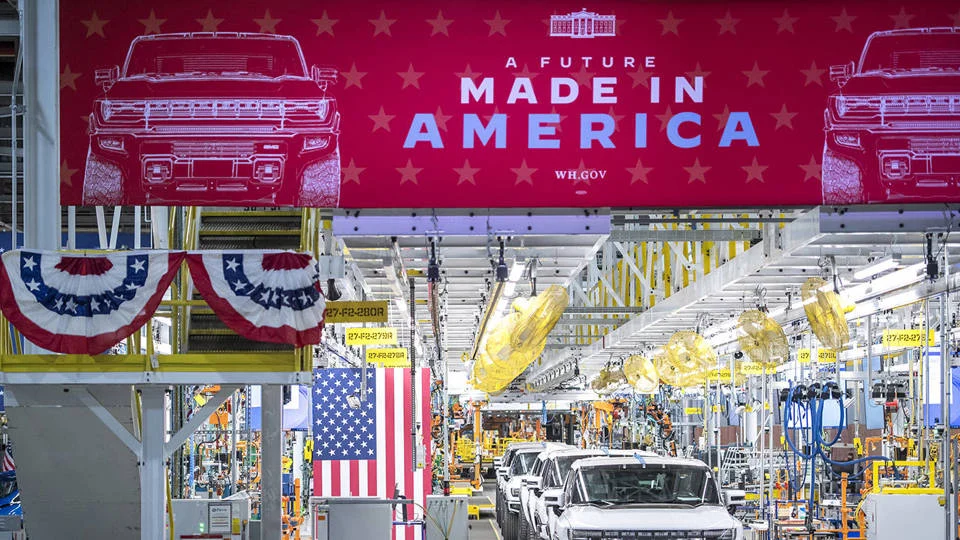
By Shang-Jin Wei
July 2, 2026
As the United States celebrates its semiquincentennial this summer, the occasion serves as more than just a patriotic milestone; it provides a necessary window to reassess the foundational pillars of the American economic identity. For generations, the prevailing narrative has painted the nation’s ascent to global hegemony as the triumph of pure, unfettered laissez-faire capitalism. According to this popular lore, the American miracle is the byproduct of a government that stayed out of the way, allowing the "invisible hand" of the market to allocate resources with unmatched efficiency.
However, historical reality paints a far more nuanced, hybrid picture. Beneath the rhetoric of free-market absolutism lies a long-standing tradition of state-directed pragmatism. From Alexander Hamilton’s early industrial visions to the massive state-backed technological initiatives of the 21st century, the United States has consistently employed a hybrid model. The state has always been an active participant, directing, subsidizing, and occasionally bailing out private enterprise to serve national priorities.
The Foundations of State-Led Growth
The Hamiltonian Legacy
The myth of American laissez-faire ignores the very origins of the federal government. Alexander Hamilton, the nation’s first Treasury Secretary, was the architect of a system designed to build economic power through state intervention. His 1791 Report on Manufactures argued that the young nation could not rely solely on agrarian production if it wished to compete with European powers. Hamilton advocated for federal subsidies, protective tariffs, and the creation of a national bank to stabilize credit and fund infrastructure.
This was not the language of a pure free-market disciple; it was the blueprint for an interventionist state. Throughout the 19th century, this spirit continued. The federal government facilitated the expansion of the American frontier by granting vast tracts of public land to railroad companies, effectively subsidizing the backbone of the industrial revolution.
The 20th Century: The Era of Strategic Intervention
The transition from a developing economy to a global superpower was not an accident of market forces. It was the result of massive state mobilization. During the Great Depression, the New Deal fundamentally altered the relationship between the government and the economy, establishing a social safety net and regulatory frameworks that still define the American landscape.
Following World War II, the federal government pivoted toward "mission-oriented" investments. The creation of the interstate highway system, the space race, and the massive funding of research and development via agencies like the Defense Advanced Research Projects Agency (DARPA) became the hidden engine of American innovation. These were not mere "market corrections"; they were state-led efforts to secure technological dominance.
Chronology of State-Led Economic Evolution
To understand how the American economy functions today, one must track the strategic evolution of government involvement:
- 1791: Alexander Hamilton submits the Report on Manufactures, establishing the concept of government-led industrial policy.
- 1862: The Pacific Railway Act provides federal land grants and loans to expedite transcontinental rail, a massive public-private partnership.
- 1933–1939: The New Deal creates a massive role for the state in employment, finance, and industrial regulation.
- 1947–1957: The Cold War triggers the rise of the "Military-Industrial Complex," where the federal government becomes the primary financier of technological research.
- 1971: The Nixon Shock ends the gold standard, shifting the US to a fiat currency system that requires sophisticated state-managed monetary policy.
- 2008–2009: The Great Recession forces the federal government into the role of lender-of-last-resort, bailing out major financial institutions and the automotive industry.
- 2022: The passage of the CHIPS and Science Act marks a return to overt industrial policy, with billions in subsidies to ensure domestic semiconductor production.
Supporting Data: The Reality of Public-Private Symbiosis
Critics of state intervention often point to the efficiency of the private sector, yet the data suggests that private sector success is frequently tethered to public investment.
According to data from the National Science Foundation, federal funding has been the bedrock for the most transformative technologies of the last half-century. The internet, GPS, and the mRNA technology behind recent vaccines were all born from research pipelines that were initially funded by the public sector.
Furthermore, consider the "bailout" reality. From the 1979 rescue of Chrysler to the 2008 Troubled Asset Relief Program (TARP), the American government has repeatedly demonstrated that it considers certain private entities "too big to fail." This implicit state insurance policy is a form of subsidy that is rarely accounted for in free-market models, yet it provides the underlying stability that allows capital markets to function during periods of extreme volatility.
Official Responses and Changing Ideologies
For decades, political rhetoric in Washington has lagged behind economic practice. During the Reagan era, the official narrative reached a crescendo of anti-government sentiment, with the famous refrain, "Government is not the solution to our problem; government is the problem."
However, even at the height of this anti-regulatory fervor, the state continued to invest heavily in strategic sectors. Today, the rhetoric has shifted again. In the wake of supply-chain vulnerabilities exposed by the COVID-19 pandemic and the rise of geopolitical competition with China, policymakers across the aisle are openly embracing "industrial policy."
The current administration’s emphasis on "Bidenomics"—a label that explicitly favors investment in green energy, infrastructure, and high-tech manufacturing—represents a formalization of a trend that has existed in practice for two centuries. The official acknowledgment that the state has a role in "de-risking" the economy is a significant departure from the Reagan-era orthodoxy, signaling a return to the Hamiltonian pragmatism that characterized the nation’s youth.
Implications for the Future
What does this realization mean for the next 250 years of American economic policy?
First, it suggests that the debate between "free markets" and "state intervention" is a false dichotomy. The real question is not if the state should intervene, but how it should intervene. The American model has been most successful when the state acts as a catalyst for innovation rather than a manager of production.
Second, the reliance on state subsidies—whether for green energy or microchips—carries the risk of rent-seeking and political capture. If the government is going to pick "winners," it must ensure that those choices are based on rigorous economic criteria rather than political expediency.
Finally, the myth of the "self-made" American economy has blinded policymakers to the importance of maintaining the public goods that underpin private success. Education, physical infrastructure, and basic scientific research are the collective investments that allow the individual entrepreneur to thrive. When these are neglected in favor of short-term market gains, the entire economic engine eventually sputters.
Conclusion
As we look toward the future, the United States must stop apologizing for its hybrid economic model. The history of the nation is not a linear story of laissez-faire triumph, but a complex, messy, and highly effective history of public-private collaboration.
Acknowledging this history is not an abandonment of the capitalist spirit; it is an affirmation of the pragmatism that has made the American economy resilient. To sustain prosperity for the next 250 years, the U.S. must continue to balance the creative energy of its private markets with the stabilizing, catalytic power of the state. It is time to retire the myth of the invisible hand and replace it with a more honest understanding of the visible, deliberate hand that has guided the nation since its founding.
 Lina Irawan
  Siti Muinah
  Suro Senen