
 By Dwi Wanna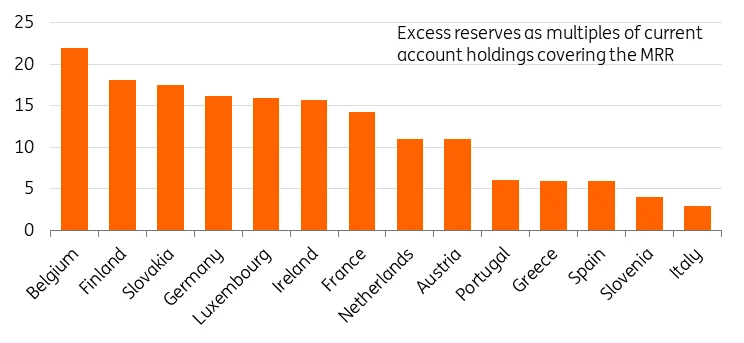
As the global financial system navigates a complex transition away from the era of hyper-abundant liquidity, two primary narratives are dominating the discourse among fixed-income analysts and central bankers: the European Central Bank’s (ECB) potential overhaul of its reserve requirements and the surprising resilience of the US labor market.
While the ECB explores methods to bolster its balance sheet, market participants in the United States are recalibrating their expectations for interest rates as payroll data suggests a labor market that is cooling but remains fundamentally robust. These developments, occurring in tandem, signal a shift in how major central banks are approaching the "new normal" of monetary policy.
The ECB’s Strategic Pivot: Reviving the Minimum Reserve Discussion
In a move that has sent ripples through the European banking sector, recent reports suggest the European Central Bank is contemplating a significant increase in the Minimum Reserve Requirements (MRR) for eurozone banks. This shift, while not slated for immediate implementation, could be rolled out as early as this autumn, marking a departure from the current status quo.
The Mechanics of the MRR
The Minimum Reserve Requirement is a regulatory tool that forces commercial banks to maintain a specific amount of cash on deposit with their national central bank. Historically, these reserves were non-remunerated—they earned zero interest. However, in the current regime, reserves held at the ECB’s deposit facility earn a generous 2.25%.
By raising the MRR—and crucially, ensuring these new required reserves remain unremunerated—the ECB is effectively looking to reduce the interest expense it pays to commercial banks. Analysts estimate that doubling the MRR could save the ECB approximately €4 billion annually, a figure that would rise significantly should the ECB choose to hike interest rates further.
The Evolution of Monetary Policy
The original purpose of the MRR was to create a liquidity deficit, granting the ECB a monopoly over the supply of funds and allowing it to dictate market rates through liquidity operations. However, this purpose was largely rendered obsolete by years of Quantitative Easing (QE), which flooded the system with excess liquidity—currently sitting at roughly €2.2 trillion.
Today, market rates are primarily anchored by the deposit facility rate. By doubling the MRR, the ECB would effectively remove €174 billion in excess liquidity from the system. While this is a small drop in a €2.2 trillion bucket, it serves as a symbolic and strategic move toward shrinking the ECB’s footprint and normalizing the banking system’s reliance on central bank balance sheets.
Chronology of the Discussion
- Pre-2024: The ECB operates under a regime defined by massive excess liquidity due to years of bond-buying programs, effectively decoupling the MRR from its original goal of liquidity management.
- Early 2024: The ECB initiates a formal review of its operational framework. During this period, the idea of increasing the MRR is floated by various stakeholders as a way to improve the central bank’s financial health.
- Yesterday: Reuters reports that the ECB is actively considering an autumn increase in the MRR, sparking immediate market reactions in Euribor/OIS spreads.
- Current State: Market analysts remain skeptical of the necessity of such a move, questioning whether the potential for financial gain outweighs the risk of disrupting the banking system’s delicate liquidity distribution.
Supporting Data: The Uneven Distribution of Liquidity
One of the primary concerns surrounding the potential increase in the MRR is the stark inequality in how excess liquidity is currently distributed across the eurozone.
Geographical Disparities
Data shows that the liquidity cushion varies wildly by jurisdiction. Italy, Spain, and Portugal hold excess liquidity levels approximately 3 to 6 times their respective MRR. In contrast, the banking systems of France and Germany maintain much larger buffers, with multiples closer to 15. This suggests that while liquidity redistribution within the Eurosystem is generally functional, a blunt-force increase in reserve requirements would disproportionately impact the southern periphery.
Structural Risks for Smaller Banks
Beyond geography, there is a mismatch at the institution level. Because the MRR is calculated based on a bank’s deposits, smaller, deposit-heavy institutions could find themselves disproportionately penalized by a higher MRR. These banks often do not hold the same levels of excess liquidity as the major systemic players, creating a scenario where a regulatory change intended for "normalization" becomes a liquidity tax on smaller, stable lenders. Furthermore, required reserves do not count toward Liquidity Coverage Ratios (LCR), further complicating the balance sheet management for these firms.
The US Labor Market: Stability Over Stimulus
Across the Atlantic, the narrative is defined by a persistent resilience in labor market data. US payroll numbers have consistently stayed above the 100,000 mark—a threshold that, while not signaling a boom, is high enough to discourage the Federal Reserve from cutting interest rates prematurely.

Why 100k Matters
Market consensus for the latest US jobs report sits at approximately 115,000. While this is a decline from the 172,000 reading seen in the previous month, it represents the fourth consecutive reading above the 100,000 floor.
In the current environment, the "replacement rate"—the number of jobs needed to keep pace with population growth—is often debated at around 150,000. However, the slowing immigration story has led some economists to believe the breakeven point has shifted downward. This makes the 100,000-115,000 range a "Goldilocks" zone: it is cool enough to prevent an inflation flare-up, but hot enough to prevent a recession.
Interest Rate Implications
Because the jobs market is not "breaking," US rates are finding little reason to test lower levels. With inflation remaining stubbornly above target, the Federal Reserve is under no immediate pressure to adopt a dovish stance. Fed Chair Warsh’s recent remarks at the Sintra conference highlighted a more benign view on inflation, which initially helped the US yield curve steepen. However, the long end of the curve—specifically the 10-year Treasury and the 10-year EUR swap rate—remains stubbornly anchored.
Implications for Global Markets
The combination of the ECB’s tinkering and the US’s labor resilience creates a challenging environment for investors.
1. The ECB’s "Endgame"
The ECB is clearly signaling that it wants a banking system that operates with lower levels of excess reserves. The goal is to move toward a self-balancing system where banks manage their own liquidity needs, using the ECB’s operations only as a secondary, integrated tool. While the desire to cut losses is understandable, experts argue that such a change risks disrupting the current, gradual path toward policy normalization.
2. The Persistence of "Sticky" Yields
The European and American yield curves are exhibiting a degree of stickiness that defies previous expectations of rapid rate cuts. With the 10-year EUR swap rate anchored near 3%, and the US economy refusing to show signs of a hard landing, the prospect of lower interest rates is being pushed further into the future. Unless the macro outlook deteriorates significantly or equity markets turn sharply bearish, the downside potential for long-term rates appears limited.
3. Upcoming Auctions and Liquidity Events
The market remains focused on the technical supply of government debt. Upcoming auctions include:
- Spain: Auctioning 3y, 8y SPGB, 10y SPGBei for a total of €6.75bn.
- France: Auctioning a wide array of OATs (including 10y, 15y, and 20y) for a total of €14bn.
- UK: Auctioning £3.25bn of an 11-year Green Gilt.
These events will serve as a litmus test for market appetite. As central banks reduce their bond portfolios and tighten liquidity, the ability of the private market to absorb this volume of issuance without causing a spike in yields will be the ultimate indicator of the system’s health.
Conclusion
The transition from a regime of massive central bank intervention to a more traditional, market-led environment is proving to be a delicate balancing act. The ECB’s attempt to refine its operational framework through higher reserve requirements is a calculated risk—one that threatens to squeeze liquidity in specific jurisdictions and smaller institutions. Meanwhile, the strength of the US jobs market is effectively putting a floor under global interest rates.
As we move through the second half of the year, market participants should brace for continued volatility. The era of "easy money" is not merely ending; it is being surgically dismantled, and the friction caused by this process is likely to remain a primary driver of market sentiment for the foreseeable future. Investors must look beyond the headline rates and monitor the structural plumbing of the banking system, where the true impact of these policy shifts will be felt first.
 rifanmuazin
  Nila Kartika Wati
  Ali Ikhwan