
 By Suro Senen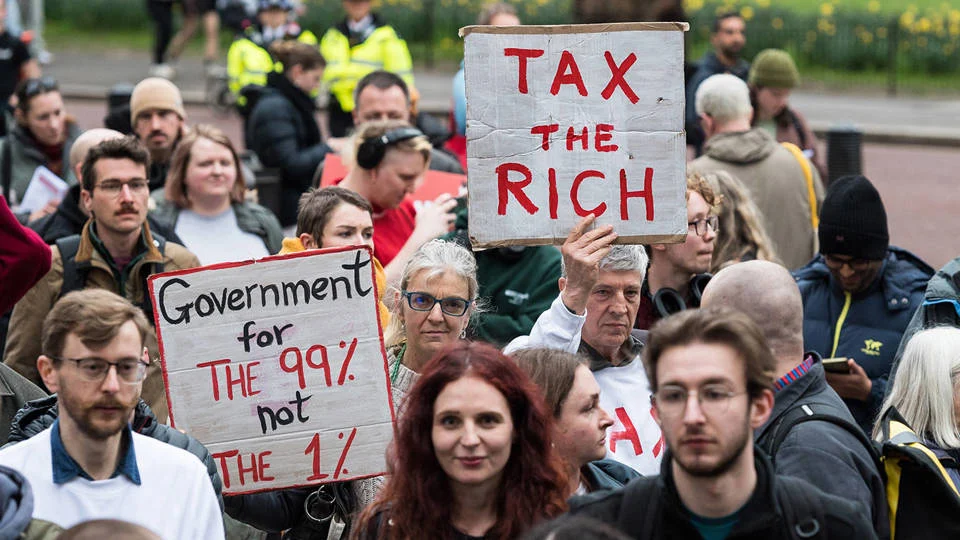
The contemporary international order is facing a crisis of legitimacy. From the bustling streets of Johannesburg to the halls of the United Nations, a growing chorus of voices—led by political figures like Brazilian President Luiz Inácio Lula da Silva—is challenging the structural inequities that have defined global finance for decades. As democratic institutions face mounting pressure from populist movements, the argument is increasingly clear: democracy cannot survive without material dignity. To secure the former, the world must fundamentally redesign the latter.
At the heart of this movement is a push to overhaul the international financial architecture, moving away from systems that favor entrenched elites and toward a multilateral framework that serves the global majority. This transition requires more than cosmetic changes; it demands a transformation in how sovereign debt is managed, how corporate tax is levied, and how human progress is measured.
The Nexus of Democracy and Economic Dignity
The impetus for reform is rooted in the belief that systemic inequality is the primary driver of political instability. In April 2026, President Lula da Silva addressed the inaugural Global Progressive Mobilisation meeting in Johannesburg, emphasizing that democracy is only as strong as its ability to provide for its citizens. When the public perceives that the international order is rigged—that they are bearing the costs of decisions made by distant, unaccountable actors—democracy begins to lose its appeal. Populists and authoritarians have weaponized this disillusionment, offering false promises that they alone can restore the fortunes of the ordinary person.
The challenge, therefore, is not merely economic; it is a battle for the soul of global governance. Unless the people who suffer the consequences of international policy can meaningfully influence the multilateral system, that system will continue to be viewed as an unjust relic of a bygone era.
Chronology of the Reformist Push
The momentum for a global reordering has been building steadily, punctuated by several key developments:
- April 2026: President Lula da Silva highlights the inextricable link between material dignity and the survival of democratic institutions during the Global Progressive Mobilisation meeting.
- May 2026: UN Secretary-General António Guterres launches the "Counting What Counts" report, marking a pivotal shift in how the international community approaches economic progress.
- Ongoing (2024–2026): Brazil’s G20 presidency introduces radical proposals for taxing the ultra-wealthy, sparking a global debate on wealth inequality that continues to gain traction.
- Current Phase: Negotiations regarding the UN Framework Convention on International Tax Cooperation are underway, representing the most significant attempt to date to harmonize global tax standards outside of the OECD/G20 framework.
Redefining Progress: Beyond GDP
For decades, Gross Domestic Product (GDP) has been the gold standard for measuring a nation’s success. However, as UN Secretary-General António Guterres noted in his "Counting What Counts" report, this metric acts as a "blind spot" that ignores the human cost of economic growth.
Guterres argues that while GDP remains a useful snapshot, it is woefully insufficient for a modern, humane accounting system. By relying on proxy measures that hide the true challenges of poverty, climate change, and systemic inequality, the global community has been flying blind. The new approach calls for metrics that align with actual human goals—such as environmental sustainability, social equity, and the quality of life for the average citizen—rather than mere financial throughput.
Dismantling the Debt Trap: A New Multilateral Mechanism
One of the most urgent priorities for the global majority is a binding UN framework for sovereign-debt restructuring. Currently, debt negotiations are conducted behind closed doors, often excluding the very nations whose futures are at stake. The result is a system where countries like Malawi are forced to divert as much as 43% of their national revenue into interest payments, effectively strangling public investment in health, education, and infrastructure.
The Failure of Existing Frameworks
The current mechanisms, such as the Paris Club and the G20’s Common Framework, have proven inadequate. The Paris Club lacks participation from major players like China, while the G20’s framework has stalled largely because private bondholder participation is entirely voluntary.
The UN Proposal
A UN-led mechanism would provide a legally binding alternative. Key features would include:
- Mandatory Participation: Requiring all creditors—public and private—to adhere to a single, unified process.
- Automatic Standstills: Implementing immediate freezes on debt payments once negotiations commence, preventing further financial bleeding.
- Comparability of Treatment: Ensuring that all creditors, regardless of their nature, share the burden of loss proportionally.
- Sustainability Assessments: Establishing independent audits that prioritize spending on health and climate as "senior" claims, ensuring that a country’s survival is not sacrificed to pay back debt.
Tax Justice and the War on Inequality
The current international tax system is riddled with loopholes that allow multinational corporations to shift profits to low-tax jurisdictions, depriving the global majority of the revenue needed for public services.
The UN Framework Convention on International Tax Cooperation
While the OECD/G20 Inclusive Framework on Base Erosion and Profit Shifting (BEPS) attempted to address this, the process was hollowed out by lobbying, eventually exempting major American multinationals from the global minimum corporate tax. The new UN convention aims to rectify this by setting a floor for effective corporate tax rates and mandating the automatic, transparent exchange of financial information across borders.
Taxing the Super-Rich
A central pillar of the reform agenda is a coordinated tax on extreme wealth. Brazil’s 2024 G20 proposal—a 2% annual levy on the world’s billionaires—is no longer a fringe idea; it is seen as a necessary fiscal tool. Such a tax could generate hundreds of billions of dollars annually, providing a massive influx of capital for global public investment. The tools for this already exist; the hurdle is political will and determining who will oversee the redistribution.
Holding Capital to Account: The 1MDB Lesson
A critical, often overlooked aspect of financial reform is the legitimacy of sovereign debt. When public funds are looted—as seen in the 1MDB scandal in Malaysia—the financial burden currently falls on the taxpayer, while the banks that facilitated the fraud walk away with massive fees.
The international community needs a standing mechanism to void debts contracted through fraud or against the public interest. By shifting the risk back to the reckless lenders who ignored warning signs, the international order can begin to discourage the predatory behavior that currently plagues emerging economies.
Implications: The Role of the Citizen
The transition to a more equitable global order will not occur through top-down mandates alone. A profound contradiction exists: many of the governments that champion global tax levies simultaneously resist taxing the wealthy or curbing austerity measures within their own borders.
Closing this "consistency gap" is the essential task for the next decade. Real change requires governments that lead with their principles and, more importantly, a citizenry that holds them accountable. Domestic movements are the heartbeat of global change; they provide the legitimacy and the pressure required to ensure that commitments made in conference halls are not merely "paper promises."
Conclusion: Handing Over the Pen
The cleaner who spends half her wage on a commute, the farmer unable to afford fertilizer, and the care worker whose labor goes unrecorded in national accounts—all are beginning to realize that their struggles are not personal failings, but symptoms of a structural flaw.
The choice facing the world is not between the existing order and chaos. It is a choice between an order that continues to prioritize the few and an order built for the global majority. If we are to design a system that truly serves humanity, we must stop asking the majority to follow rules they did not write. We must hand them the pen. The citizens of the world are not peripheral to this transformation; they are its driving force. The challenge for today’s institutional designers is to recognize this reality before the opportunity for a peaceful, systemic transition passes.
 Nana Muazin
  Lina Irawan
  Siti Muinah