
 By Nana Wu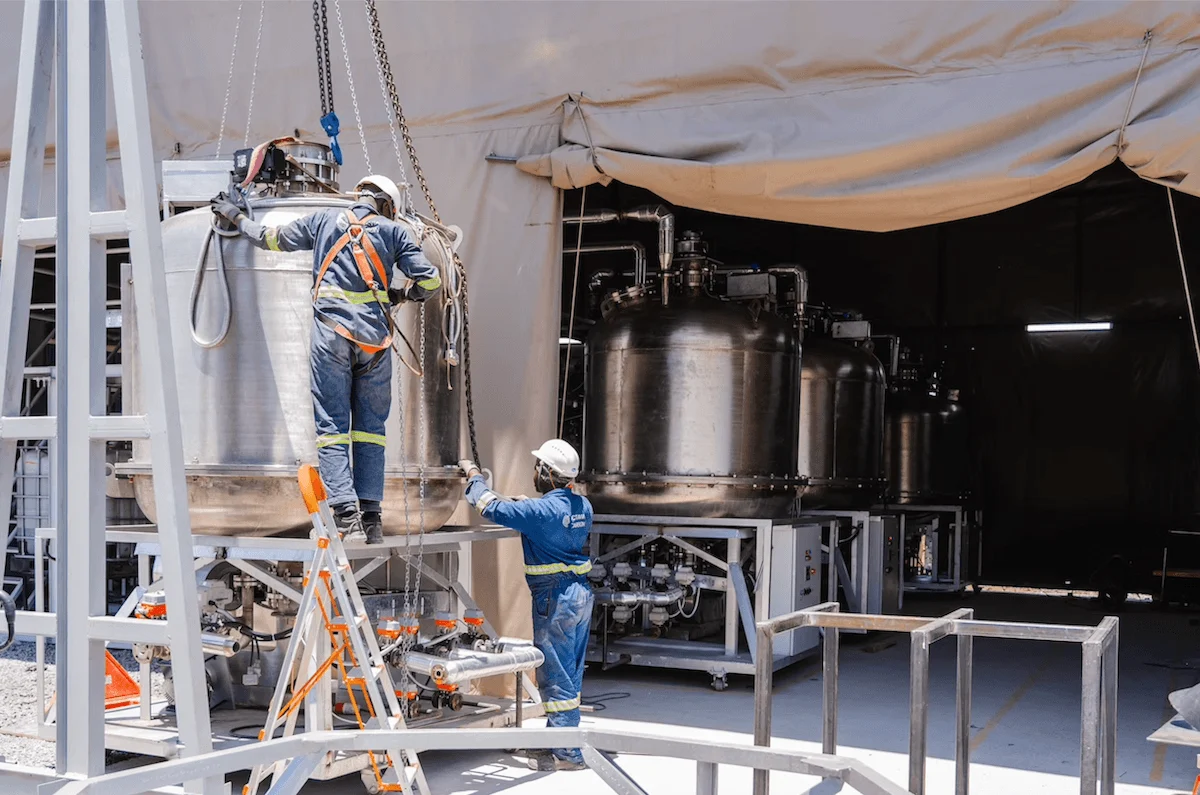
In the global theater of climate change, the narrative has long been dominated by mitigation—the reduction of emissions to prevent future catastrophe. However, as extreme heatwaves sweep across Europe and climate-driven volatility disrupts economies worldwide, the conversation is shifting. Adaptation—the urgent process of adjusting to the present and future impacts of a warming planet—has moved from the periphery to the very center of the global climate agenda.
Standing at the vanguard of this shift is the Catalyst Fund, an Africa-focused venture firm that recently announced a significant milestone: a $30 million interim close for its inaugural fund. Designed to de-risk early-stage climate innovations, the fund serves as a crucial bridge for startups struggling to navigate the "valley of death" in the nascent adaptation technology sector.
The Financial Landscape: A Disproportionate Reality
To understand the necessity of the Catalyst Fund, one must look at the stark arithmetic of global climate finance. Out of an estimated $2 trillion in annual global climate finance commitments, a mere $64 billion is directed toward adaptation. This massive deficit exists despite the clear evidence that emerging economies—particularly those across the African continent—are disproportionately bearing the brunt of climate-induced agricultural failure, water scarcity, and infrastructure instability.
Maelis Carraro, Managing Partner at Catalyst Fund, believes the tide is turning. "Adaptation and resilience have never been more front and center in the climate conversation. People are realizing the urgency," she noted during a recent briefing. The fund, which officially launched in 2022, was born out of BFA Global’s impact accelerator program with a singular mission: to plug the massive equity gap for promising climate adaptation innovations that traditional venture capital often overlooks.
Chronology: From Concept to Capital Deployment
The journey of the Catalyst Fund reflects the maturing appetite of the international investment community for emerging-market climate solutions.
- 2022: The Catalyst Fund is officially launched under the umbrella of BFA Global, leveraging years of expertise in fintech and impact acceleration to address the specific needs of climate-vulnerable communities.
- Early 2023: The fund begins active scouting and mentorship, focusing on early-stage startups that address resilience in agriculture, water, and energy.
- Mid-2024: During London Climate Action Week, investor sentiment signals a distinct pivot. Discussions move away from theoretical climate models toward tangible, scalable, and commercially viable adaptation technologies coming out of African hubs.
- Late 2024 (The Milestone): Catalyst Fund announces an interim close of $30 million, with sights set on a final target of $40 million. This capital injection marks a validation of the "blended finance" model, proving that commercial investors are increasingly willing to partner with development institutions to tackle the climate crisis.
Structuring for Success: The Blended Finance Model
The brilliance of the Catalyst Fund lies not just in its mission, but in its mechanics. Recognizing that early-stage climate tech carries significant commercial risk, the fund utilizes a multi-layered, blended finance structure designed to protect investors while providing essential "patient capital" to startups.
The fund is structured into three distinct tranches:
- Senior Equity Layer: Designed for investors seeking moderate risk profiles with a 6% hurdle rate.
- Junior Equity Layer A: Also targeting a 6% hurdle, this layer provides a buffer for the most vulnerable segments of the portfolio.
- Junior Equity Layer B: Anchored by institutions like the Shell Foundation and FASA, this layer absorbs the highest degree of risk, with a 3% hurdle.
"Upside is shared with all investors," Carraro explained, "but the junior B layer takes the most risk to encourage other commercial players to enter the market." This structure allows for the "de-risking" of innovations that are currently in the proof-of-concept stage, ensuring that companies do not stall for lack of liquidity.
The list of participants in this interim close reads like a who’s who of international development and impact investing. The International Finance Corp. (IFC), FASA, the Shell Foundation, the Trafigura Foundation, Speedinvest, and BlinkCV have all committed capital, joining anchor investors FSD Africa and the Cisco Foundation.
Global Implications: From Africa to the World
While Catalyst Fund’s primary geographic focus is Africa, the implications of its portfolio companies are distinctly global. The Nairobi-based direct air capture (DAC) startup, Octavia Carbon, serves as a prime example of this trend.
Last week, Octavia Carbon was named one of 16 winners of Tencent’s prestigious CarbonX program, securing a grant to scale its pilot projects in Kenya. This recognition is not merely a financial win; it is a signal to the global scientific community that the African continent is becoming a hub for "deep tech" climate solutions.
"It tells you that these solutions have global impact," Carraro said. "We are seeing innovations that were born out of necessity in emerging markets, which are now being looked at as blueprints for the rest of the world."
The ability of these startups to export their solutions—be it carbon sequestration, climate-resilient farming, or advanced water purification—demonstrates that "adaptation tech" is not a charity project, but a high-growth sector.
Official Responses and Strategic Pivot
The success of the fund highlights a broader shift in the investment landscape. A few years ago, explaining the necessity of blended finance—the strategic use of development finance to mobilize additional finance towards sustainable development—was a difficult sell. Today, it is an industry standard.
"It was a lot harder to explain a couple years ago," Carraro admitted. "It’s now more understood that these solutions are not just critically underfunded, they’re critically under-supported."
This "under-support" refers to the non-financial needs of early-stage companies. Beyond capital, Catalyst Fund provides hands-on technical assistance, helping startups navigate regulatory frameworks, optimize supply chains, and secure subsequent rounds of funding. This holistic approach is gaining traction, with more institutional investors now carving out separate streams of funding dedicated specifically to technical assistance and capacity building.
The Road Ahead
With $30 million secured and a target of $40 million, the Catalyst Fund is well-positioned to continue its trajectory. However, the work is far from finished. The climate crisis is accelerating, and the gap between current funding levels and the trillions required for global resilience remains vast.
For the entrepreneurs in the Catalyst portfolio, the challenge is twofold: proving the efficacy of their technologies in harsh, real-world environments, and achieving the scale necessary to move the needle on global carbon and adaptation targets.
As the fund moves toward its final close, it serves as a litmus test for the global venture capital community. If this model succeeds in scaling companies like Octavia Carbon into global players, it will likely unlock billions more in capital for the adaptation economy.
In the words of the founders and investors backing Catalyst, the time for skepticism has passed. The climate emergency has made adaptation an economic imperative, and for those willing to take the risk, the opportunities for both impact and return have never been more apparent. The narrative is changing—from one of helpless observation to one of proactive, technological intervention. And at the heart of that change, the Catalyst Fund is providing the spark.
 Nana Muazin
  Muslim
  Evan Lee Salim