
 By rifanmuazin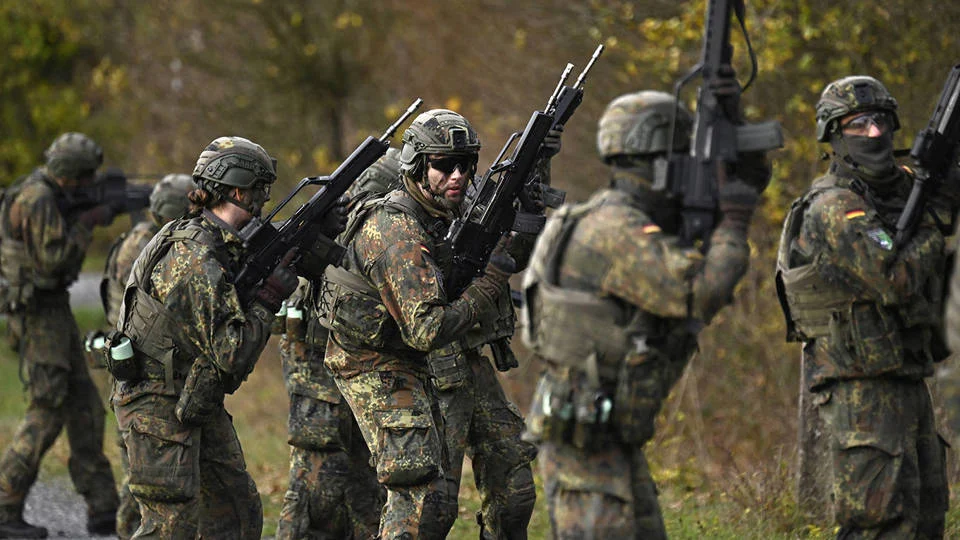
By Marco Buti and Francesco Nicoli
July 3, 2026
The European Union stands at a precarious geopolitical crossroads. As the global security environment deteriorates, EU member states have responded with a predictable, if ultimately insufficient, reflex: an aggressive increase in national defense budgets. From Berlin to Warsaw, governments are scrambling to meet and exceed NATO’s two-percent-of-GDP spending targets. Yet, a fundamental strategic fallacy persists. Policymakers in Brussels and national capitals seem to operate under the assumption that higher defense expenditure will automatically translate into a robust, autonomous European security architecture.
This assumption is flawed. Without a comprehensive, EU-level framework capable of aggregating resources to achieve industrial and operational scale, the bloc’s defense capabilities will remain structurally limited—regardless of the billions poured into national coffers. If Germany, in particular, persists in its current trend of "go-it-alone" procurement and industrial protectionism, Europe risks cementing a cycle of fragmentation that ensures continued dependence on the United States for critical military assets, effectively rendering the goal of "Strategic Autonomy" a hollow slogan.
The Chronology of Fragmentation
To understand why current spending trajectories are destined to fail, one must look at the historical arc of European defense integration—or the lack thereof.
- 1954: The Failure of the EDC: The collapse of the European Defence Community (EDC) treaty in the French National Assembly set the stage for a decades-long reliance on the North Atlantic Treaty Organization (NATO) as the primary security guarantor.
- 1992–1999: The Post-Cold War Drift: Following the Maastricht Treaty, European nations engaged in a "peace dividend" era, drastically downsizing militaries. The Balkan conflicts of the 1990s exposed the reality that, without U.S. logistics and air power, the EU was largely toothless.
- 2016–2017: The Wake-Up Call: The convergence of Brexit and the shift in U.S. political rhetoric toward isolationism sparked the creation of PESCO (Permanent Structured Cooperation) and the European Defence Fund (EDF). These were intended to harmonize procurement, yet they remained largely toothless against national sovereignty concerns.
- 2022–2024: The Ukraine Catalyst: The Russian invasion of Ukraine forced an immediate, emergency-driven increase in spending. However, this spending was characterized by a "buy off-the-shelf" mentality, with many EU nations purchasing American-made systems (such as the F-35) to fill immediate gaps, further entrenching dependency.
- 2026: The Current Impasse: As of mid-2026, defense budgets are at record highs, yet European defense industrial bases remain siloed, inefficient, and incapable of producing the high-volume ammunition and advanced platforms required for a peer-to-peer conflict.
Supporting Data: The Cost of Disunity
The inefficiency of the current European defense landscape is quantifiable. According to recent data from the European Defence Agency (EDA), the EU-27 collectively spends roughly 40% of what the United States spends on defense. Yet, the resulting military output is not 40% of the U.S. capability—it is significantly lower.
The primary culprit is fragmentation. The EU maintains over 170 different weapon systems, compared to approximately 30 in the United States. For example, while the U.S. relies on one primary main battle tank (the M1 Abrams), Europe operates over a dozen variants, each with its own supply chain, maintenance requirements, and training protocols.
Furthermore, procurement is overwhelmingly national. In 2024 and 2025, over 75% of European defense equipment was procured from outside the EU, with the vast majority of that coming from the United States. This does not merely represent a trade deficit; it represents an industrial "brain drain" and a failure to scale European production capacity. When nations act in isolation, they prioritize their own national champions, preventing the cross-border consolidation that is necessary to compete with the economies of scale enjoyed by the American and Chinese defense sectors.
The German Dilemma: A Case Study in Isolation
Germany, the EU’s economic engine, remains the most significant variable in this equation. Chancellor Olaf Scholz’s Zeitenwende—the "turning point" in defense policy—was intended to revitalize the Bundeswehr. However, the implementation has been marked by a return to national industrial priorities.
By prioritizing the German defense industry over collaborative European projects, Berlin has inadvertently signaled to smaller EU states that "strategic autonomy" is secondary to domestic industrial protectionism. When Germany unilaterally chooses national platforms, it creates a "lock-in" effect for other member states, forcing them to integrate into German systems rather than European ones. This creates a "hub-and-spoke" model where the hub is national, not collective, effectively preventing the development of a unified European military-industrial complex.
Official Responses and Political Friction
The European Commission, under the leadership of the current defense commissioner, has attempted to incentivize cooperation through the European Defence Industrial Strategy (EDIS). The goal is to ensure that at least 50% of defense procurement budgets are spent within the EU by 2030.
However, the response from member states has been lukewarm. Smaller states fear that an "EU-first" procurement policy would favor large French or German firms, hollowing out their own boutique defense industries. Conversely, France continues to push for a "European preference" that leans heavily on its own sovereign industrial base, often at the expense of interoperability with NATO standards.
In the European Parliament, debates have shifted toward the creation of a massive "Defense Bond" initiative. Proponents argue that the EU must borrow collectively to fund the massive scaling of production capacity. Opponents—primarily the "frugal" bloc of Northern European nations—argue that defense remains a sovereign prerogative and that collective debt for military spending is a bridge too far, potentially violating the core principles of the Stability and Growth Pact.
Implications: The High Cost of the Status Quo
The failure to achieve a unified defense market has profound implications for the future of the European project.
1. The Strategic Risk of "Outdated Warfare"
If Europe continues to focus on legacy systems rather than integrating AI, autonomous systems, and space-based assets at scale, it will be fighting the next war with the tools of the last one. Fragmentation prevents the rapid R&D integration required to stay ahead of rapid technological cycles.
2. The Credibility of the Transatlantic Alliance
Contrary to the belief that buying American weapons strengthens the transatlantic bond, a chronically weak and dependent Europe is a liability for Washington. As U.S. focus shifts definitively toward the Indo-Pacific, a Europe that cannot defend itself—or that relies entirely on American logistics and munitions—becomes a source of friction in the U.S.-EU relationship.
3. Political Fragmentation and Sovereignty
If the EU cannot provide security, national governments will continue to look toward bilateral deals with the United States or, worse, attempt to appease external adversaries through "neutrality" or "strategic hedging." This undermines the common foreign and security policy (CFSP) and threatens to turn the EU into a collection of vassal states rather than a coherent geopolitical actor.
Conclusion: A Call for Structural Reform
The current trajectory—more spending, more national silos, and more dependence—is unsustainable. To escape this trap, the EU must move beyond voluntary cooperation. This requires three critical shifts:
- Mandatory Interoperability: Future defense funding from the EU budget must be strictly conditional on interoperability and joint procurement.
- Consolidation of the Industrial Base: The EU must actively encourage the cross-border merger of defense firms to create European champions that can compete at a global scale.
- A Common Strategic Culture: We must move away from the "national interest first" mindset. Defense is not just another industrial sector; it is the ultimate public good. Without a unified approach to its provision, the security of the European continent will remain subject to the whims of foreign powers and the inefficiencies of fragmented, outdated national systems.
As we look toward 2027 and beyond, the time for half-measures has passed. The EU can either build a robust, integrated defense industrial base that acts as a pillar of global stability, or it can continue to spend billions on the illusion of strength while waiting for the next crisis to expose its fundamental weakness. The choice is not between spending and not spending; the choice is between effective, collective action and the slow, expensive decline into geopolitical irrelevance.
 Ammar Sabilarrohman
  Sagoh
Sagoh  Suro Senen