
 By Nana Muazin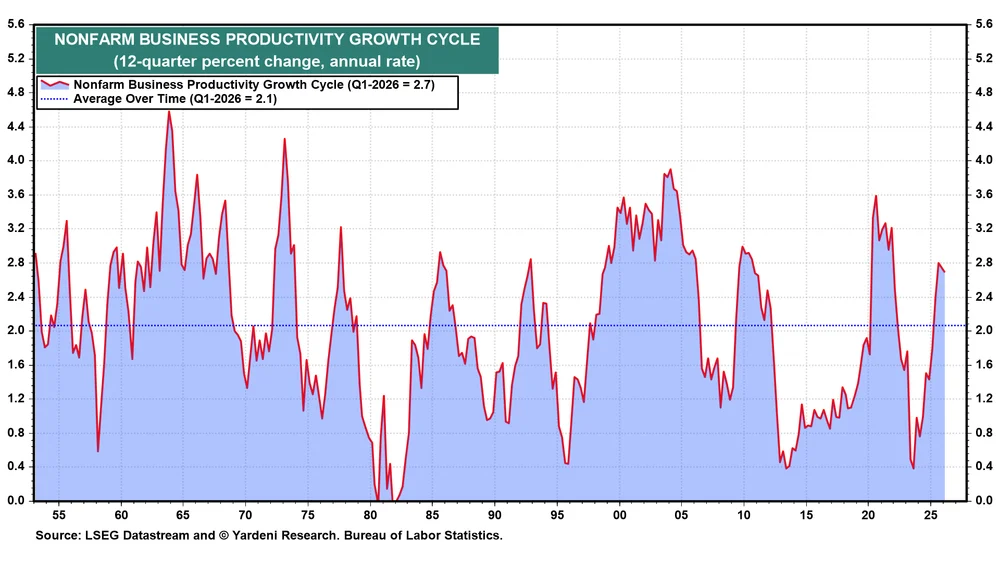
1. Main Facts: The Quarter-Millennium Milestone
As the United States of America celebrates its 250th anniversary, the nation stands not only as the world’s longest-enduring modern constitutional republic but also as its undisputed economic powerhouse. What began on July 4, 1776, as a bold political experiment has evolved into a $100-plus trillion financial ecosystem. Despite recurrent historical setbacks, structural crises, and global conflicts, the American macroeconomic engine continues to operate at or near record-breaking capacity across nearly every major indicator.
According to the latest macroeconomic data compiled in mid-2026, the United States is experiencing an unprecedented convergence of economic triumphs:

- Record Production and Consumption: Real Gross Domestic Product (GDP) is on track to establish another historic high, fueled by a historic productivity boom and record-high real personal consumption expenditures per household.
- Unprecedented Household Wealth: Aggregate household net worth has surged to a record $174.0 trillion, propelled by real estate values and capital market appreciation.
- Capital Market Dominance: The U.S. equity market has expanded to $106.9 trillion, accounting for a staggering 63.5% of the MSCI All Country World Index.
- Energy Independence: Having transitioned into a net exporter of crude oil, petroleum products, and natural gas over the last decade, the U.S. has insulated its domestic economy from global energy shocks.
- Global Trust in the Greenback: Despite persistent debates over dedollarization, the U.S. dollar maintains its hegemony, representing 57.1% of global foreign currency exchange reserves, while foreign investors hold a record $9.4 trillion in U.S. Treasury securities.
This economic dominance is not accidental. It is the direct yield of a constitutional architecture designed to protect individual liberties, enforce the rule of law, and incentivize private enterprise.
2. Chronology: From Foundational Principles to the 2026 Economic Landscape
The trajectory of the American economy is inextricably linked to its founding documents. The Declaration of Independence in 1776 established the moral and philosophical framework for prosperity by asserting the unalienable rights to "Life, Liberty and the pursuit of Happiness," conditioned on the consent of the governed.

Eleven years later, on September 17, 1787, the signing of the U.S. Constitution institutionalized these principles. By establishing a robust system of checks and balances, the framers deliberately sought to mitigate the risk of factional tyranny. This institutional "gridlock," often criticized by contemporary observers, was designed to prevent rapid, destabilizing shifts in the legal and economic landscape, thereby providing a predictable environment for long-term investment.
[1776] Declaration of Independence establishes unalienable rights to Life, Liberty, and the pursuit of Happiness.
   │
[1787] U.S. Constitution signed; establishes the rule of law and property rights under a system of checks & balances.
   │
[2008-2009] Great Financial Crisis (GFC) triggers housing crash; homeownership rates among young adults decline.
   │
[2009-2020] The longest economic expansion in U.S. history, characterized by low inflation and steady growth.
   │
[2020] Two-month COVID-19 lockdown serves as a brief but severe economic disruption.
   │
[2021-2025] Post-pandemic recovery weathered by supply-chain crises, soaring inflation, and aggressive monetary tightening.
   │
[2026] U.S. marks its 250th anniversary with record real GDP, $174T household wealth, and 63.5% global equity share.
Over the past two decades, this constitutional framework has weathered extraordinary structural stress tests:

- The Great Financial Crisis (GFC) of 2008: The collapse of the subprime housing bubble severely disrupted the financial sector and depressed homeownership rates, particularly among younger cohorts, for nearly a decade.
- The 2009–2020 Expansion: Following the GFC, the U.S. embarked on the longest economic expansion in its history, characterized by steady job creation and low interest rates.
- The 2020 Pandemic Shock: The COVID-19 pandemic prompted a government-mandated two-month lockdown in early 2020. While deep, the ensuing recession was the shortest on record, followed by an extraordinarily rapid, stimulus-fueled recovery.
- The 2021–2025 Inflationary and Geopolitical Crucible: The current decade has forced the economy to navigate supply-chain bottlenecks, a spike in inflation to multi-decade highs, the most aggressive Federal Reserve monetary tightening cycle in forty years, rising global tariff barriers, and escalating geopolitical conflicts in Eastern Europe and the Middle East (frequently termed "Gulf War III").
Despite these compounding headwinds, the American economy has repeatedly demonstrated its capacity to adapt, restructure, and expand.
3. Supporting Data: The Nine Pillars of the American Macroeconomic Engine
The scale of America’s current economic performance is best understood through a detailed examination of its primary macroeconomic components.

I. GDP, Consumer Spending, and Labor Productivity
Real GDP is poised to hit another record high by the end of 2026. This expansion has been structurally different from previous cycles; recessions have become notably less frequent and shorter in duration.
Macroeconomic Indicator                  Current Level / Metric (2026)
─────────────────────────────────────────────────────────────────────────
U.S. Household Net Worth                 $174.0 Trillion (Record High)
U.S. Share of MSCI ACWI                  63.5% (Market Cap Share)
U.S. Equity Market Total Value           $106.9 Trillion
Annual Business Applications             6.0 Million (12-mo through May)
Foreign Holdings of U.S. Treasuries      $9.4 Trillion
U.S. Dollar Share of Global Reserves     57.1%
Homeownership Rate (Q1-2026)             65.3%
Joint Senior Net Worth (Boomer/Silent)   $109.4 Trillion
A primary driver of this growth is labor productivity. Productivity, measured as output per hour, serves as the ultimate anchor for the American standard of living. Both productivity and inflation-adjusted hourly compensation are hovering at all-time highs. This efficiency has allowed real personal consumption expenditures (PCE) per household to reach unprecedented levels, demonstrating that the purchasing power of the average American household continues to expand despite recent inflationary pressures. Furthermore, the aggregate annualized hours worked by the American labor force have reached an all-time high, reflecting a highly engaged and robust labor market.

II. The Resiliency of the Housing Market
While critics frequently declare the "American Dream" of homeownership dead, empirical data suggests otherwise. During the first quarter of 2026, the national homeownership rate stood at 65.3%.
While homeownership rates among young adults experienced a pronounced decline in the immediate aftermath of the 2008 GFC—largely due to tighter credit standards and the scarring effects of the subprime collapse—they have remained remarkably stable and resilient since approximately 2015. The pre-GFC housing boom was characterized by speculative excesses; the current market, by contrast, is supported by more stringent lending standards and organic demand.

III. Household Net Worth and the Generational Wealth Transfer
U.S. household net worth reached an astronomical $174.0 trillion in Q1-2026. While wealth inequality remains a central focus of public debate, analysis reveals that a significant portion of this disparity is age-dependent rather than purely structural. Older Americans naturally accumulate assets over their working lives, whereas younger generations are in the early stages of capital accumulation.
The Baby Boomer generation and the Silent Generation hold a combined net worth of $109.4 trillion. This represents the largest and wealthiest cohort of retirees and seniors in human history. Over the next two decades, the transition of this capital to younger generations—Gen X, Millennials, and Gen Z—will constitute the largest intergenerational wealth transfer in history, with profound implications for asset markets, consumer spending, and philanthropy.

IV. The Technological Productivity Boom and Capital Expenditures
The United States is currently entering a major productivity growth cycle. Facing persistent domestic labor shortages and skills mismatches, American corporations have aggressively pivoted toward automation and technological integration. Over the 12 quarters ending in Q1-2026, nonfarm business productivity grew at a robust 2.7% annual rate.
       [U.S. High-Tech Capital Expenditures as % of Nominal Capex]

  60% │                                                 54.9% (2026)
      │                                                ┌───┐
  50% │                                                │   │
      │                                                │   │
  40% │                                 ┌───┐          │   │
      │                                 │   │          │   │
  30% │                  ┌───┐          │   │          │   │
      │                  │   │          │   │          │   │
  20% ───────────────────┴───┴──────────┴───┴──────────┴───┴──────────
                         2000           2015           2026
This structural shift is backed by a surge in private non-residential fixed investment (capital spending), driven heavily by the "onshoring" of manufacturing and supply chains. Crucially, high-tech investment now accounts for a record-high 54.9% of all nominal corporate capital expenditures in the United States, indicating that American businesses are heavily prioritizing artificial intelligence, cloud computing, advanced robotics, and software-driven efficiencies.

V. Corporate Profitability and Margins
Corporate profits from current production and corporate cash flows achieved record highs in the first quarter of 2026. Despite elevated interest rates and input costs, corporate profit margins are matching their historical peaks.
This financial health extends beyond large-cap multinationals. Proprietors’ income (the earnings of unincorporated businesses) and rental income have also climbed to record levels. Combined, these two categories reached an annualized rate of $3.3 trillion in May 2026, reflecting a highly lucrative environment for small business owners and real estate investors.

VI. The Entrepreneurial Surge
The entrepreneurial spirit remains a core pillar of the U.S. economy. In 2023, the country recorded an all-time high of 31.1 million nonfarm sole proprietorships. This momentum has only accelerated: for the 12-month period ending in May 2026, new business applications reached an unprecedented 6.0 million. This surge in startup activity demonstrates that the United States remains an exceptionally fertile ground for risk-taking and business creation.
VII. Unrivaled Capital Markets
The financial markets of the United States are the largest, deepest, and most liquid in the world. As of Q1-2026, the total capitalization of the U.S. equity market stood at $106.9 trillion, with the S&P 500 comprising the lion’s share.

Global Equity Market Capitalization (MSCI All Country World Index)

┌───────────────────────────────────────────────────────┬──────────────┐
│                     United States                     │  Rest of the │
│                         63.5%                         │  World 36.5% │
└───────────────────────────────────────────────────────┴──────────────┘
The primary market remains incredibly active; new issuances of corporate bonds and equities reached $3.0 trillion over the 12 months ending in May 2026. On the global stage, the MSCI USA Index accounts for a dominant 63.5% of the total market capitalization of the MSCI All Country World Index (ACWI). Even more telling of America’s fundamental strength is its earnings share, which stands at 54.1% of the global index.
VIII. The Energy Revolution
One of the most profound structural shifts of the past fifteen years is America’s transition to energy independence. At the turn of the decade, the U.S. officially became a net exporter of crude oil and petroleum products. This was accompanied by a similar transition in the natural gas sector, where the U.S. has been a consistent net exporter since the late 2010s, largely driven by the technological revolution in hydraulic fracturing and horizontal drilling. This domestic abundance serves as a vital macroeconomic shock absorber, shielding U.S. industries and consumers from the energy crises that have severely impacted European and Asian markets.

IX. Global Capital Inflows and Reserve Currency Status
Despite persistent political rhetoric suggesting a decline in global confidence, international investors continue to allocate capital to the United States at historic rates. Over the 12-month period ending in April 2026, foreign net purchases of U.S. equities reached a record $763.0 billion.
Furthermore, foreign sovereign and private entities hold a record $9.4 trillion in U.S. Treasury securities, underscoring the dollar’s role as the ultimate safe-haven asset. This is further corroborated by the International Monetary Fund (IMF) data, which shows that the U.S. dollar still accounts for 57.1% of all allocated foreign currency exchange reserves globally, far outpacing its nearest competitors.

4. Official Responses and Expert Perspectives
The extraordinary performance of the U.S. economy on its 250th anniversary has drawn extensive analysis from policymakers, academic economists, and financial strategists.
Many Wall Street economists attribute the current productivity boom to the rapid adoption of artificial intelligence and machine learning. Analysts note that the severe labor shortages of the post-pandemic era acted as a catalyst, forcing corporate leaders to substitute capital for labor. The resulting 2.7% productivity growth rate has allowed the economy to expand rapidly without triggering the wage-price spirals that many traditional macroeconomic models predicted.

However, some fiscal policy experts and institutional officials strike a more cautious tone. Representatives from organizations like the Congressional Budget Office (CBO) and international monitoring bodies frequently point out that while private wealth is at a record $174.0 trillion, public debt is also at historic levels. Economists warn that the massive interest burden on the $9.4 trillion of U.S. debt held by foreign investors could eventually crowd out private investment if fiscal consolidation is not pursued.
From a political-economy perspective, constitutional scholars emphasize that the "gridlock" built into the American system of checks and balances—often lamented by politicians seeking swift legislative action—remains a major asset. By forcing consensus and slowing down radical policy shifts, the constitutional structure provides global investors with a level of predictability and legal stability unmatched by more centralized regimes.

5. Implications: Navigating the Next Quarter-Century
As the United States embarks on its next 250 years, the macroeconomic data suggests that the country’s fundamental strengths remain intact, though not without structural challenges that will require careful management.
The Great Wealth Transfer and Demographics
The $109.4 trillion held by Baby Boomers and the Silent Generation will gradually transition to younger cohorts over the next two decades. This transfer could significantly alter domestic investment patterns, potentially driving greater capital allocation toward sustainable technologies, venture capital, and digital assets. However, it also presents a policy challenge: if not managed through balanced tax structures, it could further entrench wealth concentration among heirs, potentially exacerbating social and political polarization.

The Fiscal Dilemma vs. Private Wealth
The contrast between America’s unparalleled private wealth ($174.0 trillion) and its mounting sovereign debt is the defining macroeconomic paradox of the era. To sustain its growth trajectory, the U.S. will need to address its fiscal imbalances without stifling the entrepreneurial spirit that generated 6.0 million new business applications in the past year. Analysts argue that productivity-led growth is the most viable path to inflating away the real burden of this debt, making continued support for high-tech capital expenditures (currently at 54.9% of capex) a matter of national security.
Global Hegemony in a Multipolar World
With the MSCI USA accounting for nearly two-thirds of the global equity market cap, the U.S. remains the central hub of global capital. While geopolitical competitors continue to build alternative financial systems, the sheer liquidity, regulatory transparency, and legal protections of U.S. markets make complete dedollarization highly unlikely in the medium term. The primary risk to this dominance is not external competition, but rather internal political instability that could undermine the rule of law.

Conclusion: The Endurance of the Constitutional Safeguard
The economic achievements of the United States are ultimately a testament to its constitutional design. The rule of law, protected by an independent judiciary, has successfully safeguarded property rights, encouraged risk-taking, and fostered an environment where entrepreneurs can pursue happiness. While the system is intentionally designed to be slow and prone to political gridlock, this very friction has acted as a stabilizing force for a quarter of a millennium. As long as these core constitutional institutions endure, the American macroeconomic engine is well-positioned to navigate the challenges of the next 250 years.
 Layla Zulfa
  Asep Darmawan
  rifanmuazin