
 By Neng Nana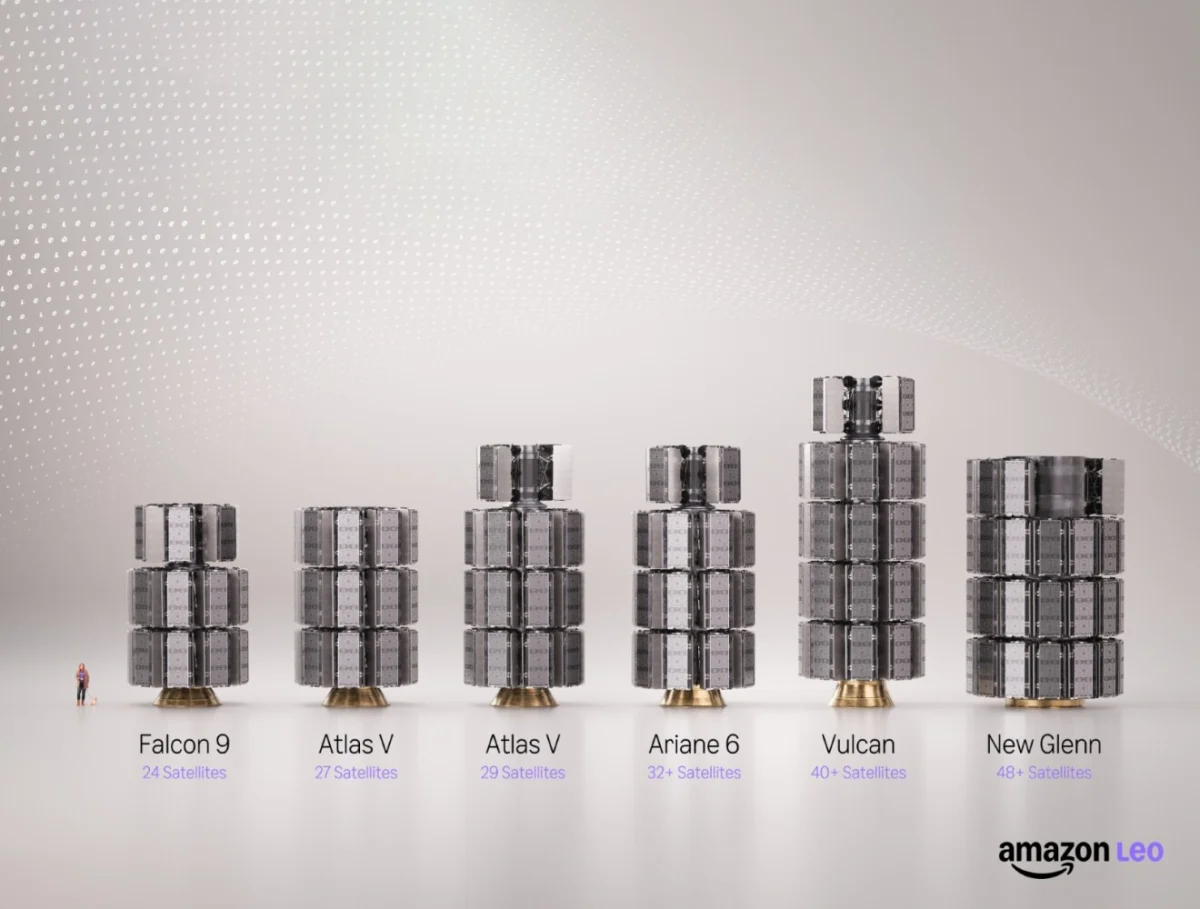
In the high-stakes arena of low-Earth orbit (LEO) satellite constellations, Amazon has officially hit a significant operational milestone. With the successful deployment of its latest batch of satellites, Project Kuiper—Amazon’s ambitious answer to SpaceX’s Starlink—now has 396 satellites orbiting the planet. According to Chris Weber, the vice president leading business and product for the initiative, this density is "enough to support continuous service across initial latitudes."
While this marks a pivotal step toward Amazon’s goal of commercial availability by mid-2026, the company faces a long, arduous road to challenge the dominance of Elon Musk’s SpaceX. As the tech giant prepares to transition from a development phase to a service-provider model, industry observers are closely watching to see if Amazon can overcome significant infrastructure delays to deliver on its promise of global, high-speed connectivity.
A Chronology of Ambition and Delay
Project Kuiper was announced in 2019 with a vision to connect the "unconnected" and provide a robust alternative to traditional terrestrial ISPs. However, the path to orbit has been anything but smooth.
- 2019: Amazon formally announces Project Kuiper, seeking FCC approval to deploy a constellation of over 3,000 satellites.
- 2020–2022: Amazon secures launch contracts with Arianespace, ULA, and Blue Origin, signaling an intent to diversify its launch vehicles.
- 2023: Amazon successfully launches two "Protoflight" test satellites, marking the first time the company’s hardware operated in the vacuum of space.
- 2024–2025: A rapid series of deployments begins as Amazon seeks to meet regulatory requirements and service milestones.
- January 2025: The constellation reaches 396 operational satellites, hitting the threshold for "initial latitude" coverage.
The delay in this timeline is largely attributed to the slow development of Blue Origin’s New Glenn rocket. As Jeff Bezos’ private space firm grapples with the complexities of reusable launch vehicle technology, Amazon has been forced to rely heavily on third-party launch providers to keep its project alive, creating a strategic bottleneck that has hindered its ability to scale at the pace of its primary rival, SpaceX.
The Starlink Benchmark: A History of "Better Than Nothing"
To understand the expectations for Project Kuiper, one must look at the precedent set by SpaceX. When Starlink launched its "Better than nothing beta" in 2020, it did so with nearly 900 satellites—more than double the current count of Amazon’s active constellation.
Early users were met with significant growing pains. Reports of frequent service interruptions, high latency, and sensitivity to physical obstructions like tree lines and buildings were rampant. Speeds fluctuated between 50Mbps and 150Mbps. However, as SpaceX expanded its constellation, those metrics stabilized significantly. Today, with over 10,000 satellites in operation, Starlink has become a global powerhouse, providing reliable service in over 160 countries with median download speeds of 200Mbps and latency that rivals terrestrial broadband.
Amazon’s leadership is managing expectations accordingly. Weber and his team have been clear that while the current infrastructure is sufficient to "light up" the network, early adopters should not expect the seamless, high-performance experience that current Starlink users enjoy. The initial phase will be one of testing, calibration, and iterative improvement.
Supporting Data: The Scale of the Challenge
The disparity between Project Kuiper and Starlink is not just about the number of satellites; it is about the maturity of the infrastructure.

| Metric | Project Kuiper (Current) | Starlink (Current) |
|---|---|---|
| Operational Satellites | 396 | ~10,000 |
| Planned Constellation | 3,232 | Unlimited (Growth-based) |
| Median Download Speed | N/A (Beta) | 200 Mbps |
| Latency | N/A (Beta) | ~25 ms |
| Global Reach | Initial Latitudes | 160+ Countries |
Amazon’s goal is to reach a total of 3,232 satellites. While this number is substantial, it remains a fraction of the total capacity that SpaceX has already deployed. Furthermore, the reliance on the New Glenn vehicle remains a primary point of concern. If Blue Origin continues to struggle with its testing phases and launch cadence, Amazon may find its hardware sitting in warehouses while its competitors continue to occupy critical orbital slots.
Official Responses and Strategic Implications
Amazon’s internal stance remains one of cautious optimism. The company views Project Kuiper as a crucial component of its broader ecosystem—a way to tie together its retail, cloud computing (AWS), and logistics networks.
"We are building a network that will fundamentally change how people in underserved regions access the digital economy," a spokesperson noted in a recent briefing. By integrating Kuiper with AWS, Amazon is positioning itself to provide high-speed, low-latency backhaul for enterprise clients, remote research stations, and maritime operations, perhaps even more than the average residential consumer.
However, the implications of this delay are profound:
- Market Saturation: SpaceX has effectively captured the "first-mover" advantage. By the time Amazon is fully operational in 2026, Starlink may have already solidified its hold on the most lucrative commercial and government contracts.
- Regulatory Pressure: The FCC has set strict deployment deadlines for Amazon to maintain its spectrum licenses. If the company cannot maintain its current launch momentum, it risks losing the legal right to operate in certain bands, which would be a catastrophic blow to the project’s viability.
- Cost Efficiency: With massive capital expenditures required for both rocket development and satellite production, the economic window for Project Kuiper to reach profitability is shrinking.
The Road Ahead: Can Amazon Bridge the Gap?
The coming 18 months will be the most critical in the history of Project Kuiper. The focus will shift from simple deployment to network stability and user-terminal manufacturing. Amazon has invested heavily in creating low-cost, high-performance user terminals—the "dishes" that consumers will use to access the network—and the efficiency of these units will be just as important as the satellites themselves.
If the "mid-2026" target for commercial availability is to be met, Amazon must demonstrate that its network can handle the stress of real-world usage. This means not just launching hardware, but proving that the system can manage hand-offs between satellites seamlessly as they streak across the sky at 17,000 miles per hour.
For consumers, the arrival of Project Kuiper is likely to be a net positive. Increased competition in the satellite internet space is historically the best driver for lower prices and better service quality. Whether Amazon can truly disrupt the space currently occupied by SpaceX remains an open question, but the "lights" are officially being turned on.
As we look toward 2026, the question is no longer whether Amazon can build a satellite network, but whether it can build one that is fast, reliable, and affordable enough to matter in an increasingly crowded sky. For now, the tech giant is moving forward with a measured, deliberate approach, hoping that slow and steady wins the race—or, at the very least, keeps them in the game.
 Sagoh
Sagoh  Raul Delapena Setiawan