
 By Iffa Jayyana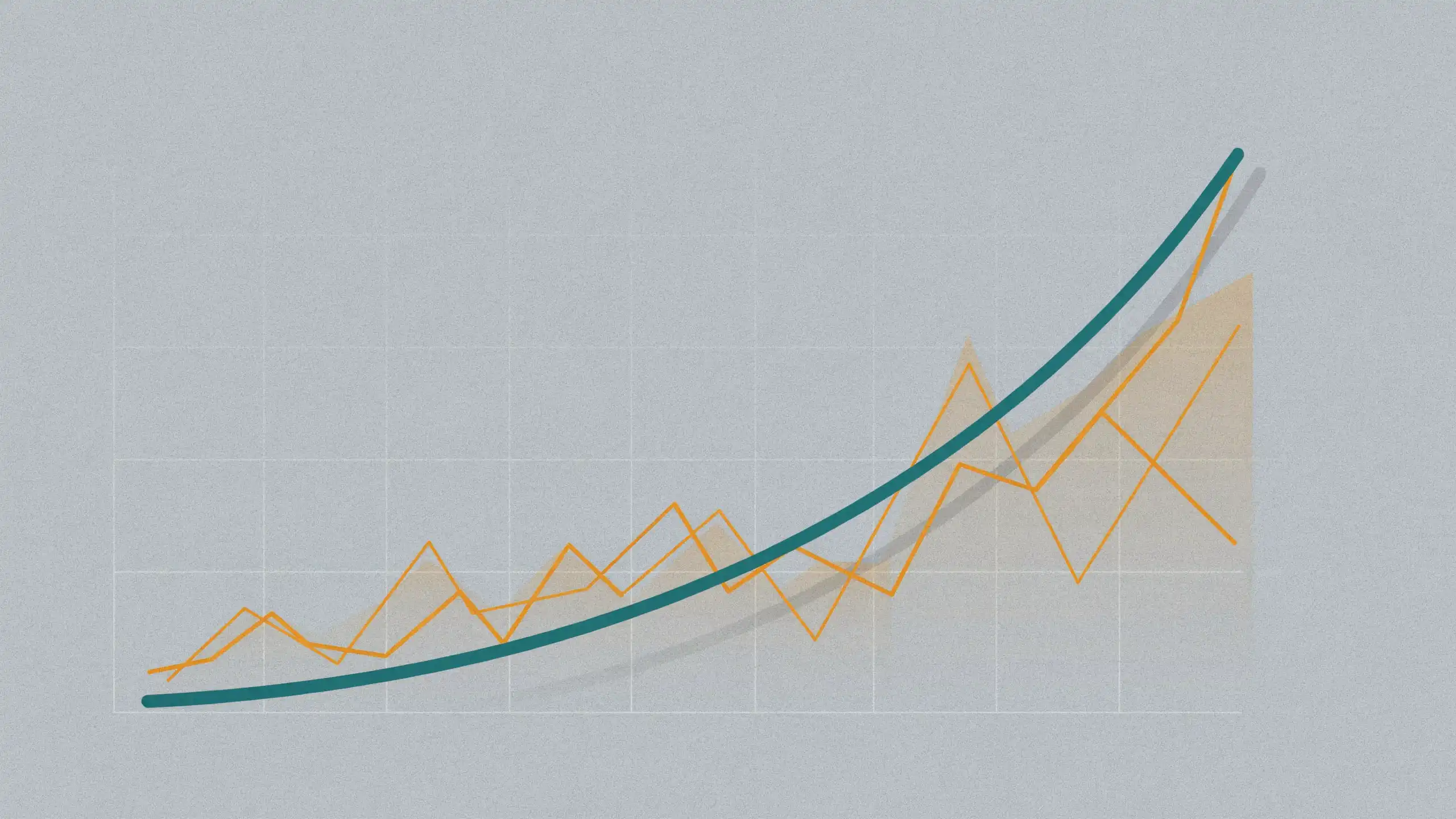
For decades, the financial industry has marketed the allure of the "star manager"—the brilliant mind on Wall Street capable of outmaneuvering the market, picking the next tech titan, and shielding investors from downturns. Investors have paid billions in management fees for this perceived expertise. However, a growing body of evidence, reinforced by 25 years of data from the S&P Global SPIVA (S&P Indices Versus Active) scorecard, suggests a sobering reality: for the vast majority of investors, the most expensive way to grow wealth is to pay someone to try and beat the market.
The Core Conflict: Skill vs. Strategy
The fundamental premise of active management is that by researching, analyzing, and timing the market, a professional manager can deliver "alpha"—returns in excess of a benchmark index. In contrast, index funds are passive vehicles. They do not aim to beat the market; they aim to be the market by holding a representative basket of stocks, such as those found in the S&P 500 or a total stock market index.
The "hard part" for many investors is the psychological hurdle of accepting that inactivity is a superior strategy. Wall Street’s business model relies on the perception that stock-picking is a skill worth paying for. Yet, the data consistently shows that this "skill" rarely survives the weight of its own price tag. When an investor pays a 1% annual fee for an active fund, they are essentially placing a bet that the manager will outperform the market by at least 1% every single year just to break even with a low-cost, passive alternative. Mathematically, that is a losing game for most.
Chronology of a Failed Promise: 25 Years of SPIVA
The S&P Global SPIVA scorecard has served as the industry’s objective scoreboard since its inception. It provides a quarterly, transparent look at how actively managed funds compare to their respective benchmarks.
- The Early Years: When SPIVA began, the debate between active and passive management was often dismissed as a niche academic concern. However, as the data accumulated, the trend became undeniable. Even in the 1990s and early 2000s, it was clear that the majority of active managers failed to sustain long-term outperformance.
- The Mid-2000s to 2015: As retail investors began to embrace low-cost ETFs and index mutual funds, the performance gap widened. The rise of algorithmic trading and the democratization of market data meant that "information asymmetry"—the edge managers once held—effectively evaporated.
- 2020–2025: The Current Reality: The most recent data from 2025 underscores the persistence of the trend. In that year alone, 79% of active large-cap funds trailed the S&P 500. Furthermore, fewer than one in six active managers were able to beat their benchmark over a 10-year horizon. This confirms a grim reality for active management: consistency is essentially non-existent. Funds that rank in the top quartile of performance in one five-year period rarely repeat that success in the next.
Supporting Data: The Mathematical Weight of Fees
The disparity in performance is not solely the result of poor stock selection; it is driven by the crushing weight of expense ratios.
Consider a hypothetical investment scenario:
- The Active Fund: Charges an annual expense ratio of 1.00%.
- The Index Fund: Charges an annual expense ratio of 0.03%.
While a 0.97% difference may seem negligible on an annual statement, the power of compounding turns this into a massive chasm. Over a 30-year investment horizon, that 1% fee consumes approximately 25% of the total potential growth of a portfolio.
Moreover, the "hurdle rate" for active managers is incredibly high. If the S&P 500 returns 8% in a given year, an active manager with a 1% fee must generate a gross return of 9% just to match the index. To truly provide value, they must generate 10% or more. This requires taking on additional risk, which often leads to volatility that can result in even larger losses during market corrections.
Official Responses and Industry Sentiment
The financial services industry has been forced to adapt to this shift. Large brokerages and investment firms, once built entirely on the commissions generated by active funds, have pivoted. Many have launched their own proprietary lines of low-cost index funds and "smart beta" products.
However, the "Active" camp still has its defenders. Proponents argue that active management is essential for market efficiency—that if everyone invested passively, prices would no longer reflect the true value of companies. While this may be a valid economic theory regarding price discovery, for the individual investor, the practical reality remains: paying for market efficiency is a cost that the investor bears, but the benefits accrue to the market as a whole.
Institutional investors, including pension funds and endowments, have increasingly moved toward a "core-satellite" approach. They place the bulk of their capital in low-cost index funds (the core) and reserve a small portion for active managers (the satellites) in niche, less efficient markets—such as emerging market small-caps or private equity—where the potential for "alpha" is higher than in the well-trodden large-cap U.S. market.
The Practical Path Forward
For the individual investor, the implications of this data are clear. Wealth creation is not found in the excitement of picking the next big stock, but in the discipline of long-term holding.
1. Simplify the Architecture
The first step is to audit your existing holdings. If your 401(k) or brokerage account is filled with dozens of actively managed funds with expense ratios exceeding 0.5%, you are likely losing a significant percentage of your wealth to fees. Compare these funds to the index options available in your plan. If an index fund exists with an expense ratio under 0.1%, it is almost always the mathematically superior choice.
2. Automate and Ignore
The greatest enemy of the investor is not the market, but their own behavior. Investors often panic during downturns or chase "hot" funds after they have already peaked. By automating a monthly contribution into a broad-market index fund, you remove the emotional component from the equation. The goal is to own the entire economy and let the power of global growth work for you over decades, not days.
3. Focus on What You Can Control
You cannot control the market’s return, nor can you predict which sector will lead in 2026. However, you have absolute control over your savings rate and your investment costs. By choosing low-cost, diversified index funds, you ensure that the maximum amount of your money stays in your account to compound, rather than being siphoned off by management fees.
Conclusion: The Victory of Boredom
The data over the last quarter-century paints a consistent, boring picture: the investor who buys the entire market and leaves it alone for 20 years will almost certainly outperform the professionals who are paid to beat it.
"Boring" is the ultimate strategy. It is the strategy of the patient, the disciplined, and the informed. In a world of 24-hour financial news cycles and the constant pressure to "do something," the most radical and profitable move is to do almost nothing at all. By embracing the passive approach, you stop competing against the market and start partnering with it. In the long run, the math is on your side.
 Basiran
  Raul Delapena Setiawan
  Nana
Nana 