
 By Nila Kartika Wati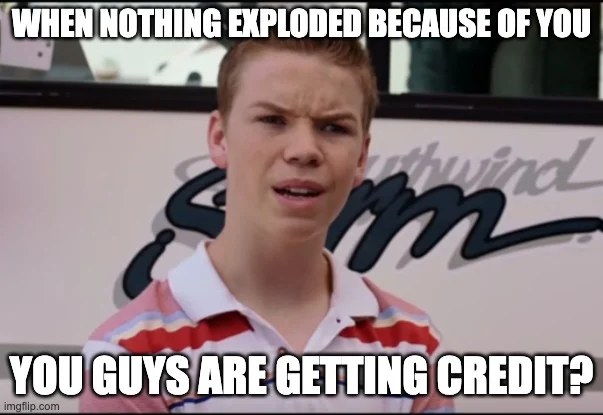
Introduction: The Hiring Paradox
In the high-stakes environment of modern software engineering, the interview process is often treated as an exact science. Candidates are run through rigorous gauntlets: system design whiteboarding, algorithmic complexity analysis, and architectural trade-off debates. These metrics are objective, quantifiable, and seemingly bulletproof. Yet, hiring managers frequently face a frustrating phenomenon: the "B-list" candidate who barely passes the technical threshold but becomes the most valuable asset on the team within six months.
Consider the case of "Mitch." During his interview loop, the consensus among the engineering panel was lukewarm. He didn’t dazzle in architectural design, nor did he demonstrate the lightning-fast pattern recognition required to solve LeetCode-style puzzles. The feedback was a collective shrug—neither a clear "no-go" nor an enthusiastic "hire." Yet, there was an intangible quality to his presence that prompted the hiring manager to take a risk. The hire was made.
What followed was not the dramatic, high-velocity output of a "rockstar" engineer. Instead, it was a quiet, systemic transformation. Within weeks, Mitch had begun mapping the team’s tribal knowledge, updating decaying runbooks, and documenting processes that had existed only in the minds of departing employees. He wasn’t just writing code; he was lubricating the gears of the organization. Mitch is what the industry is beginning to identify as a "Gap Reader."
Chronology: From Uncertain Hire to Structural Linchpin
The trajectory of an engineer like Mitch typically follows a consistent, if often overlooked, timeline:
- Phase 1: The Induction Period. Mitch enters a team that is already moving fast. He doesn’t attempt to rewrite the core platform or boast about his previous successes. Instead, he begins an "archeological" phase. He observes where existing developers stumble, noting the friction points in the onboarding documentation and the ambiguity in service request paths.
- Phase 2: The Identification of "The Mess." While most engineers treat technical debt and process messiness as obstacles to be worked around, Mitch treats them as the primary work. He closes the loops: if he finds an unanswered question, he hunts down the answer and commits it to the documentation.
- Phase 3: The Stabilization Phase. As his influence grows, the team begins to offload their "ugly" problems to him—the ambiguous dependencies, the poorly communicated handoffs, and the looming technical risks. He doesn’t act as a judge; he acts as a facilitator, keeping the problems visible and the stakeholders aligned.
- Phase 4: The Institutionalization. Eventually, the "Mitch effect" becomes systemic. The chaos he once managed is replaced by clear processes. The team stops asking "What should we do about this?" and finds the answer already embedded in the documentation he helped build.
The Anatomy of a Gap Reader
The core value of a Gap Reader lies in their ability to detect the "invisible" failures that threaten projects long before they manifest as outages.
The Failure of Traditional Metrics
Standard interview loops are designed to measure bounded skill—how well a candidate performs within a defined, artificial box. They test for specific technical inputs and outputs. However, engineering is rarely a series of isolated technical problems. It is a social, political, and historical ecosystem.
A Gap Reader’s value is not in knowing every answer; it is in knowing where the answer should be and why no one can find it. They notice when two teams are using the same terminology to describe different objects. They sense when a cross-team dependency is likely to fail because of a lack of genuine alignment. These are not "LeetCode" skills; they are high-level cognitive and sociological skills that are often invisible in a 45-minute technical screen.
Managing the "Nothing Happening" Dilemma
One of the primary challenges in assessing these individuals is that their success often appears as "nothing happening." In a traditional performance review, an engineer who fights a massive production fire for 48 hours is hailed as a hero. The Gap Reader, who noticed the migration would fail on legacy data and added a check that prevented the fire from ever occurring, is often overlooked entirely.
This is a fundamental "measurement bug" in modern engineering culture. We incentivize the mitigation of damage rather than the prevention of friction. By reducing the coordination cost—which is often where teams bleed the most time—the Gap Reader makes the entire team faster, yet the credit for that increased velocity is diffuse and hard to track.
Implications for Engineering Leadership
The existence of the Gap Reader poses a significant challenge to the way tech companies organize their teams and evaluate talent.
The Risk of "Coordination Burnout"
There is a dark side to the Gap Reader’s efficacy: the "bottleneck of trust." If an organization relies too heavily on one individual to act as the repository of coordination knowledge, they create a single point of failure. When the team stops asking, "How do we solve this?" and starts asking, "What does Mitch think?", the organization has effectively outsourced its collective intelligence to one person. If that person leaves, the company finds itself in a state of sudden, paralyzing amnesia.
Redefining Technical Leverage
Managers must learn to look for the "signal of friction going down." When a new hire joins, the manager should track:
- Reduction in Interruptions: Does the team spend less time asking, "Who owns this?" or "Where is the documentation for that?"
- Documentation Health: Is the repository of "tribal knowledge" shrinking as written documentation expands?
- Cross-functional Alignment: Are there fewer late-stage "surprises" during project handoffs?
These are not merely soft skills; they are a form of technical leverage. A Gap Reader is effectively building the "operating system" around the code.
Official Perspectives and Industry Observations
Industry veterans and engineering leads have long struggled to articulate the value of "glue people"—those who, while not the most productive in terms of raw commits, are essential to the team’s "jelled" state.
"We are seeing a shift in the requirements for senior-level engineers," says one CTO of a major cloud-services firm. "For a long time, we valued the ’10x engineer’ who could out-code their peers. Now, we are realizing that a 10x engineer who creates a massive mess of technical debt or social friction is actually a net negative. We are moving toward valuing the ‘systemic integrator’—the person who makes the other 10 people on the team 10% more effective. That is a massive net gain."
Despite this realization, the hiring systems remain stubborn. The industry is currently locked in a cycle of "AI-proof" interviewing that favors speed and syntax over systemic awareness. The result is a selection bias that rewards candidates who can "play the game" of the interview, often overlooking those who are capable of changing the game for the better.
Conclusion: The Future of Assessment
The "Mitch" archetype reminds us that engineering is not just about the code. It is about the people, the processes, and the gaps between them. As teams grow larger and systems more complex, the cost of "coordination drift" will only increase.
To remain competitive, companies must evolve their interview loops to look beyond the immediate performance of a system design task. They must look for the "archaeologist"—the person who is willing to dig through the mess, document the reality, and close the gaps that others ignore.
True technical leverage isn’t just about building features; it is about building an environment where features can be built safely, predictably, and with minimal friction. The Gap Reader is the architect of that environment. It is time for hiring managers to stop looking for the person who gives the best answers and start looking for the person who asks the right questions—even if those questions seem, at first glance, like they aren’t technical enough.
Ultimately, the most effective engineers are not those who thrive within the rules of the existing system, but those who have the insight to make the game less stupid for everyone else. Identifying this trait requires a shift in perspective, a willingness to value the "absence of pain" over the "presence of noise," and a recognition that the most important work in engineering is often the work that never has to be fixed.
 Raul Delapena Setiawan
  Suro Senen
  Dwi Wanna