
 By Azzam Bilal Chamdy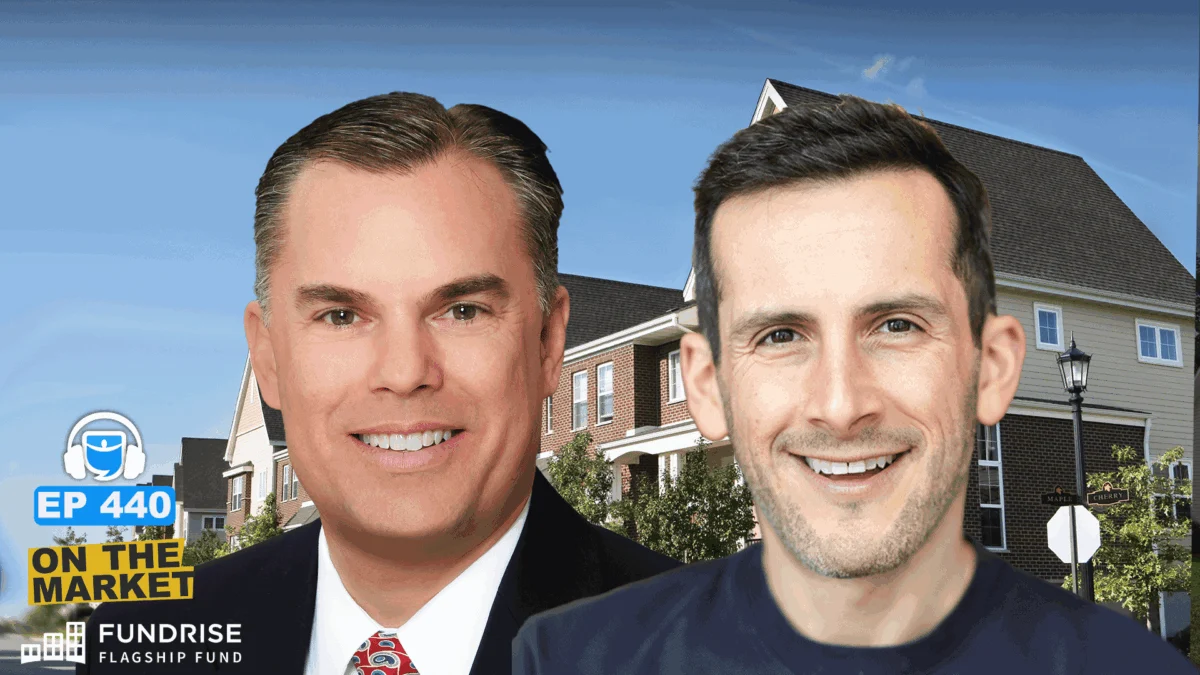
As we cross the halfway mark of 2026, the real estate market remains a complex puzzle of conflicting indicators. While nominal home prices have managed to inch upward, the broader economic climate—marked by interest rate volatility and shifting transaction velocities—has created a "boring" but deeply strategic environment for investors. To make sense of this, Dave Meyer, host of On The Market, recently sat down with veteran real estate expert Brian Burke to parse the current state of the industry, the surprising resilience of the stock market, and where the next decade of opportunity lies.
The State of the Market: A "Boring" But Necessary Phase
The residential real estate market in 2026 is, by most accounts, lacking in vitality. New home inventory is climbing as builders struggle with higher carrying costs, and transaction volumes remain subdued. For many, this represents a period of stagnation, but Burke argues that this "boredom" is actually an invitation for disciplined investors.
"The best time to be in the market is during boring times," Burke explains. "When things are exciting, everybody’s piling in and you can’t get anything unless you’re overpaying. So this is the time to take advantage of the flatness. Don’t shun it; embrace it."
While some observers are waiting for a significant price correction—the "30% drop" narrative often discussed in popular media—Burke remains skeptical. He notes that the current market lacks the fundamental weaknesses that characterized the 2007–2008 financial crisis. Unlike the mid-2000s, homeowners today have high levels of equity, many are mortgage-free, and loan-to-value (LTV) ratios are exceptionally favorable. This structural stability provides a floor for prices, making a catastrophic collapse unlikely.
Chronology of the 2026 Economic Climate
The first half of 2026 has been defined by a striking dislocation between macroeconomic sentiment and market performance.
- Q1 2026: Markets opened with widespread concerns regarding a potential recession, a looming debt crisis, and fears of waning U.S. economic dominance.
- Q2 2026: Despite these pessimistic forecasts, the stock market has consistently climbed. Investors have shown a clear preference for bullish positions, voting with their capital day after day.
- Mid-2026: The current period is characterized by what Burke calls "Jekyll and Hyde" behavior—a disconnect between the gloom of personal finance headlines and the robust profitability of corporations.
Burke observes that while individual households report feeling the pinch of inflation and interest rates, their continued spending habits are effectively fueling the corporate earnings that keep the stock market afloat. This cycle suggests that while the "personal" side of the economy may be in peril, the "corporate" engine remains surprisingly durable.
Supporting Data: Bifurcation and Commercial Distress
A critical development in 2026 is the K-shaped nature of the residential housing market. In regions like Northern California, the upper-end price bracket is seeing significant weakness, while the median and lower price brackets remain relatively robust. This bifurcation often masks the true health of the market, as aggregate statistics fail to capture the divergence between luxury performance and entry-level necessity.
The Commercial Real Estate (CRE) Collision
In the commercial sector, the narrative is starkly different. Burke, who previously forecasted that the market would be "fixed in 2026" and a "buyer’s heaven in 2027," acknowledges that the timeline has stretched. He likens the current CRE situation to a major pile-up in an intersection where all the lights were green—rent growth, occupancy, and interest rates were all favorable until the crash occurred.
"The harder the impact, the more likely it is that the victims are trapped," Burke says. "It’s going to take specialized equipment and time to extricate these assets."
Lenders, currently in "self-preservation mode," are opting to keep troubled assets on their books rather than foreclosing, often asking original owners to continue managing the properties. This effectively kicks the can down the road, waiting for values to recover enough to allow for a clean exit.
Official Perspectives: The Syndication Debate
A significant point of discussion centered on the role of syndications—pooling investor capital for large-scale real estate projects. High-profile failures in the sector have led to a narrative that syndications themselves are inherently risky.
Burke dismisses this, emphasizing that a syndication is merely a structure, not a root cause of failure. He categorizes the current wave of failures into three types:
- Market Failures: Macroeconomic downturns that affect all owners, regardless of structure.
- Sponsor Failures: Issues related to a lack of experience, partnership disputes, or poor track records.
- Structural Failures: Poor debt choices, such as high-leverage, short-term loans that mature during market troughs.
"A market failure simply exposes the other two," Burke notes. "When the market turns, the inexperienced operators and those with bad debt structures are the ones who implode."
Implications for Future Investors
Looking ahead to the remainder of 2026 and into 2027, the outlook for savvy investors is one of measured optimism. The decline in new construction starts and a tapering in the architectural billing index suggest that the current oversupply of apartments will eventually give way to a shortage.
The Case for Senior Housing and Diversification
While traditional multifamily units face short-term headwinds, Burke highlights senior housing as a standout asset class. Driven by unique demographic shifts, it is currently outperforming other commercial sectors. This strength is also trickling down into adjacent markets, such as mobile home parks, which often share similar demographic profiles.
For investors, the implications are clear:
- Patience is a Virtue: There is no need to rush into the market to "time the bottom." Historical data shows that when a double-digit correction occurs in commercial real estate, it is often followed by a bull run lasting a decade or more.
- The Power of Relationship-Based Buying: The best deals in the coming years will not be found on the open market. They will be acquired through private relationships between lenders and operators. Consequently, investing through reputable syndicators who possess these relationships provides individual investors with a "backdoor" into high-value opportunities.
- Portfolio Construction: A resilient financial picture is built on diversification. Whether it is stocks, single-family rentals, or specialized commercial assets, the goal is to eliminate single points of failure.
Conclusion: Preparing for the Decade-Long Run
The consensus between Meyer and Burke is that the current market environment is a testing ground for discipline. While the residential market offers stability, the commercial real estate space—despite its current distress—is poised for a significant long-term recovery.
As the construction pipeline slows and demand stabilizes, the conditions for a sustained bull run are beginning to take root. For those willing to look past the media’s pessimistic "business model" and focus on underwriting quality deals with experienced sponsors, the next few years represent a rare opportunity to build a foundation that will look like a masterstroke when the cycle finally turns.
"You don’t have to be the first guy in," Burke concludes. "It’s okay to be a week late, and it’s better than being a week early."
By avoiding the "fear of missing out" and focusing on the fundamentals of cash flow and structural integrity, investors can navigate the 2026 landscape with confidence, positioning themselves to capture the growth that inevitably follows these periods of market adjustment.
 Nana Wu
  Basiran
  Muslim