
 By Lina Hope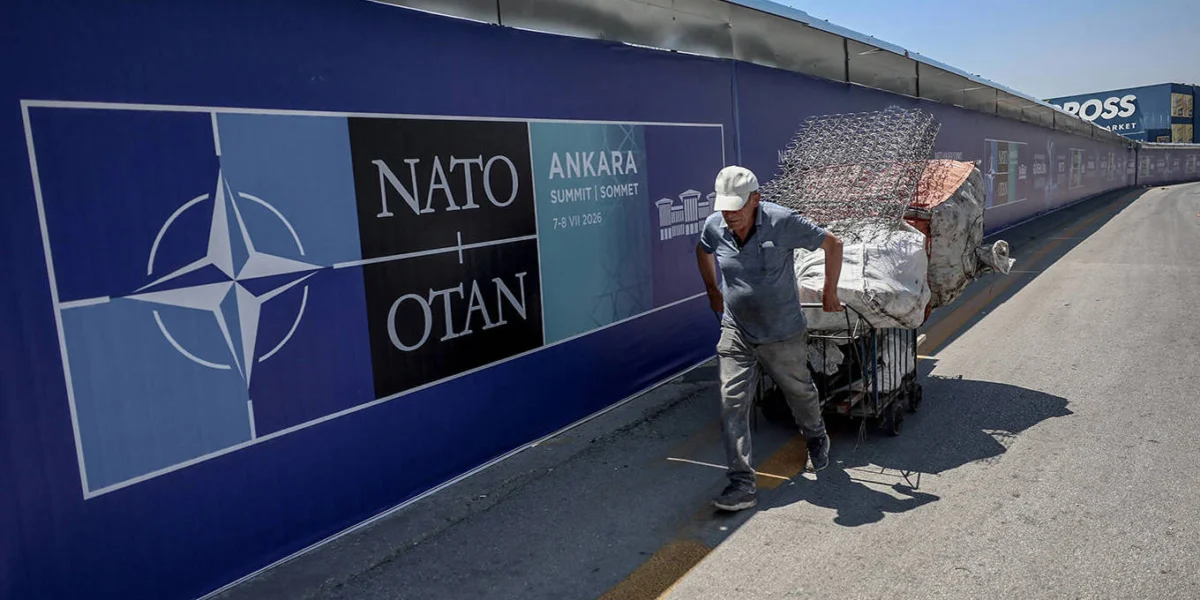
By Özgür Özel
July 6, 2026
As the North Atlantic Treaty Organization (NATO) prepares to convene its annual summit in Ankara on July 7–8, 2026, the diplomatic optics are meticulously curated. For Turkish President Recep Tayyip Erdoğan, the summit is intended to be a grand stage—a projection of a stable, confident, and indispensable regional power. Yet, behind the polished veneer of the host nation lies a starker reality: Turkey is indeed indispensable to Western security, but its democratic architecture is crumbling.
The paradox defines the current geopolitical landscape. NATO requires a strong, operational Turkey to anchor its southeastern flank, particularly amidst the volatility of the Middle East and the ongoing shadow of regional conflicts. However, the alliance’s foundational principles—democracy, individual liberty, and the rule of law—are increasingly at odds with the current trajectory of the Turkish state.
The Strategic Importance of the Host
Turkey’s geostrategic value to NATO has never been in question. Situated at the crossroads of Europe, Asia, and the Middle East, the country serves as the literal bridge between the Western alliance and the instability of the Levant and the Black Sea. With the second-largest standing army in the alliance, Turkey provides a vital bulwark against encroachment and serves as a primary intelligence and logistics hub.
However, the upcoming summit serves as a reminder that strategic utility does not equate to ideological alignment. As NATO leaders descend on Ankara, they find themselves in a country governed by a man who has held power for over two decades—a tenure that has fundamentally transformed the republic’s political DNA.
Chronology: Two Decades of Transformation
To understand the gravity of the current moment, one must look at the arc of the Erdoğan era.
- 2003–2010: The Reformist Years: Initially, the Justice and Development Party (AKP) was viewed by many in the West as a model for moderate, pro-European Islamic democracy. Economic liberalization and constitutional reforms aimed at EU accession defined this period.
- 2011–2015: The Authoritarian Pivot: Following the Arab Spring, the rhetoric shifted. Internal dissent, particularly the Gezi Park protests of 2013, was met with state-sanctioned force, signaling a departure from the democratic pluralism of the previous decade.
- 2016: The Failed Coup and Aftermath: The failed military coup attempt in July 2016 served as a catalyst for a sweeping consolidation of power. A state of emergency led to mass purges within the judiciary, the civil service, and the military.
- 2017–2023: The Executive Presidency: The constitutional referendum of 2017 transitioned Turkey from a parliamentary system to an executive presidency, effectively removing traditional checks and balances.
- 2024–2026: The Current Stagnation: Today, the political environment is characterized by a restricted press, a compromised judiciary, and the systematic marginalization of opposition voices, setting the stage for this week’s summit.
Supporting Data: The Erosion of Institutions
The decline of Turkish democracy is not merely a matter of political rhetoric; it is a measurable phenomenon. Independent observers and international monitors have noted a consistent downward trend in Turkey’s standing.
According to the latest data from the V-Dem Institute and Freedom House, Turkey has seen a steady erosion in the "Liberal Democracy Index." Factors contributing to this include the imprisonment of journalists, the administrative takeover of opposition-led municipalities, and the politicization of the high courts. Economically, the instability of the Turkish Lira and the departure of foreign direct investment—driven by a lack of legal predictability—have further strained the social contract.
When NATO leaders discuss "shared values" during the opening sessions, these figures will haunt the proceedings. A military alliance is only as strong as the political legitimacy of its members; when a member state drifts away from democratic governance, it introduces a systemic vulnerability that no amount of military hardware can patch.
Official Responses and Diplomatic Tightrope
The official stance from Ankara is one of defiance and self-assurance. President Erdoğan’s administration consistently frames domestic crackdowns as "necessary measures to protect national security" against existential threats, ranging from terrorism to foreign-backed sabotage.
Conversely, the response from Brussels and Washington has been one of calculated ambiguity. NATO officials, when pressed, emphasize the importance of Turkey’s "continued commitment to the alliance" and its role in regional security. There is a palpable fear that public criticism of Turkey’s domestic situation could push Ankara closer to alternative power blocs, such as the Shanghai Cooperation Organization (SCO) or bilateral entanglements with Moscow and Beijing.
"We need Turkey," a senior NATO diplomat noted on the condition of anonymity. "But we also need Turkey to be the nation that signed the North Atlantic Treaty, not just a tactical partner of convenience."
Implications for the Future of NATO
The implications of this summit extend far beyond the borders of Turkey. If NATO remains silent on the democratic regression of its members, it risks internalizing the very authoritarianism it claims to stand against.
1. The Erosion of Credibility
If the alliance ignores the silencing of dissent in Ankara, it loses its moral authority to critique human rights abuses in non-member states. The "democratic core" of NATO becomes a hollow phrase, making it difficult to maintain the support of citizens in member states who value human rights and the rule of law.
2. The Risk of Internal Fragmentation
A Turkey that prioritizes its own executive interests over collective alliance stability creates friction. Whether through unilateral military actions in Northern Syria or controversial diplomatic maneuvers, the current Turkish government has repeatedly shown that it acts as a "freelance" power within the NATO framework.
3. The Need for a New Engagement Strategy
The time has come for a more robust engagement strategy. Rather than viewing democracy and security as separate silos, NATO must recognize that the restoration of democracy in Turkey is, in fact, a matter of Western security. A democratic, predictable, and stable Turkey is a more reliable ally than one ruled by the whims of an individual whose power relies on constant crisis and polarization.
Conclusion: A Call for Principled Diplomacy
As the summit concludes on July 8, the world will look for a joint communique that balances security commitments with democratic aspirations. The challenge for NATO leaders is to find a way to encourage reform in Ankara without triggering a rupture that would leave the alliance dangerously exposed.
The restoration of democracy in Turkey is not merely a domestic concern for the Turkish people; it is a vital interest for the entire North Atlantic community. If Turkey is to remain an essential pillar of Western security, it must first be an essential pillar of Western values. Without a clear path back to the rule of law and political pluralism, the "stability" Erdoğan claims to offer will remain a fragile, temporary illusion—one that leaves NATO’s southeastern flank more vulnerable than ever.
The leaders gathered in Ankara this week face a choice: they can continue to prioritize the tactical utility of an autocrat, or they can begin the difficult, necessary work of holding a strategic partner to the standards of the alliance. The history of the next decade will be written based on how they navigate this dilemma.
 Sagoh
Sagoh  Reynand Wu
  Iffa Jayyana