
 By Laily UPN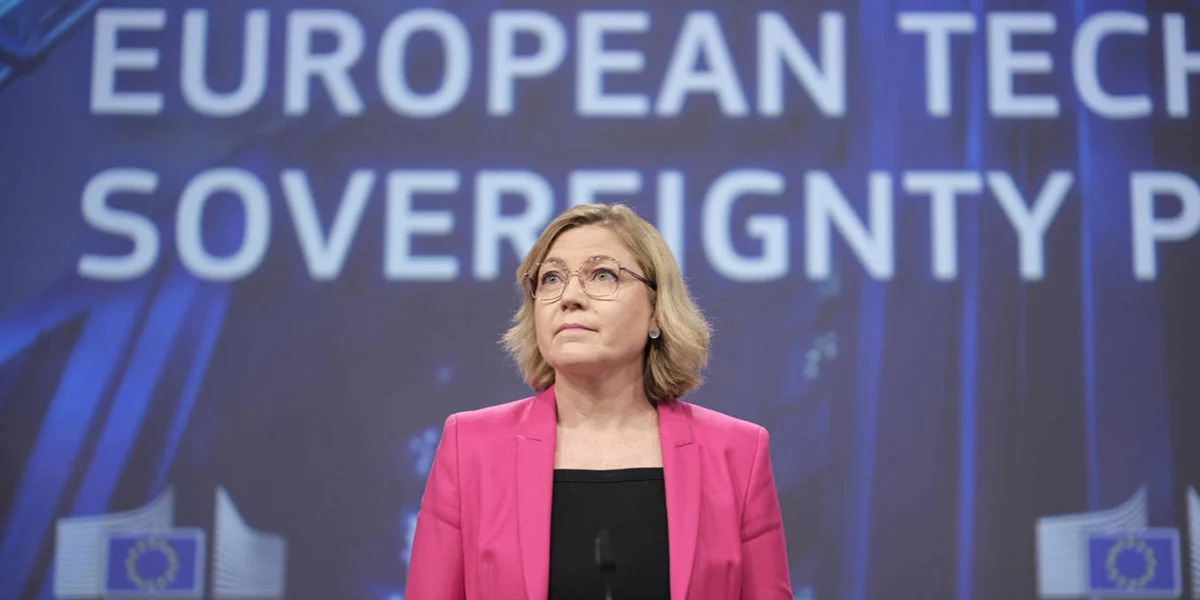
By Giorgos Verdi
July 7, 2026
BRUSSELS — The European Union stands at a precarious crossroads. For the better part of two decades, the continent’s digital ecosystem has been defined by a quiet, pervasive dependency: the reliance on American technology giants for the foundational infrastructure of modern life. From the cloud services hosting government data to the artificial intelligence models shaping the next generation of industrial automation, Europe has become a consumer of digital sovereignty rather than a producer.
In early June 2026, the European Commission finally sought to address this imbalance, unveiling its much-anticipated "Tech Sovereignty Package." The policy agenda is a sweeping attempt to reclaim control, prioritizing investments in generative AI, domestic semiconductor manufacturing, sovereign cloud infrastructure, and the expansion of open-source software. Yet, as the ink dries on these ambitious proposals, a fundamental question persists: Can investment alone bridge the chasm created by decades of market concentration?
The Main Facts: Defining the Tech Sovereignty Package
The Tech Sovereignty Package is not merely a set of subsidies; it is an industrial strategy designed to insulate the European Single Market from geopolitical shocks and supply chain disruptions. The Commission’s agenda is built upon four primary pillars:
- AI Orchestration: A €45 billion initiative to develop "European-native" Large Language Models (LLMs) that prioritize data privacy and compliance with the EU AI Act, aiming to reduce reliance on proprietary models owned by US firms.
- Semiconductor Independence: An accelerated expansion of the "Chips for Europe" initiative, with the goal of securing 25% of global semiconductor manufacturing capacity by 2030, specifically focusing on advanced nodes (below 5nm) essential for high-performance computing.
- Sovereign Cloud Infrastructure: The implementation of the "Euro-Cloud" project, a decentralized, high-security cloud network designed to host sensitive public sector and industrial data, effectively creating a sanctuary from the jurisdiction of non-EU intelligence laws.
- Open-Source Acceleration: A mandatory integration requirement for public procurement, forcing government contractors to prioritize open-source software to prevent vendor lock-in.
The strategy represents a clear departure from the EU’s traditionally passive role as a "regulatory superpower," shifting toward the role of an active industrial player.
A Chronology of Dependency: How Europe Lost Its Digital Foothold
To understand the urgency of the June 2026 package, one must look back at the trajectory of the last twenty years.
- 2005–2010: The Cloud Migration. As European enterprises began their digital transformation, the lack of a unified regional cloud provider forced companies to lean on the established scalability of Amazon Web Services (AWS) and Microsoft Azure. This period established a "lock-in" effect that persists to this day.
- 2015–2020: The Data Privacy Awakening. With the introduction of the GDPR, Europe positioned itself as the global arbiter of privacy. However, while the EU successfully regulated Big Tech, it failed to build the domestic alternatives required to replace them.
- 2023–2025: The Generative AI Shock. The explosion of AI caught European firms flat-footed. As US-based models became the industry standard, European startups found themselves forced to build on top of foreign APIs, effectively paying a "sovereignty tax" to American corporations for the privilege of innovation.
- June 2026: The Sovereignty Package Launch. Recognizing the existential threat to its economic independence, the European Commission formally launches its multi-year strategy to decouple critical digital infrastructure from non-European influence.
Supporting Data: The Reality of Market Concentration
The data justifying the Commission’s pivot is stark. According to the 2026 Digital Market Observatory report, European businesses currently spend approximately 78% of their IT budgets on services provided by non-EU corporations.
Furthermore, the disparity in R&D investment is widening. In 2025, the combined R&D spending of the top five US tech giants surpassed the total annual digital R&D expenditure of all 27 EU member states by a factor of three. This financial dominance translates into a talent drain: internal surveys suggest that nearly 40% of European computer science graduates from top-tier universities choose to work for American-headquartered firms, often relocating to the US or working remotely from European satellite hubs.
Regarding cloud services, the "Sovereign Cloud" report indicates that only 12% of the data generated by European SMEs is currently stored on EU-owned servers. The remaining 88% is subject to the data governance frameworks of third-party nations, creating a structural risk for data-heavy industries such as healthcare, automotive, and defense.
Official Responses: A Divided Consensus
The unveiling of the Tech Sovereignty Package has triggered a polarized debate among stakeholders in Brussels and beyond.
The European Commission’s Stance:
Margrethe Vestager, the Commissioner for Competition, defended the package as a necessity for "the digital survival of the European model." She argued that "economic security is now inseparable from national security. If we do not control the pipes through which our data flows, we do not control our future."
Industry Skepticism:
Conversely, the "Digital Europe" coalition, representing major industry players, has warned against the dangers of protectionism. A spokesperson noted, "While we support the goal of sovereignty, we fear that by creating closed, regionally-focused standards, we may inadvertently isolate European startups from the global market. The focus should be on competitiveness, not just insulation."
The View from Washington:
The US Department of Commerce issued a measured statement, expressing concerns that the initiative might violate existing transatlantic trade agreements. "We urge our European partners to ensure that these policies do not create discriminatory barriers that stifle the collaborative nature of the global digital economy," the statement read.
Implications: The Road Ahead
The implications of the Tech Sovereignty Package extend far beyond the immediate economic impact. If successful, the EU could emerge as a leader in "responsible AI," providing a blueprint for how democracies can harness technology without compromising on human rights or individual privacy. This would solidify the "Brussels Effect," where European standards become the global benchmark.
However, the risks of failure are equally profound. If the strategy leads to a fragmented digital landscape—an "EU-net"—the continent risks technological stagnation. High costs for domestic cloud services and localized AI models could make European manufacturers less competitive on the global stage, leading to a decline in industrial output.
The Missing Piece: Antitrust and Market Concentration
The fundamental critique of the current package remains its focus on "building up" rather than "breaking down." The Commission’s strategy assumes that the European market is a level playing field where domestic firms can compete fairly. In reality, the immense capital reserves and platform power of American tech giants create barriers to entry that no amount of government subsidy can easily overcome.
To truly achieve tech sovereignty, the EU must pair its investment agenda with a more aggressive approach to antitrust. This means not only funding European champions but also dismantling the cross-platform synergies that allow Big Tech to stifle innovation at the source. It requires a rethink of interoperability—forcing platforms to open their ecosystems so that European-made AI and cloud solutions can actually integrate with the global market.
Conclusion: A Strategic Imperative
The Tech Sovereignty Package is a bold, long-overdue admission that the digital era requires more than just regulation. It requires the state to be an architect of industry. Whether this marks the beginning of a European digital renaissance or a descent into costly isolationism depends entirely on the implementation of these policies.
Europe has the talent, the capital, and the regulatory framework to become a third pole in the global tech landscape alongside the US and China. But for the "Tech Sovereignty Package" to be anything more than a symbolic gesture, the European Union must be willing to confront the uncomfortable truth: you cannot build a new house on ground that is already entirely owned by someone else. The next five years will determine if Europe can reclaim its digital destiny, or if it will remain a permanent satellite in the orbit of Silicon Valley.
 Sagoh
Sagoh  Lina Hope
  Reynand Wu