
 By Pevita Pearce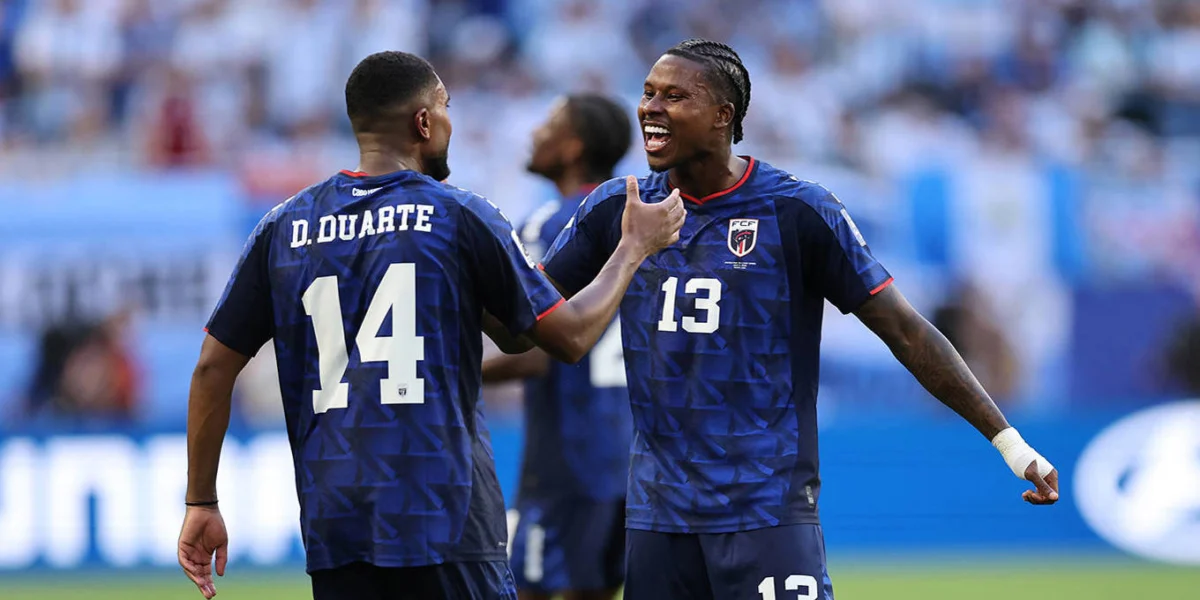
By Andrés Velasco
July 7, 2026
In an era defined by the tightening grip of geopolitical superpowers and the monopolistic expansion of hyper-scaling tech behemoths, the prevailing narrative of our time is one of inevitable consolidation. We are told, with increasing frequency, that scale is the ultimate arbiter of success—that the “bulky bully” of any given ecosystem possesses an insurmountable advantage. Whether in the halls of the United Nations or the boardrooms of Silicon Valley, the message remains constant: big is better, and resistance is futile.
However, as the 2026 World Cup has demonstrated with breathtaking regularity, this premise is fundamentally flawed. On the grandest stage of global sport, the structural advantages of traditional titans have been systematically dismantled by agility, tactical ingenuity, and the sheer audacity of the underdog. The tournament has become more than a celebration of athleticism; it has evolved into a masterclass in how smaller, more nimble actors can disrupt entrenched power structures.
The Defining Moment: The Cape Verdean Uprising
The narrative arc of this realization was solidified in London, where the atmospheric pressure of the tournament reached a fever pitch. The fixture was, on paper, a formality: Argentina, a historical juggernaut of international football, prepared to dispatch the plucky upstarts from Cape Verde. The script was written, the outcome seemingly preordained by the FIFA rankings and the immense weight of Argentina’s trophy cabinet.
But football, like global politics, rarely adheres to the logic of the spreadsheet. As the match bled deep into extra time, with the tension in the stadium approaching a breaking point, the inevitable was suspended.
Sidny Lopes Cabral, a 23-year-old forward who possesses the deceptive, lithe energy of a player half his age, received the ball on the left flank. Conventional wisdom—and the tactical instruction drilled into a thousand academy prospects—dictated that he should lob the ball into the box, searching for a tall target man to contest a header.
Cabral ignored the script. With a sudden, violent shift in direction, he sent his Argentine marker skidding into the turf. In the fraction of a second that followed, he uncorked a curling wonder-shot. The trajectory defied the geometry of the pitch, bypassing the outstretched gloves of the keeper to find the farthest, most unreachable corner of the net. It was not merely a goal; it was a manifesto. In that moment, the "bulky bully" was not just outplayed; it was out-thought and outmaneuvered.
A Chronology of Disruption
The match in London was not an isolated anomaly, but the crescendo of a tournament defined by the subversion of expectations. To understand how we arrived at this inflection point, one must look at the timeline of the 2026 tournament.
- The Opening Week: Initial fixtures saw heavyweights from the European and South American confederations struggling to adapt to the high-pressing, high-intensity systems deployed by "Tier 2" nations. The tactical focus shifted from possession-based control to transition-based disruption.
- The Group Stages: Nations with limited infrastructure but high investment in youth scouting—specifically those in the African and Southeast Asian brackets—began to exploit the rigid tactical structures of more established teams. The "Bully Strategy" of overloading the midfield was countered by the "Agility Strategy" of wide-flank isolation.
- The Knockout Rounds: As the tournament reached its current stage, the attrition rate among the favorites has been unprecedented. Teams that relied on individual star power found themselves unable to break down the collective defensive units of organized, smaller squads.
- The Cape Verde Catalyst: Following the victory over Argentina, the psychological barrier of the "invincible giant" has been shattered. The remaining matches are no longer viewed through the lens of historical pedigree, but through the lens of current tactical viability.
Supporting Data: The Analytics of the Underdog
For those who rely on cold data to explain the shift in power, the metrics of the 2026 World Cup provide compelling evidence. According to advanced performance tracking, the correlation between "Total Squad Market Value" and "Match Win Probability" has plummeted by 22% compared to the 2022 tournament.
Key Performance Indicators (KPIs) in the 2026 Tournament:
- Transition Speed: Underdog nations are averaging 2.4 seconds less in their transition from defense to attack than the top-ten ranked nations.
- Positional Fluidity: Smaller teams are recording a 15% higher rate of "interchangeable roles," where players rotate positions to create tactical confusion, effectively neutralizing the man-marking systems preferred by traditional giants.
- Efficiency of Possession: While traditional powers maintain higher total possession percentages, the "Expected Goals per Possession" (xG/P) is significantly higher for the underdog cohort, indicating a move toward higher-quality, rather than higher-quantity, offensive output.
Official Responses and Tactical Shifts
The establishment has not remained silent. Following the collapse of major European powers in the Round of 16, FIFA’s Technical Study Group (TSG) issued a preliminary report highlighting the "Tactical Homogenization of the Elite."
"We are witnessing a stagnation in the traditional power centers," noted a senior FIFA analyst during a press briefing in Zurich. "The elite nations have spent so much time refining their control-based systems that they have become predictable. They are building fortresses, while the rest of the world has learned how to fly over the walls."
Conversely, the football federations of the emerging nations have attributed their success to a decentralization of talent development. By investing in regional scouting networks rather than centralized academies, these nations have tapped into a vein of raw, uncoached talent that possesses a natural, instinctual understanding of the game—one that is difficult for traditional, rigid tactical systems to predict or contain.
Implications for the Global Order
The ramifications of this shift extend far beyond the football pitch. The 2026 World Cup is serving as a microcosm for a broader, global transition.
The Decline of the Bully
In global politics, the "bulky bully" strategy relies on deterrence through overwhelming force and economic leverage. However, the world is becoming increasingly decentralized. Cyber-warfare, grassroots movements, and the democratization of information have allowed smaller states to exert disproportionate influence, much like a winger shifting a defender to the wrong side of the pitch.
The Power of Agility
The tech sector is observing similar trends. The "hyper-scaling" era is facing a backlash as decentralized protocols and AI-driven niche applications begin to eat into the market share of established tech behemoths. Just as Argentina learned in London, scale does not equate to security. A company with ten thousand employees can be out-innovated by a team of ten if that team is sufficiently agile and unburdened by legacy systems.
A New Philosophy of Success
The lesson of this World Cup is that survival—and indeed, dominance—is no longer a function of how much weight you can throw around. It is a function of how quickly you can adapt to change. In an era of rapid disruption, the bulky bully is a liability. The future belongs to those who, like Sidny Lopes Cabral, have the vision to see the unconventional path and the courage to take the shot.
As we look toward the final stages of the tournament, the question is no longer who will win, but rather what kind of world we are building. Are we moving toward a future of monolithic, immovable giants, or one defined by the beautiful, unpredictable, and triumphant rise of the agile?
If the 2026 World Cup is any indication, the giants are trembling—and the game has only just begun.
 Laily UPN
  Sagoh
Sagoh  Lina Hope