
 By Reynand Wu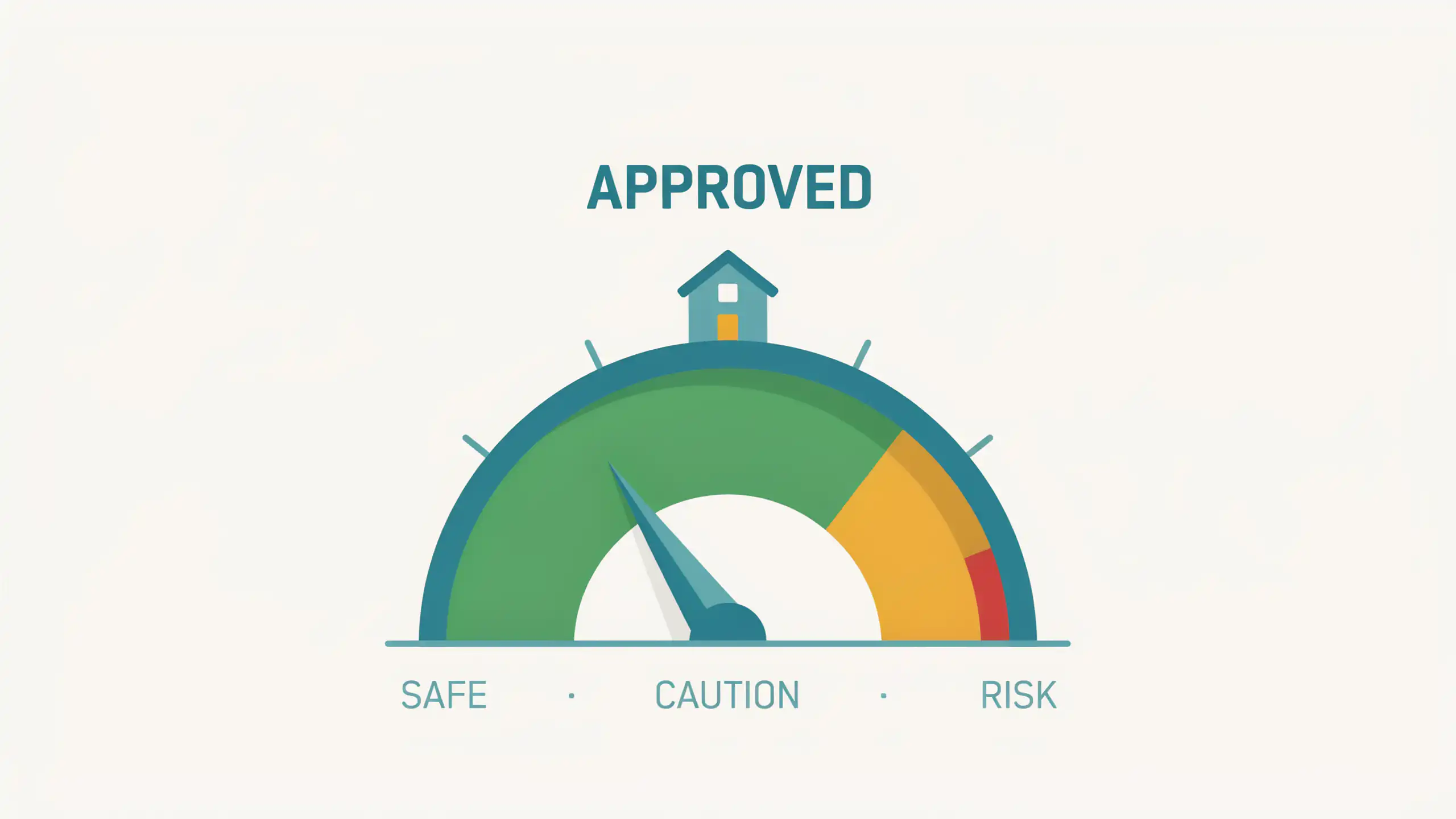
While prospective homebuyers often spend months obsessing over their FICO credit scores, a different, equally critical metric often flies under the radar until it is too late. The Debt-to-Income (DTI) ratio is the silent gatekeeper of the mortgage industry. Lenders frequently deny applicants with "excellent" credit scores simply because their monthly financial obligations leave too little room for a new house payment.
Understanding, calculating, and optimizing your DTI ratio is not just a secondary task; it is the fundamental arithmetic that determines whether your homeownership dream becomes a reality or a rejection letter.
The Fundamentals of DTI: What Lenders Actually See
At its core, the DTI ratio is a simple percentage that reflects your monthly debt burden relative to your gross (pre-tax) monthly income. Lenders use this figure to assess your "capacity"—the ability to take on a new, substantial monthly obligation without defaulting.
How the Math Works
The formula is straightforward:
Total Monthly Debt Payments ÷ Gross Monthly Income = DTI Ratio
It is vital to distinguish between what lenders do count and what they ignore. Lenders focus exclusively on recurring, contractually obligated debt payments that appear on your credit report. This includes:
- Minimum monthly credit card payments.
- Auto loan payments.
- Student loan payments.
- Personal or consolidation loans.
- Alimony or child support payments.
- The projected new mortgage payment (including principal, interest, taxes, and insurance).
Notably, the "cost of living" expenses that weigh heaviest on your wallet—rent, utilities, groceries, fuel, and entertainment—are entirely invisible to this calculation. This creates a fascinating paradox: a borrower with a $600 car payment is viewed as a higher risk than someone with a $600 monthly grocery bill, even if the latter is more financially squeezed.
The Thresholds of Success: Where Do You Stand?
In the world of mortgage underwriting, not all ratios are created equal. Financial institutions generally categorize applicants into three "zones" based on their DTI:
1. The Optimal Zone: Under 36%
Borrowers who maintain a DTI below 36% are viewed as the "gold standard" by lenders. This level of debt indicates a high degree of financial flexibility and suggests that the borrower is unlikely to be overextended. Applicants in this tier often qualify for the most competitive interest rates and have the widest selection of loan products available to them.
2. The Warning Zone: 36% to 43%
This is the "middle ground" where most conventional loans sit. While approval is still highly likely, you may find that your loan officer scrutinizes other aspects of your file more closely, such as your cash reserves or the size of your down payment.
3. The Danger Zone: Above 43%
Once your DTI exceeds 43%, the path to approval narrows significantly. While government-backed loans like FHA or VA mortgages may occasionally allow for higher ratios under specific circumstances, conventional lenders generally view anything above 43% as a red flag. At this level, you are no longer just fighting for a lower rate; you are fighting for the loan itself.
Chronology of Debt Management: A Two-Year Strategy
If you are planning to buy a home within the next 24 months, your strategy should shift from "wealth building" to "ratio optimization." Improving your DTI is a deliberate process that requires a tactical approach.
18 to 24 Months Out: The Audit Phase
Start by pulling your credit reports and listing every single monthly minimum payment. Do not look at the total balance yet—look at the required payment. This is the number that matters for your DTI.
12 Months Out: The "Elimination" Phase
Do not try to pay down balances equally. Instead, target specific accounts for total elimination. A $90 minimum payment on a credit card counts just as much toward your DTI as a $20,000 student loan payment. If you have a small balance that can be paid off entirely, prioritize that account. By closing out the account, you remove the monthly payment from your DTI entirely, providing an immediate, measurable boost to your approval odds.
6 Months Out: The "Freeze" Phase
This is the most critical period. Avoid any new credit inquiries or debt obligations. Financing a new car, buying furniture on credit, or opening a new credit card line can erase months of progress. Lenders want to see stability; a sudden increase in monthly debt obligations shortly before application is a major deterrent.
Supporting Data: The Power of Small Adjustments
To understand the impact of these changes, consider a borrower with a gross monthly income of $6,000.
If this individual has $2,500 in monthly debt obligations (including a car, student loans, and credit cards), their DTI is roughly 41.6%. They are inside the conventional lending threshold, but barely.
If this borrower eliminates two small accounts—say, a $100 credit card minimum and a $150 personal loan payment—their total monthly debt drops to $2,250. Their new DTI becomes 37.5%.
The Implication: By eliminating just $250 in monthly payments, the borrower has dropped their DTI by over 4 percentage points. This move often marks the difference between a high-interest sub-prime offer and a standard, favorable mortgage rate.
Official Industry Stance and Risk Assessment
From an underwriter’s perspective, the DTI ratio is a proxy for "life stress." When a borrower has a high DTI, the lender assumes that any minor life event—a broken furnace, a medical emergency, or a temporary loss of income—will force the borrower to choose between buying food and paying the mortgage.
"We look for borrowers who can withstand volatility," says one mortgage loan originator. "When a borrower’s DTI is already pushing 45%, they have zero margin for error. We aren’t just looking at the math of today; we are projecting the risk of the next thirty years."
This is why lenders prioritize the elimination of fixed monthly payments over the reduction of total debt. A loan with a high balance but no monthly payment (e.g., a deferred loan) is often less damaging to a mortgage application than a small loan with a high monthly payment.
Strategic Implications for Future Homebuyers
If you are currently in the market, your "to-do" list should be clear:
- Calculate Your Current DTI: Use a mortgage calculator to add up your monthly debt and divide by your gross monthly income.
- Target the "Pain Points": Identify small, recurring payments that can be wiped out with a lump-sum payment.
- Ignore the "Non-Debt" Expenses: Do not cut your grocery budget to improve your DTI. While it is good for your wallet, it will do absolutely nothing for your mortgage approval.
- Avoid New Credit: If you need a new car or major appliances, wait until after the mortgage closes. The "new" payment will increase your DTI and potentially disqualify you from the home loan you are currently seeking.
Final Thoughts
Your credit score may be the "hook" that gets you through the door, but your Debt-to-Income ratio is the "engine" that carries you across the finish line. By treating your DTI as a variable that you can actively manage—rather than a fixed state of affairs—you empower yourself to negotiate from a position of strength.
In the final months leading up to your home purchase, every dollar of monthly debt you remove is a dollar that increases your buying power and secures your financial future. Prioritize the math, eliminate the small payments, and watch your mortgage approval odds climb.
Editorial Disclosure: The content provided in this article is for educational purposes only and does not constitute financial, legal, or mortgage advice. Every individual’s financial situation is unique, and you should consult with a licensed mortgage professional or financial advisor before making major credit decisions. The information provided here is independent and not endorsed by any specific lender or financial institution.
 rifanmuazin
  Iffa Jayyana
  Azzam Bilal Chamdy