
 By Asep Darmawan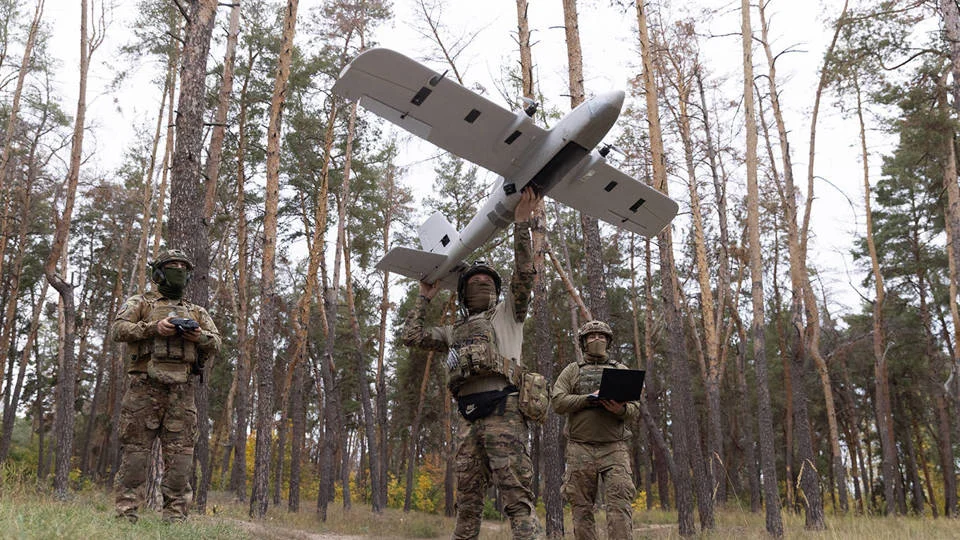
By Yuriy Gorodnichenko, Viktor Koziuk, and Ilona Sologoub
BERKELEY/KYIV – If necessity is the mother of innovation, Ukraine’s military technology sector stands as the definitive global case study of the 21st century. Over the past several months, a relentless wave of Ukrainian-engineered drones has successfully struck dozens of strategic sites deep within Russian territory, meticulously targeting the backbone of the Kremlin’s war machine: its oil refineries, high-capacity weapons manufacturing plants, and critical logistics hubs.
Yet, as the smoke clears over these targeted sites, a sobering strategic reality remains. While Ukraine has developed world-leading military technology to defend itself against a vastly larger and resource-rich aggressor, drones alone cannot end the war. As NATO leaders convene in Ankara this week to discuss the urgent imperatives of rearmament and collective defense, the Ukrainian experience offers a roadmap—and a warning—for the future of global security.
The Evolution of a Grassroots Industry
The trajectory of Ukraine’s drone industry is a story of rapid, forced maturation. When Russia first violated Ukraine’s sovereignty in 2014 with the annexation of Crimea and the invasion of the Donbas, the role of unmanned aerial vehicles (UAVs) was strictly limited to reconnaissance. Ukrainian firms, while innovative, operated within a fragmented civilian-focused framework, lacking the industrial integration required for high-intensity warfare.
Fast-forward to 2026, and the landscape has been transformed beyond recognition. The "reconnaissance-only" limitation has been shattered by a lethal combination of domestic ingenuity, rapid prototyping, and a decentralised production model that has proven resilient against Russian attempts to destroy it. Today, Ukrainian drones are not merely tools; they are the central pillar of the nation’s defensive architecture, allowing a numerically inferior force to project power hundreds of kilometers behind enemy lines.
Chronology of Technological Maturation
To understand how Ukraine reached this point, one must look at the developmental arc of its military-industrial complex:
- 2014–2016: The Prototyping Era: Following the initial invasion, volunteer groups and small tech startups began modifying commercial drones for military intelligence. The focus was on "eyes in the sky" to spot artillery positions.
- 2017–2021: The Integration Phase: The Ukrainian government began formalizing relationships with private tech firms. Defense procurement began to favor dual-use technologies, though bureaucratic friction remained a significant hurdle.
- 2022: The Crucible: The full-scale invasion served as an immediate catalyst. The "Army of Drones" initiative was launched, crowdsourcing funds and talent to deploy thousands of off-the-shelf and specialized UAVs to the frontlines within months.
- 2023–2024: The Strike Capability: With the deployment of long-range, indigenous "kamikaze" drones, the theater of operations expanded. Ukraine demonstrated an ability to bypass sophisticated Russian air defense systems to strike critical energy infrastructure.
- 2025–2026: The AI-Integrated Frontline: Current drone platforms now feature advanced AI-assisted targeting and anti-jamming capabilities, reflecting a sophisticated evolution in electronic warfare (EW) countermeasures.
Supporting Data: The Economic and Strategic Impact
The strategic efficacy of these strikes is quantifiable. By targeting Russia’s oil infrastructure, Ukraine has successfully disrupted the supply chains that fuel the Russian military’s heavy armor and air force.
The Cost-Benefit Ratio
The asymmetric nature of drone warfare is its greatest advantage. A single long-range, indigenous drone costs a fraction of the multi-million-dollar air defense batteries or high-tech refineries it destroys.
- Efficiency: Ukrainian long-range drones have maintained an estimated 70-80% success rate in penetrating Russian airspace, largely due to "swarming" tactics and low-altitude flight paths that exploit gaps in radar coverage.
- Economic Attrition: Estimates suggest that the disruption to Russian oil refining capacity has contributed to a 15% increase in domestic fuel prices within Russia, complicating logistics for Russian military units stationed in occupied territories.
Official Responses and Global Implications
The success of Ukraine’s drone program has not gone unnoticed by the international community. During the lead-up to the Ankara summit, defense ministers from across the NATO alliance have been forced to reconcile their traditional procurement cycles with the "Ukrainian speed" of innovation.
"We are watching a shift in the nature of conflict," a senior NATO defense official noted ahead of the summit. "The traditional focus on massive, multi-decade platforms is being challenged by the need for cheap, attritable, and highly lethal autonomous systems."
The Kremlin, meanwhile, has struggled to find a coherent response. Initial dismissals of Ukrainian technical capability have given way to massive, multi-billion-dollar investments in domestic EW technology. Russian state media has been tasked with downplaying the impact of these strikes, though the frequency of fires at major Russian petrochemical facilities speaks to a different reality.
The Limits of Innovation: Why Drones Aren’t Enough
Despite the tactical successes, there is a consensus among military analysts: drones are an enabler of victory, not a substitute for it. The war remains a conflict of attrition that requires traditional, heavy military hardware.
1. The Need for Mass and Heavy Armor
Drones lack the kinetic "punch" to hold territory. While they can disrupt logistics, they cannot breach fortified trench systems in the way that heavy armor, supported by long-range artillery and infantry, can.
2. Electronic Warfare (EW) Saturation
Russia is investing heavily in "dome" defense systems—electronic bubbles that neutralize drone frequencies. As Russia adapts, the technological lead Ukraine enjoys is under constant threat of erosion. Innovation must be continuous; there is no "winning" design, only a "current" one.
3. The Human Factor
Technological superiority is ultimately moot without the personnel to utilize it. The Ukrainian military faces a constant challenge in training operators to keep pace with the rapid evolution of drone software and hardware.
Implications for NATO’s Rearmament
As NATO leaders gather in Ankara, the primary takeaway from Ukraine’s experience should be the necessity of agility.
The current Western procurement model, characterized by long-term contracts and risk-averse bureaucratic processes, is fundamentally ill-suited for the rapid pace of drone warfare. If the alliance is to deter future aggression, it must integrate the following lessons from Ukraine:
- Decentralized Procurement: Allowing smaller, agile firms to bypass layers of red tape to deliver technology to the front lines.
- Modular Design: Developing hardware that can be upgraded with new software/sensors in the field, rather than waiting for "Block II" versions of vehicles or aircraft.
- Investment in EW Resilience: Shifting focus from just "flying" to "surviving" in a contested electronic environment.
Conclusion: A New Era of Defense
Ukraine has effectively become the world’s most advanced laboratory for modern combat. Its ability to pivot from a state of total surprise in 2014 to a drone-producing powerhouse by 2026 is a testament to the resilience of its society and the brilliance of its engineers.
However, the war continues. The strike on an oil refinery in Russia may cause a tactical headache for the Kremlin, but it does not remove the threat of Russian aggression. For Ukraine’s partners, the lesson of this conflict is clear: technology is a force multiplier, but it is not a panacea.
As the Ankara summit begins, the delegates would do well to remember that while the drone has changed the battlefield, the fundamental requirements of security—industrial capacity, logistical depth, and political resolve—remain as traditional as ever. Ukraine has shown the world how to fight with ingenuity; it is now up to the democratic world to provide the necessary support to ensure that ingenuity translates into a lasting and secure peace. The future of NATO’s defense rests not in the past, but in how quickly it can adopt the lessons written in the skies over Ukraine.
 Nana Muazin
  Pevita Pearce
  Laily UPN