
 By Ali Ikhwan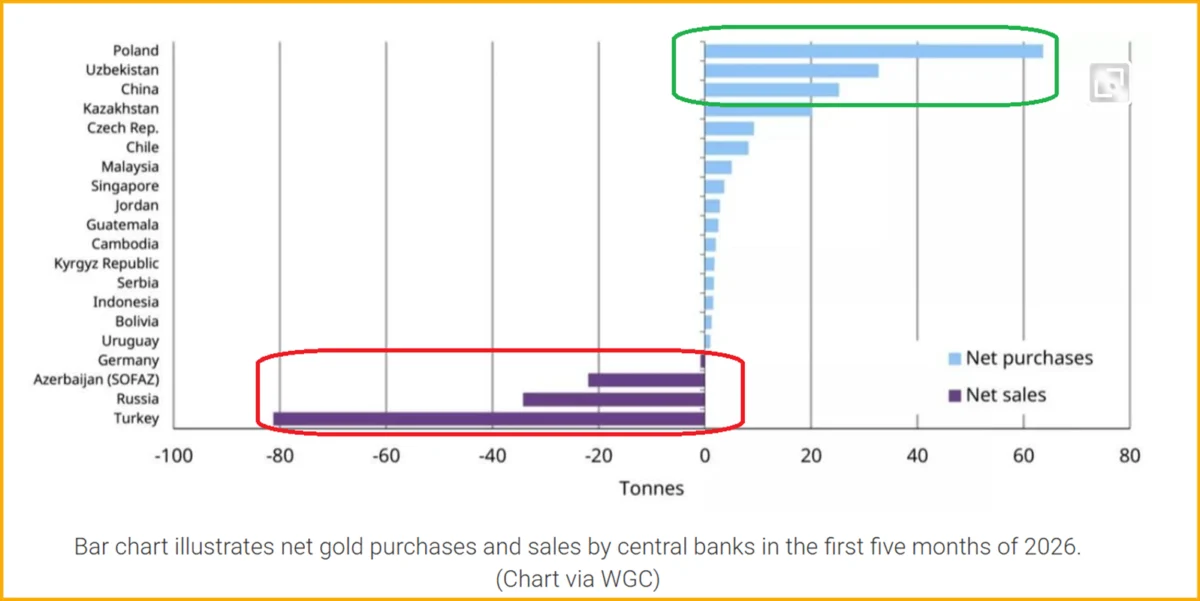
Introduction: The Knockout Blow to Fiat Currency
Much like the U.S. national soccer team’s struggle against Belgium—where no amount of structural support or tactical shifting could prevent a definitive knockout—the global fiat currency system faces an increasingly inevitable defeat against the enduring power of gold. Despite aggressive government efforts to stabilize paper currencies, the macroeconomic landscape suggests that gold remains the ultimate victor. As we navigate the volatile waters of 2026, the divergence between paper-based assets and hard assets has never been more pronounced.
For investors, the narrative promoted by mainstream Western analysts—that gold is a "barbarous relic" because it pays no interest—is increasingly viewed as a relic of a bygone analytical era. In a world defined by ballooning sovereign debt and understated inflationary pressures, the true value of gold is reasserting itself with systemic force.

The Chronology of a Bull Market
To understand where we are going, we must look at where we have been. The recent market cycle has been defined by a strategic accumulation phase. Analysts recently identified the $4,100–$3,900 per ounce zone as a primary accumulation target for physical gold and mining equities. Investors were advised to maintain "dry fiat powder"—liquid capital reserved for opportunistic buying—should the market dip further into the $3,500–$3,200 range.
As of mid-2026, those primary buys are complete. We have transitioned from a phase of intense price discovery to a period where investors can reasonably anticipate a rally toward the $4,800–$5,000 resistance zone. While the journey may be sluggish due to geopolitical headwinds, the technical indicators, particularly the 14,5,5 Stochastics oscillator on the weekly charts, suggest a robust foundation for the next leg upward.

Supporting Data: The Central Bank Tug-of-War
The gold market is currently influenced by a complex interplay of central bank policies and government interventions.
Central Bank Net Purchases
The first half of 2026 has been marked by a dichotomy in central bank activity. While many nations continue to aggressively accumulate bullion to diversify away from the U.S. dollar, others have been forced to tap into their "rainy day" reserves to manage the fiscal fallout of ongoing global conflicts, specifically the wars in Ukraine and the Middle East. This sporadic selling from certain central banks has acted as a temporary ceiling on price appreciation, preventing the parabolic moves that might otherwise occur.

The Indian Market Intervention
Beyond central banks, government policy in India has significantly distorted the demand side of the equation. By weaponizing tariff taxes against gold, the Indian government has effectively discouraged private consumption. Conservative estimates suggest this policy has removed between 50 and 75 tons of monthly demand from the global market. This is a classic case of administrative friction artificially suppressing the price of a high-demand commodity.
Official Responses and Western Analytical "Poppycock"
There is a profound disconnect between the reality of the gold market and the "poppycock" narrative promulgated by Western financial institutions.

The Interest Rate Fallacy
Western analysts frequently argue that because gold pays no dividends, it is a liability in a high-interest-rate environment. They point to the 4.5%–5% interest rate environment as a reason to abandon gold in favor of government debt. However, this argument ignores the empirical evidence of the last few years: gold surged from $1,800 to $5,600 precisely while rates were rising.
The analytical flaw lies in the government’s own inflation reporting. By utilizing metrics like CPI, PPI, and PCE that arguably understate the actual cost of living, authorities make "real" interest rates appear significantly higher than they are. This creates a false sense of security regarding the government’s ability to service its massive debt load, leading investors to panic-sell gold for overvalued debt instruments.

Implications: The Looming "Crash Season"
The current environment is not merely about the rise of gold; it is about the structural instability of the broader equity market.
The "Riff-Raff" Warning
A classic sign of a maturing bear market is the bifurcation of stock performance. Currently, we are seeing the "riff-raff" or speculative stocks and indices falter, while the Dow Jones Industrial Average is propped up to provide a false sense of normalcy. Investors are being led to believe that the strength of the Dow signals a healthy market, yet the underlying valuations—as evidenced by the rising Shiller/CAPE ratio—indicate extreme danger.

The Seasonal Outlook
Historical trends suggest that while July often brings a period of calm or moderate gains, the months of August through October represent "crash season." As the speculative holdings bought via "price chasing" by amateur investors continue to lose momentum, the risk of a systemic correction increases. The implication for the average investor is clear: shifting capital from hard assets like silver and gold into an overvalued stock market is a high-risk strategy that ignores the warning signs written in the technical charts.
Technical Analysis: Silver and the Mining Sector
Silver remains a standout performer. On a quarterly chart, silver has shown incredible resilience, frequently finding support well above its projected floors. The $50 zone for silver currently aligns with the $4,000 level for gold. When such clear value manifests, the obsession with finding the "absolute" low becomes secondary to the importance of building a value-oriented position.

The GDX Breakout
The mining sector, specifically represented by the VanEck Gold Miners ETF (GDX), is currently at a technical sweet spot. The drop from mid-April was not a violent crash but an "ooze"—a consolidation pattern that typically precedes a breakout.
For the discerning investor, the senior miners offer the most compelling value proposition. Many of these companies are now operating with "bulletproof" debt-to-equity ratios, often falling below 0.20. This financial discipline, combined with a massive bull wedge formation on the GDX daily chart, suggests that the sector is primed for a significant rally.

Conclusion: A Path Forward
The macroeconomic environment is currently defined by a "slug-fest" between those who rely on the promises of paper currency and those who recognize the intrinsic value of gold. Despite the headwinds of central bank reserve adjustments, government interference in local markets, and the persistent misinformation from mainstream financial analysts, the structural case for gold and silver remains unshakeable.
Investors should view the current price action as an opportunity rather than a cause for alarm. With gold poised for a move toward the $4,800–$5,000 range and silver showing strong structural support, the strategy remains straightforward: accumulate on dips and ignore the fear-mongering surrounding the "no interest" narrative.

The era of "dry fiat powder" is drawing to a close as the technical indicators suggest that the consolidation period for mining equities is ending. The fundamentals are in place, the technicals are aligned, and for those positioned correctly, there is no need for fear—only for the patience to hold through the coming market volatility. As the "crash season" approaches for the broader equity markets, the true strength of hard assets will likely be the only shelter for those who prepared in advance.
 Raul Delapena Setiawan
  Asro
Asro  Azzam Bilal Chamdy