
 By Muslim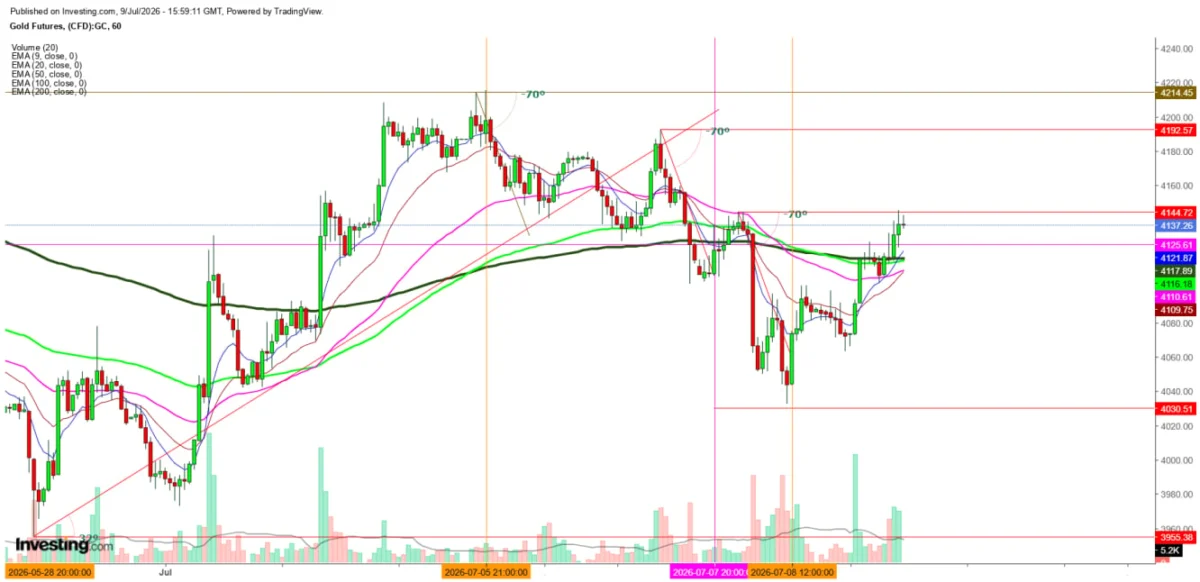
Introduction
The delicate geopolitical landscape of the Middle East has suffered a catastrophic fracture this week, as the fragile ceasefire between the United States and Iran has officially collapsed. Following a flurry of fresh U.S. air strikes on Thursday, Tehran retaliated with a synchronized wave of attacks across key sites in the Persian Gulf. This rapid deterioration of diplomatic relations has not only upended regional stability but has also sent shockwaves through global financial markets, with gold futures—traditionally a safe-haven asset—experiencing unprecedented volatility. As the specter of conflict looms larger than at any point since February, investors are struggling to navigate a market environment defined by conflicting signals from the Federal Reserve, persistent inflationary pressures, and the raw uncertainty of renewed warfare.
Chronology of a Collapsing Truce
The cycle of violence that has plagued the region since the signing of a framework truce in June appears to have reached its terminal phase. For weeks, the agreement was characterized by tenuous halts to hostilities, punctuated by accusations of bad-faith maneuvers from both Washington and Tehran.
The turning point occurred on Wednesday following a high-stakes NATO summit in Türkiye. During a press briefing, President Trump delivered a definitive blow to diplomatic hopes, declaring the ceasefire "over" and stating that he had no further interest in pursuing negotiations with Iranian leadership. This blunt diplomatic pivot acted as an immediate catalyst for market instability.
By Thursday, the situation escalated from rhetoric to kinetic action. The U.S. launched targeted air strikes, prompting an immediate and aggressive response from Iranian forces. This "tit-for-tat" exchange has effectively neutralized the diplomatic architecture established in June, leaving global observers and financial institutions to prepare for a protracted period of hostility.
Financial Markets: The Gold Price Paradox
The gold market, which often serves as a barometer for geopolitical fear, has been caught in a complex tug-of-war. On Wednesday, following the President’s remarks, gold futures saw a steep slide, testing lows of $4,032.56—hovering perilously close to critical support levels at $4,030.51—before managing a modest recovery to close at $4,082.24.
Thursday’s trading session offered little reprieve. After opening at $4,085.90, the metal rallied to a daily high of $4,145.40, only to face immediate resistance. As of the latest market data, gold is trading at approximately $4,138, reflecting deep investor skepticism regarding the metal’s ability to sustain a bullish trend in the current economic climate.

The Federal Reserve’s Dilemma
Beyond the geopolitical noise, the U.S. Federal Reserve has inadvertently added to the market’s volatility. Minutes from the June meeting, released mid-week, revealed a deeply divided central bank. While some policymakers expressed a desire to halt interest rate hikes, citing the potential for economic cooling, others remained staunchly focused on the threat of persistent inflation.
The prospect of lower interest rates is typically a boon for non-yielding bullion, as it reduces the opportunity cost of holding the asset. However, the Fed’s minutes underscored a growing anxiety regarding the inflationary impact of the ongoing conflict. Since the outbreak of hostilities in late February, U.S. price pressures have accelerated, remaining stubbornly above the central bank’s 2% target. This suggests that the Federal Reserve may be forced to maintain a "higher for longer" interest rate stance, even if it threatens to stifle growth, as it attempts to combat the supply-side shocks triggered by the energy-driven volatility inherent in Middle Eastern conflicts.
Technical Analysis: Resistance and Support Levels
A granular look at the technical indicators provides a bleak outlook for gold bulls.
The Daily Chart Perspective
On the daily chart, gold futures are currently struggling to defend key support at $4,125.61. The metal is facing significant bearish pressure beneath the immediate resistance of $4,144.72. The broader narrative here is one of "energy-driven inflation," where the rising cost of energy—directly tied to the Persian Gulf instability—is keeping bearish pressure intact despite the traditional appeal of gold as a hedge against war. Furthermore, the rise in U.S. Treasury yields to multi-week highs, coupled with soaring eurozone yields, has diverted capital away from gold, as investors seek higher returns in bond markets despite the geopolitical risks.
The 1-Hour Chart: A Bearish Crossover
The short-term outlook is similarly fraught with technical warning signs. Over the past several hours, gold futures have attempted to sustain their position above the 200 Exponential Moving Average (EMA) at $4,117.92. However, the formation of a distinct bearish hourly candle suggests that the market is losing momentum. The 100 EMA has crossed below the 200 EMA, confirming a "Bearish Crossover"—a classic technical signal that typically precedes a sustained selling spree. With the price currently hovering at $4,137, traders are bracing for a potential test of lower support levels should the $4,144.72 resistance prove insurmountable.
Implications of a New Escalation
The implications of this renewed conflict extend far beyond the gold pits of the COMEX. The energy markets, in particular, remain the primary engine of global inflation. As long as the Persian Gulf remains a theater of active combat, the risk of a supply shock—either through the closure of the Strait of Hormuz or damage to regional energy infrastructure—remains acute.

For the U.S. economy, the "war-driven" inflationary cycle presents a Catch-22 for policymakers. Cutting interest rates to stimulate the economy could worsen inflation if energy prices spike, yet keeping rates high could exacerbate the economic slowdown that many analysts fear is already underway. For the average investor, this environment necessitates extreme caution. The historical correlation between war and gold prices is currently being tested by the overwhelming force of macroeconomic policy and rising yields.
Official Responses and Diplomatic Fallout
The international community has reacted with alarm to the collapse of the ceasefire. NATO members, meeting in Türkiye, have largely signaled a hardening of positions, though there is clear daylight between the U.S. approach and that of several European partners who remain wary of a wider regional conflagration.
Tehran, for its part, has framed its retaliatory strikes as a necessary defensive measure against what it characterizes as American aggression. The lack of a diplomatic "off-ramp" at this stage suggests that both sides are preparing for a long-term standoff. The absence of back-channel communications, which were previously utilized to maintain the June truce, further increases the risk of a miscalculation that could lead to a broader, uncontrollable conflict.
Conclusion: Navigating the Fog of War
As the situation on the ground continues to evolve, the financial markets will likely remain in a state of high alert. Gold, while historically a refuge in times of trouble, is currently caught in a liquidity trap where rising bond yields and the Federal Reserve’s inflation-fighting mandate are overriding its safe-haven status.
Investors are advised to watch the $4,144.72 resistance level closely. A failure to break through this ceiling, combined with the bearish technical signals on the hourly charts, suggests that the path of least resistance for gold remains to the downside. In this era of heightened uncertainty, where geopolitics and central bank policy intersect with explosive force, the volatility seen this week is likely only the beginning. Readers are strongly cautioned to manage risk appropriately, as the market’s response to the ongoing U.S.-Iran conflict remains as unpredictable as the war itself.
Disclaimer: This analysis is provided for informational purposes only and is based on current market observations and technical indicators. Trading in gold and other commodities carries a high level of risk. Investors should consult with a financial advisor and conduct their own due diligence before making any investment decisions. The author and publisher assume no responsibility for losses incurred based on this analysis.
 Reynand Wu
  Suro Senen
  Neng Nana