
 By Layla Zulfa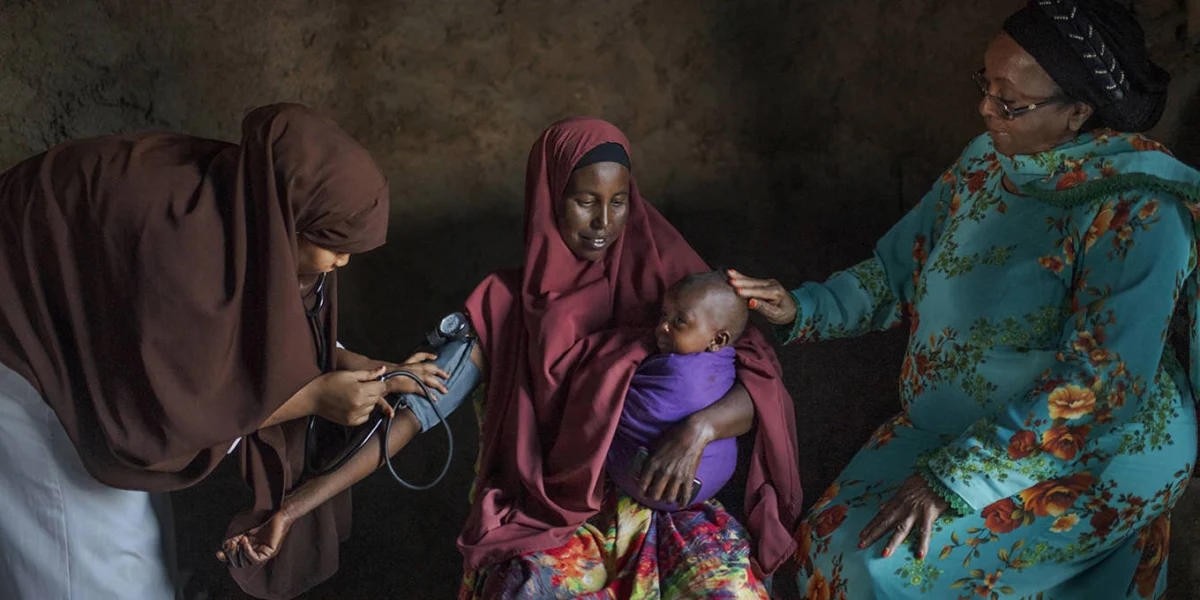
In the quiet corners of rural health clinics across Sub-Saharan Africa and South Asia, the difference between life and death for a woman in labor often comes down to the availability of a few basic medical supplies. Every day, more than 700 women perish from preventable complications related to pregnancy and childbirth. It is a staggering human toll that persists despite decades of global health initiatives.
As foreign aid budgets tighten and the geopolitical landscape shifts, the global health community is facing a moment of reckoning. The prevailing model—which often favors expensive, hospital-centered care—is proving increasingly unsustainable for low-income nations. A new call to action is emerging: policymakers must pivot toward decentralized, cost-effective, and evidence-based interventions to stem the tide of maternal mortality.
The Global Landscape: A Tale of Two Realities
The distribution of maternal mortality is a stark indicator of global inequality. Roughly 87% of all maternal deaths occur in Southern Asia and Sub-Saharan Africa, with the latter alone accounting for nearly 70% of the global burden. These figures represent more than just statistics; they represent the breakdown of fundamental health systems in the world’s most vulnerable regions.
However, the crisis is not limited to the developing world. Even in high-income nations, where medical technology is advanced, deep-seated systemic inequities persist. In the United States, for instance, the maternal mortality rate for Black women remains more than three times higher than that of white women. This disparity highlights that the crisis is as much about social determinants, access, and quality of care as it is about medical intervention.
A Chronology of Recent Commitment
The urgency of the situation was underscored in early June when philanthropist Melinda French Gates announced a landmark $215 million pledge to improve women’s health globally. This infusion of capital is specifically targeted at underfunded areas, including maternal care in Africa.
While the announcement has been lauded as a vital injection of resources, it serves as a stopgap in a much larger struggle. Historically, global maternal health initiatives have oscillated between massive infrastructure projects and targeted disease-eradication campaigns. The current movement, bolstered by Gates’ funding, marks a shift toward a more pragmatic, localized approach that prioritizes "doing more with less."
The Science of Survival: Proven, Low-Cost Interventions
The challenge in modern maternal health is no longer a lack of medical knowledge; it is a lack of implementation. The leading causes of maternal death—postpartum hemorrhage (PPH), hypertensive disorders (pre-eclampsia), complications from unsafe abortions, and obstructed labor—are all addressable through interventions that are both affordable and manageable in low-resource settings.
Tackling Postpartum Hemorrhage
Postpartum hemorrhage remains the leading killer of women during childbirth. Yet, the third stage of labor can be managed with active interventions that reduce severe bleeding by 60–70%.
The gold standard involves the administration of uterotonic medicine to ensure the womb contracts after delivery. While oxytocin is the preferred pharmaceutical, its requirement for "cold chain" storage makes it difficult to use in regions without reliable electricity. Here, innovation provides an alternative: misoprostol. This heat-stable, oral medication has revolutionized care in remote settings.
Furthermore, the introduction of the non-pneumatic anti-shock garment (NASG) has proven to be a game-changer. By applying pressure to the lower limbs and abdomen, the garment redirects blood flow to vital organs, stabilizing women in shock while they are transported for surgery or transfusion. When paired with simple blood-collection drapes that allow providers to accurately measure blood loss, these tools can turn a life-threatening hemorrhage into a manageable event.
The Power of Early Detection: Pre-Eclampsia
Pre-eclampsia affects roughly 3–8% of pregnant women worldwide and, if left untreated, can progress to fatal seizures. The solution is remarkably simple: routine blood-pressure monitoring.
Evidence from the "Community-Level Interventions for Pre-eclampsia" (CLIP) program demonstrates that community health workers, equipped with mobile tools and pictorial guides, can effectively screen and manage blood pressure in remote villages. In randomized controlled trials across Mozambique, Pakistan, and India, this decentralized model facilitated early detection and the timely administration of magnesium sulfate, drastically reducing the rate of eclamptic emergencies.
Policy Shifts: The Role of Legislation and Infrastructure
Medical interventions alone cannot solve maternal mortality; they require a supportive policy framework. This is perhaps best exemplified by the case of Ethiopia.
In 2005, Ethiopia liberalized its abortion laws, integrating safe abortion and follow-up care into the public health system. By training healthcare workers to treat complications from incomplete abortions—such as severe bleeding or infection—the country saw a dramatic shift. Within a decade, the percentage of maternal deaths attributed to unsafe abortion plummeted from 32% to less than 10%. This proves that legal reform, when paired with clinical training, is a potent tool for public health.
The Bangladesh Model: A Multi-Sectoral Success
Bangladesh provides a roadmap for nations struggling with obstructed labor and lack of emergency care. By adopting a multi-sectoral strategy, the country increased access to specialized emergency care, encouraged the growth of private medical facilities to meet the demand for C-sections, and established a robust network of community-based skilled birth attendants.
These efforts were further supported by improvements in maternal nutrition and a reduction in adolescent pregnancy rates. The result was a rapid, sustainable decline in maternal mortality that serves as a blueprint for other emerging economies.
The Economic and Moral Imperative
The economic argument for these interventions is clear: investing in preventive, low-cost maternal health measures yields an exponential return on investment. Every dollar spent on maternal health reduces the long-term economic strain on healthcare systems and preserves the lives of women who are the bedrock of their families and communities.
However, the reliance on external philanthropy—while welcome—cannot be the long-term solution. As foreign aid fluctuates, the sustainability of maternal health programs must be rooted in domestic resource mobilization. Policymakers must move away from the "hospital-only" mentality, which often leaves rural populations behind, and instead invest in:
- Workforce Development: Training and certifying community health workers to perform basic life-saving procedures.
- Supply Chain Resiliency: Prioritizing the distribution of heat-stable, affordable medications like misoprostol over drugs that require complex cold chains.
- Data-Driven Referral Systems: Utilizing mobile technology to connect community workers with emergency facilities, ensuring that when a complication exceeds a village-level capability, the transition to hospital care is seamless.
Implications for the Future
The path forward is defined by a necessary pivot. We must stop viewing maternal health through the lens of high-tech, centralized medicine and start viewing it through the lens of community-based resilience.
The global community has the tools. We have the data. We have the evidence-based protocols that work. What remains is the political will to prioritize these solutions over the more glamorous, yet often less effective, capital-intensive projects.
As we look toward the future, the goal must be clear: to ensure that the birth of a child is never a death sentence for the mother. By scaling up these simple, proven, and affordable interventions, we can reach the women who currently fall through the cracks of the global health system. The era of waiting for complex hospital infrastructure must give way to an era of immediate, decentralized action. The cost of inaction is a price the world can no longer afford to pay.
 Basiran
  Nana Wu
  Sagoh
Sagoh 