
 By rifanmuazin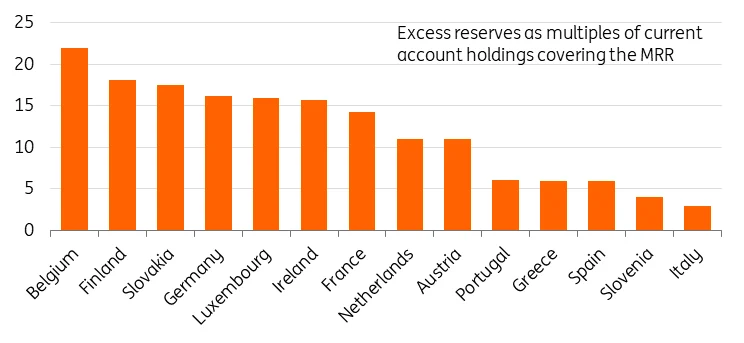
The global financial landscape is currently defined by a delicate balancing act. On one side of the Atlantic, the European Central Bank (ECB) is grappling with the structural consequences of its past quantitative easing programs, weighing the merits of raising Minimum Reserve Requirements (MRR) to stem operational losses. On the other, the United States labor market—despite signs of cooling—continues to provide just enough stability to prevent a collapse in Treasury yields, keeping interest rate volatility firmly in play.
This report examines the convergence of these two distinct, yet interconnected, macroeconomic phenomena.
The ECB’s Strategic Shift: Revisiting Minimum Reserve Requirements
The Mechanics of the Proposed Change
Recent reports from Reuters have brought a dormant policy tool back to the forefront of the European financial debate: the Minimum Reserve Requirement (MRR). The ECB is reportedly contemplating an increase in the amount of reserves that commercial banks must hold at the central bank.
While these changes are not slated for immediate implementation, policymakers are eyeing an autumn rollout. The primary incentive for this shift is purely financial. Unlike the funds parked in the ECB’s deposit facility, which currently earn banks a healthy 2.25% in interest, the MRR is non-remunerated. Economists estimate that a doubling of these requirements could save the ECB approximately €4 billion annually—a figure that would swell even further should interest rates climb higher.
A Relic or a Remedy?
Historically, the MRR served as a crucial lever for monetary policy implementation. By maintaining a liquidity deficit, the ECB could effectively monopolize the supply of funds, forcing banks to rely on its liquidity operations. However, in the post-QE era, the system has been flooded with excess liquidity—currently sitting at a staggering €2.2 trillion.
In this environment, the MRR no longer functions as the primary mechanism for setting market rates; rather, those rates are now dictated by the interest earned on the deposit facility. Consequently, a one-off reduction of €174 billion (the result of doubling the MRR) would have a marginal impact on total system liquidity. Nevertheless, it signals a transition toward a more sensitive funding environment where market rates may react more sharply to central bank intervention.
Chronology: The Evolution of European Liquidity Policy
- The QE Era (2015–2022): The ECB engaged in massive bond-buying programs, injecting multiples of the MRR into the banking system. This rendered traditional reserve requirements largely symbolic.
- The Interest Rate Hike Cycle (2023–2024): As the ECB aggressively raised rates to combat post-pandemic inflation, the cost of servicing the interest payments on excess reserves began to weigh heavily on the ECB’s balance sheet.
- The 2024 Operational Framework Review: The ECB initiated a comprehensive review of its monetary policy operational framework. This year’s review provides the perfect window for officials to debate changes to the MRR.
- Summer 2024 (Recent Headlines): Leaks regarding the potential increase in MRR hit the wires, causing immediate, if modest, volatility in Euribor/OIS spreads.
The Uneven Landscape: Why Distribution Matters
One of the most significant arguments against a blanket increase in MRR is the gross inequality of liquidity distribution across the Eurosystem. The impact of such a policy would not be uniform.
Geographic Disparities
Data shows that the liquidity cushion varies wildly by jurisdiction. Banks in Italy, Spain, and Portugal hold excess liquidity roughly three to six times their required reserves. In contrast, banking systems in France and Germany hold multiples closer to 15. While the Eurosystem generally facilitates smooth liquidity redistribution, an aggressive increase in requirements could create localized funding squeezes in the periphery, potentially widening yield spreads within the bloc.
The "Small Bank" Penalty
The burden of the MRR is tied to a bank’s deposit base, not its level of excess liquidity. This creates a structural mismatch: many of the banks holding the most excess liquidity are not the same institutions that hold the bulk of the deposits. Consequently, smaller, deposit-heavy institutions would bear a disproportionate share of the cost, effectively acting as a tax on retail banking operations rather than a targeted tool for central bank profit-seeking.
US Labor Markets: The "Goldilocks" Scenario
While the ECB navigates internal balance sheet friction, the US economy continues to defy expectations of a sharp downturn. The market consensus for the latest US payrolls data sits at 115,000—a figure that, while lower than the previous month’s 172,000, maintains a crucial psychological threshold.

Why 100k Matters
Markets have fixated on the "100k jobs" floor. For four consecutive months, US payroll additions have remained above this level, providing investors with a sense of stability. While some economists argue that a "replacement rate"—the level of hiring needed to maintain a constant unemployment rate—is closer to 150,000, a slowing immigration narrative suggests that the economy can now tolerate a lower breakeven point without overheating or crashing.
Inflation and Rate Persistence
Because inflation remains stubborn, US rates have found little reason to test lower levels. The "dovish" sentiment that briefly gripped markets during the Sintra conference, bolstered by benign comments from Fed Chair Warsh and a decline in oil prices, has been tempered by the reality of sticky long-term rates. The 10-year EUR swap rate, for example, remains stubbornly anchored near 3%. Absent a significant deterioration in the macro outlook or a broad-based equity sell-off, the path of least resistance for rates appears to be horizontal, if not slightly upward.
Implications and Market Outlook
The ECB’s Endgame
The ECB’s ultimate goal is to move toward a self-balancing system. They envision a future where banks manage their own liquidity needs with greater autonomy, with central bank operations serving as a secondary backstop rather than the primary source of funding. By reducing excess reserves, the ECB hopes to return market rates to levels closer to the Main Refinancing Operations (MRO) rate.
However, the risks of this transition are substantial. Disrupting the gradual path toward a new monetary policy framework—one that the ECB has spent years carefully signaling—could lead to unnecessary volatility.
Thursday’s Market Events: A Snapshot
Market participants are now bracing for the release of the June US payrolls data, which will serve as the next litmus test for the "soft landing" hypothesis. Concurrent with this, European bond markets remain active:
- Spain: Auctioning a mix of 8-year and 10-year bonds for a total of €6.75 billion.
- France: A heavy issuance schedule totaling €14 billion across various maturities (including 10y, 15y, and 20y OATs).
- United Kingdom: Issuing £3.25 billion of 11-year Green Gilts.
These auctions will provide further insight into investor demand for long-term sovereign debt in a high-interest-rate environment.
Final Assessment: The Cost of Efficiency
The ECB is currently caught between the desire to improve its financial standing and the need to maintain market stability. Increasing the MRR offers an elegant, albeit blunt, solution to the problem of central bank losses. Yet, as the data indicates, the banking system is not a monolith.
The potential for a "liquidity crunch" in specific jurisdictions or among smaller, deposit-heavy institutions is a risk that cannot be ignored. Furthermore, as the US experience shows, when labor markets remain resilient and inflation persists, the room for monetary maneuvering shrinks.
The ECB must decide whether the pursuit of a leaner balance sheet is worth the potential disruption to the delicate, hard-won equilibrium of the European banking sector. For now, market sentiment remains cautious, with eyes locked on the upcoming payroll figures and the ECB’s official response to the ongoing operational framework review. Investors should anticipate continued volatility in Euribor spreads and a persistent "stickiness" in the long end of the yield curve, as the global financial system continues its slow, methodical transition away from the era of ultra-loose liquidity.
 Nana Wu
  Raul Delapena Setiawan
  Muslim